Traumatic brain injury
Bottom line
- Mild head injury: use the Canadian CT Head Rule to decide who needs a CT. It is the American College of Emergency Physicians' (ACEP) only Level A recommendation for this question. NEXUS Head CT and the New Orleans Criteria are acceptable but less specific.1
- On a blood thinner, at baseline, with a normal first CT: no routine repeat CT or admission (Level B). In one multicenter cohort, delayed bleeding occurred in 0.6% of warfarin patients and none on clopidogrel.1,2
- Severe injury: prevent hypoxia and hypotension. In 13,151 patients, hypotension and hypoxia together carried six times the adjusted odds of death (aOR 6.1).3 Keep SpO2 at 90% or more and systolic pressure at 110 mm Hg or more.4,5
- Ventilate to a normal CO2. Target ETCO2 35–40 mm Hg. Hyperventilate to 30–35 only for signs of active herniation.4,5
- Tranexamic acid (TXA) is debated. CRASH-3 missed its primary outcome, and its benefit appeared only in a GCS 9–15 subgroup.6 Prehospital TXA did not improve 6-month function, and the Brain Trauma Foundation (BTF) advises against routine prehospital use.7,5
Severity
ACEP uses a common definition of mild TBI: GCS 13–15, with confusion, loss of consciousness of 30 minutes or less, or amnesia for less than 24 hours. No consensus definition exists.1 CRASH-3 analyzed GCS 9–15 as mild-to-moderate injury, which leaves 8 or less as severe.8 The BTF secures the airway at GCS under 9.5
GCS 13 is not reassuring. Surgical lesions are more common at GCS 13, and some of these patients test more like moderate TBI.1
First 15 minutes: moderate or severe TBI
- Oxygen for every suspected severe TBI, whatever the saturation. Keep SpO2 at 90% or more. If it stays low, reposition the airway, then bag-mask ventilate, then place an advanced airway.5
- Secure the airway for GCS under 9, GCS 9 and falling, an airway the patient can't protect, or hypoxemia that oxygen doesn't fix.5 Confirm the tube with capnography.5
- Keep systolic pressure at 110 mm Hg or more. Check it every 5–10 minutes or continuously. Treat hypotension fast with blood products or isotonic fluids.5
- Ventilate at about 10 breaths a minute to ETCO2 35–40 mm Hg. Don't hyperventilate without signs of herniation.5
- Score the GCS and pupils after the ABCs, before sedation or paralysis if that doesn't delay the airway. Repeat the GCS at least every 30 minutes. Record pupil asymmetry over 1 mm and fixed pupils.5
- CT and neurosurgery. The patient belongs in a center with immediate CT, prompt neurosurgery and intracranial pressure monitoring. If that isn't possible, stabilize and transfer.5
Secondary insults
The brain injury you can still change is the one that comes after the impact. In a statewide Arizona cohort of moderate or severe TBI, prehospital hypotension (SBP < 90 mm Hg) and hypoxia (SpO2 < 90%) each raised mortality, and together their effects added up.3
| Prehospital finding (n = 13,151) | Mortality | Adjusted OR for death |
|---|---|---|
| Neither | 5.6% | reference |
| Hypotension only | 20.7% | 2.5 |
| Hypoxia only | 28.1% | 3.0 |
| Both | 43.9% | 6.1 |
Observational data from the EPIC study, adjusted for injury severity, age and other confounders.3
How high should the blood pressure be?
- In 12,169 patients with major TBI, the adjusted risk of death fell steadily as the lowest prehospital SBP rose from 40 to 130 mm Hg. It was lowest from 130 to 180 mm Hg and rose quickly above 180. There was no threshold where risk suddenly changed.9
- The BTF set the adult target at 110 mm Hg or more and says the best target may be higher.4,5
- Don't lower a high pressure reflexively. In a Cushing response, dropping the pressure risks cerebral hypoperfusion.5
The BTF target is SBP 110 mm Hg or more.5 The EPIC data put the lowest mortality at 130–180 mm Hg, though the authors say their design can't prove that raising the treatment threshold helps, and they call for trials.9
Does following the guideline help? When Arizona EMS adopted the prehospital TBI guidelines, overall survival to discharge did not change (aOR 1.06). Adjusted survival roughly doubled in severe TBI (aOR 2.03) and tripled in intubated severe TBI (aOR 3.14).10
Mild TBI: who needs a CT?
| Canadian CT Head Rule (CCHR) | NEXUS Head CT | New Orleans Criteria |
|---|---|---|
| CT if any one is present | ||
| GCS < 15 at 2 hours after injury | Evidence of skull fracture | Headache |
| Suspected open skull fracture | Scalp hematoma | Vomiting |
| Any sign of basal skull fracture | Neurologic deficit | Age over 60 |
| Vomiting more than once | Abnormal alertness | Drug or alcohol intoxication |
| Age over 64 | Abnormal behavior | Short-term memory deficit |
| — | Persistent vomiting | Trauma above the clavicles |
| — | Coagulopathy | Post-traumatic seizure |
| — | Age 65 or older | — |
| Who the rule is for | ||
| GCS 13–15 with witnessed loss of consciousness, definite amnesia or witnessed disorientation. Not for age < 16, blood thinners, or seizure after injury | Blunt head trauma, age 16 or older | GCS 15 with loss of consciousness or amnesia |
High-risk criteria as listed in the ACEP clinical policy.1 The CCHR also has two medium-risk factors for any clinically important brain injury: amnesia for more than 30 minutes before impact, and a dangerous mechanism.11
The wording of two CCHR items differs. The 2001 derivation abstract lists vomiting more than 2 episodes and age over 65.11 ACEP lists vomiting more than once and age over 64.1 This page uses ACEP's wording, which flags more patients.
- CCHR (derivation, n = 3,121): the high-risk factors were 100% sensitive (95% CI 92–100%) for needing neurologic intervention and would have imaged 32% of patients. The medium-risk factors were 98.4% sensitive and 49.6% specific for clinically important brain injury.11
- NEXUS Head CT (n = 11,770): flagged all 420 patients who needed neurosurgery (sensitivity 100%, 95% CI 99.1–100%), but its specificity was only 24.9%.12
- Head to head: in the 7,759 patients who met the CCHR's own criteria, the CCHR missed 3 of 111 neurosurgical patients (sensitivity 97.3%) with specificity 58.8%. NEXUS caught all 111, with specificity 32.6%.12
- ACEP's verdict: all three rules are highly sensitive. The CCHR is preferred because it is more specific, so it leads to fewer unnecessary scans.1
When the rules don't apply
- Blood thinners other than aspirin: don't use a decision rule to skip the CT (Level C).1
- Intoxication: in 283 intoxicated patients with minor head injury, the CCHR was only 70% sensitive and NEXUS 83% for clinically important injury. A negative rule does not remove the need for CT.1
- Older adults: every rule images them on age alone.1
- Children, pregnancy, bleeding disorders, penetrating injury, unstable multisystem trauma: outside the ACEP policy.1
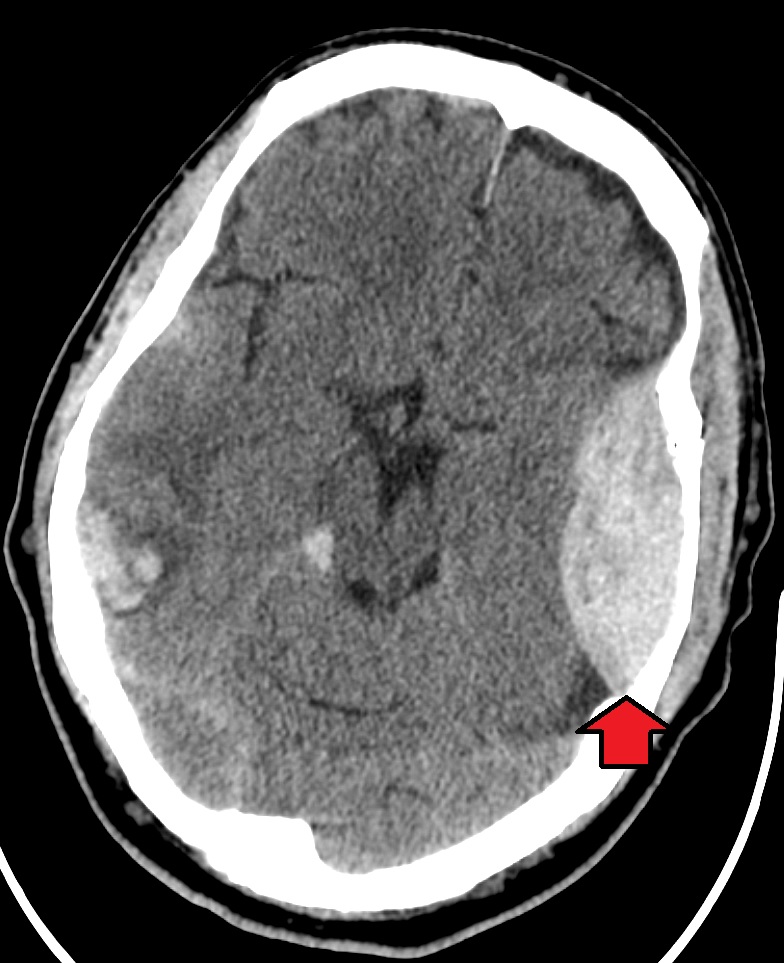
Patients on blood thinners
- Image first. Clinicians' threshold for a first CT in these patients is very low, and ACEP advises against using decision rules to skip it.1
- After one normal CT, at baseline neurologically: no routine repeat CT and no routine admission or observation (both Level B).1
- Discharge instructions should describe the symptoms of rare delayed bleeding (consensus).1
- Consider outpatient referral to review fall risk and whether the anticoagulant is still worth it (consensus).1
The data
- In 1,064 ED patients on warfarin or clopidogrel, the first CT showed bleeding in 12.0% on clopidogrel and 5.1% on warfarin (RR 2.31).2
- After a normal first CT, delayed bleeding within 2 weeks occurred in 4 of 687 warfarin patients (0.6%) and 0 of 243 clopidogrel patients.2
- Across the 8 studies ACEP reviewed, delayed bleeding after a normal CT occurred in up to about 5–6% of patients, and very few needed surgery.1
- Aspirin is the gap. ACEP's recommendation doesn't cover it. In 100 adults aged 65 or older on low-dose aspirin, 4 had delayed bleeding; one needed surgery and one died. ACEP notes that older patients on antiplatelets with high-risk features (loss of consciousness, amnesia, GCS under 15) may need some observation if the CT is not repeated.1
Herniation and raised intracranial pressure
Signs of active herniation: Cushing triad (hypertension, bradycardia, irregular breathing), GCS under 9, posturing or lateralizing signs, progressive neurologic decline, and one or two fixed, dilated pupils.5
| Measure | Adult dose or target | Notes |
|---|---|---|
| Bridge to definitive care | ||
| Hyperventilation | ETCO2 30–35 mm Hg | Only for signs of active herniation. Otherwise keep 35–40.5 |
| Mannitol 20% | 0.25 g/kg IV over ≥ 30 min; may repeat every 6–8 h | Label dose for raised intracranial pressure. The label lists active intracranial bleeding (except during craniotomy), anuria and severe hypovolemia as contraindications, so decide with neurosurgery.13 |
| Hypertonic saline | Dose per institutional protocol | No FDA-labeled dose for this use was found. The BTF allows hypertonic resuscitation for GCS < 8 with suspected raised pressure (weak).5 |
| Not recommended | ||
| Prophylactic hyperosmolar therapy | — | Not recommended before hospital, with or without signs of herniation (weak). This is separate from hypertonic fluid used for resuscitation.5 |
| Corticosteroids | Do not give | Raised 2-week mortality, 21.1% vs 17.9% (RR 1.18).14 |
Unreviewed doses. Verify against the current label and your institution's protocol before giving anything.
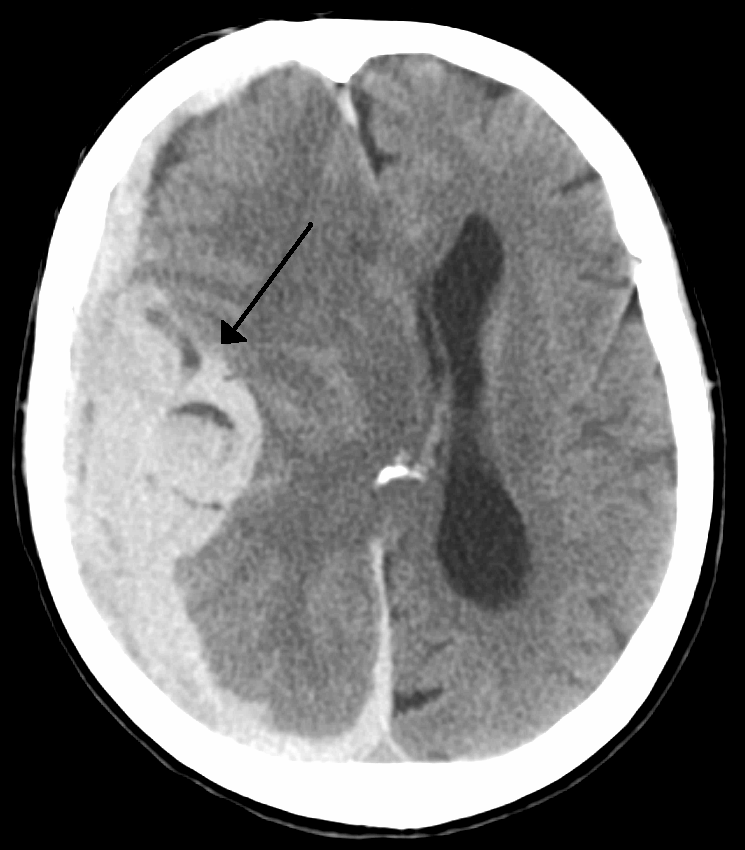
Tranexamic acid
- CRASH-3 (n = 12,737; GCS 12 or less or any bleed on CT, no major extracranial bleeding): in the 9,202 treated within 3 hours, head injury–related death was 18.5% with TXA vs 19.8% with placebo (RR 0.94, 95% CI 0.86–1.02). The trial regimen was 1 g over 10 minutes, then 1 g over 8 hours.6
- In the GCS 9–15 subgroup, head injury–related death fell (RR 0.78, 95% CI 0.64–0.95). There was no effect in severe injury (RR 0.99). Vascular occlusive events and seizures did not increase.6
- Prehospital TXA (n = 966 analyzed, GCS 12 or less, SBP 90 or more, within 2 hours): favorable 6-month function was 65% vs 62%, not significantly different. Day-28 mortality was 14% vs 17%, also not significant.7
- The BTF makes a strong recommendation against routine prehospital TXA for TBI, while allowing system-level exceptions.5
The CRASH-3 authors conclude that treatment within 3 hours reduces head injury–related death.6 The Bottom Line notes that the primary outcome's confidence interval crosses no effect and that the GCS 9–15 benefit may be a chance finding.8 First10EM points out that the trial protocol said to rely on the overall result unless subgroups differed at p < 0.001; the reported p was 0.03.15
Disposition
- Moderate or severe TBI: a center with immediate CT, neurosurgery and intracranial pressure monitoring. Choose the transport mode that gets the patient to definitive care fastest.5
- Mild TBI, at baseline, CT negative or not needed: discharge with concussion-specific instructions (consensus).1 Patients who need help at home should have someone to assist them.1
- Consider referral for persistent post-concussive symptoms with female sex, a psychiatric history, anxiety or depression, GCS under 15, assault, intoxication, or loss of consciousness (Level C).1
- Don't rely on biomarkers or other current tools to predict post-concussive syndrome (Level C).1
Pitfalls
- Applying the CCHR to a patient on a blood thinner. Anticoagulated patients were excluded from it.1
- Trusting a negative rule in an intoxicated patient.1
- Calling an SBP of 90–100 mm Hg acceptable. The target is 110 or more, and mortality kept falling up to 130.5,9
- Hyperventilating a patient who isn't herniating.5
- Scoring the GCS after sedation or paralysis without documenting it.5
- Giving steroids for head injury.14
How strong is the evidence?
ACEP found no Class I studies for any of its three questions. The Level A decision-rule recommendation rests on Class II studies, and the post-concussion advice on Class III studies only.1 The BTF prehospital guideline drew on 122 articles, 5 of them Class I, and made 30 strong and 10 weak recommendations.5 The blood pressure and oxygen targets come from large observational cohorts.3,9 Two randomized trials of TBI-specific TXA disagree in interpretation.6,7
On-shift teaching
Questions to ask a learner at the bedside. Tap a question to see the answer. Every answer uses facts cited above.
Q1Which head CT decision rule gets ACEP's Level A recommendation, and why is it preferred over NEXUS and New Orleans?
Q2A 78-year-old on apixaban fell and is at baseline. The first CT is normal. Repeat CT? Admit?
Q3Why can't you use the CCHR in an intoxicated patient with a minor head injury?
Q4How much do prehospital hypotension and hypoxia matter in severe TBI?
Q5When is hyperventilation appropriate, and to what target?
References
- 1ACEP Clinical Policies Subcommittee on Mild Traumatic Brain Injury; Valente JH, Anderson JD, et al. Clinical policy: critical issues in the management of adult patients presenting to the emergency department with mild traumatic brain injury. Ann Emerg Med. 2023;81(5):e63–e105.
- 2Nishijima DK, Offerman SR, Ballard DW, et al. Immediate and delayed traumatic intracranial hemorrhage in patients with head trauma and preinjury warfarin or clopidogrel use. Ann Emerg Med. 2012;59(6):460–468.
- 3Spaite DW, Hu C, Bobrow BJ, et al. The effect of combined out-of-hospital hypotension and hypoxia on mortality in major traumatic brain injury. Ann Emerg Med. 2017;69(1):62–72.
- 4Lulla A, Lumba-Brown A, Totten AM, et al. Prehospital guidelines for the management of traumatic brain injury, 3rd edition. Prehosp Emerg Care. 2023;27(5):507–538.
- 5Hawryluk GWJ, Lulla A, Bell R, et al. Guidelines for prehospital management of traumatic brain injury 3rd edition: executive summary. Neurosurgery. 2023;93(6):e159–e169.
- 6CRASH-3 trial collaborators. Effects of tranexamic acid on death, disability, vascular occlusive events and other morbidities in patients with acute traumatic brain injury (CRASH-3). Lancet. 2019;394(10210):1713–1723.
- 7Rowell SE, Meier EN, McKnight B, et al. Effect of out-of-hospital tranexamic acid vs placebo on 6-month functional neurologic outcomes in patients with moderate or severe traumatic brain injury. JAMA. 2020;324(10):961–974.
- 8The Bottom Line. CRASH-3 (critical appraisal).
- 9Spaite DW, Hu C, Bobrow BJ, et al. Optimal out-of-hospital blood pressure in major traumatic brain injury: a challenge to the current understanding of hypotension. Ann Emerg Med. 2022;80(1):46–59.
- 10Spaite DW, Bobrow BJ, Keim SM, et al. Association of statewide implementation of the prehospital traumatic brain injury treatment guidelines with patient survival following traumatic brain injury: the EPIC study. JAMA Surg. 2019;154(7):e191152.
- 11Stiell IG, Wells GA, Vandemheen K, et al. The Canadian CT Head Rule for patients with minor head injury. Lancet. 2001;357(9266):1391–1396.
- 12Mower WR, Gupta M, Rodriguez R, Hendey GW. Validation of the sensitivity of the NEXUS Head CT decision instrument for selective imaging of blunt head injury patients. PLoS Med. 2017;14(7):e1002313.
- 13Mannitol Injection (ICU Medical). FDA label, DailyMed.
- 14Roberts I, Yates D, Sandercock P, et al. Effect of intravenous corticosteroids on death within 14 days in 10008 adults with clinically significant head injury (MRC CRASH trial). Lancet. 2004;364(9442):1321–1328.
- 15Morgenstern J. CRASH 3: TXA is no wonder drug. First10EM; 2019.
- 16Carney N, Totten AM, O'Reilly C, et al. Guidelines for the management of severe traumatic brain injury, fourth edition. Neurosurgery. 2017;80(1):6–15. Further reading; not used for any claim above.
AI-generated draft. Not reviewed by a physician. This page is for education only and may contain errors, including in doses. Do not use it to diagnose, treat or make decisions about any patient. Rely on your own clinical judgment, your institution's protocols and current drug labeling. Reading this page does not create a physician-patient relationship. Full terms