Symptomatic bradycardia
Bottom line
- Look for a reversible cause first. Hyperkalemia, AV-nodal blocking drugs, digoxin, ischemia, hypothermia, hypothyroidism, hypoxia and Lyme disease are on the guideline's list.1
- Atropine helps only some patients. In 131 unstable prehospital patients, about half had no response to it.2 Block below the AV node, with a wide QRS, is unlikely to respond.3
- If atropine fails, escalate. Start an adrenergic infusion (epinephrine, dopamine or isoproterenol) or transcutaneous pacing, and plan transvenous pacing for refractory instability.1,4
- Confirm pacing capture with a pulse and a blood pressure, not just the monitor. In one EMS series, 19 of 23 paced patients had false electrical capture.5
- "Drug-induced" AV block often comes back. Only 15% of AV block on beta-blockers or nondihydropyridine calcium channel blockers was truly caused by the drug.6
Recognize
- Definition: the guideline defines sinus bradycardia as a sinus rate under 50 bpm.1 What matters at the bedside is whether the slow rate causes symptoms or hemodynamic compromise.1
- Instability in the atropine studies meant ischemic chest pain, dyspnea, syncope, altered mental status, or systolic blood pressure under 90 mm Hg.2
- Get a 12-lead ECG to document rate, rhythm and conduction, and to look for structural heart disease or systemic illness (Class I).1
- Send labs guided by suspicion: potassium, pH, thyroid function and a Lyme titer are the guideline's examples (Class IIa).1
- Think ischemia in unstable AV block. In unstable prehospital AV block, 55.6% of patients were later diagnosed with acute MI.7
First 10 minutes
- Monitor and get a 12-lead ECG. Send labs aimed at likely causes, such as potassium and pH.1
- Decide whether the patient is unstable. In sinus node dysfunction with minimal symptoms and no hemodynamic compromise, temporary pacing should not be done (Class III: Harm).1
- Treat reversible causes in parallel: hyperkalemia, drug toxicity, ischemia, hypoxia, hypothermia.1
- Give atropine if the block is likely at the sinus or AV node (Class IIa). Do not rely on it for wide-QRS Mobitz II or third-degree block. Skip it after heart transplant.1,3
- If atropine fails, escalate: an adrenergic infusion or transcutaneous pacing.1,4 In drug toxicity with severe symptoms, prepare for pacing while you give antidotes.1
- Call cardiology for transvenous pacing if instability persists despite medical therapy.1,4
Where is the block?
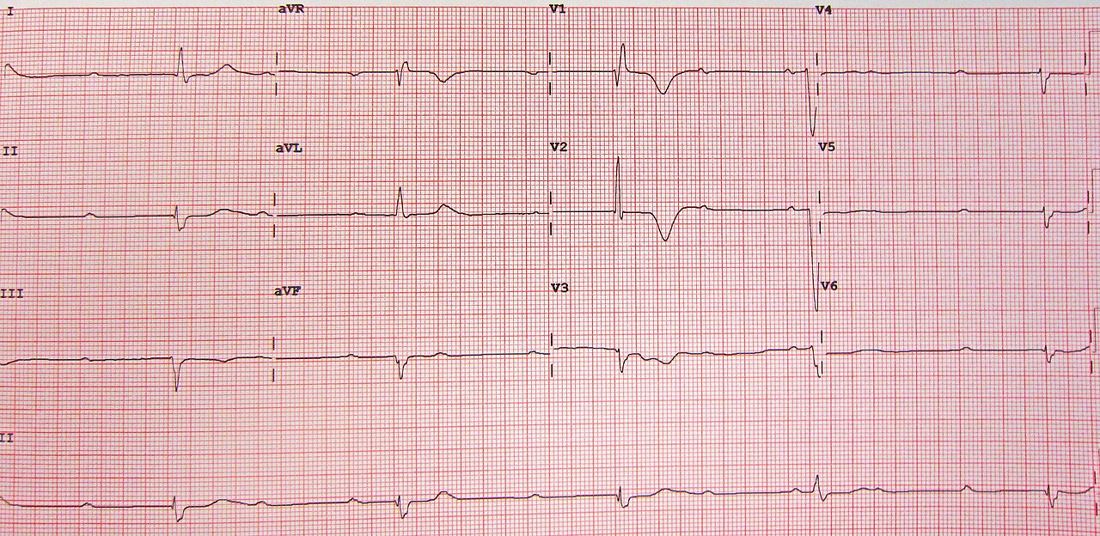
The site of block predicts the response to atropine. Atropine works on vagal tone at the sinus and AV nodes. It does little for block in the His-Purkinje system.1,3
| Rhythm | Usual site | Atropine | Plan |
|---|---|---|---|
| Sinus bradycardia, sinus pauses | Sinus node | Reasonable (IIa) | Treat the cause; atropine if symptomatic.1 |
| Mobitz I (Wenckebach), narrow QRS | AV node | Reasonable (IIa) | Treat if symptomatic.1 |
| Mobitz II | Below the AV node in most cases; about 75% have a wide QRS | Unreliable | Admit to monitoring with backup pacing.8,3 |
| Third-degree (complete) block | AV node or below | More likely to help if the block evolved from Mobitz I; unreliable with a wide QRS | Treat the cause; adrenergic drug or pacing if unstable.9,3,1 |
Drawn for this page. The guideline notes the AV node is the more likely site with Mobitz I and a narrow QRS, or with a very long PR (over 0.30 s) and a narrow QRS.1 The ECG is only a guide to the level of block.
Treatment
| Agent | Adult dose | Notes |
|---|---|---|
| 1 · First line | ||
| Atropine | 0.5–1 mg IV every 3–5 min, max 3 mg | Class IIa for sinus or AV-nodal bradycardia. The label gives 0.5 mg IV, max 3 mg. Not after heart transplant.1,3 |
| 2 · Adrenergic infusions (if low likelihood of coronary ischemia) | ||
| Epinephrine | 2–10 mcg/min IV, titrated | Class IIb.1 |
| Dopamine | 5–20 mcg/kg/min IV; start at 5, increase by 5 every 2 min | Above 20 mcg/kg/min may cause vasoconstriction or arrhythmias.1 |
| Isoproterenol | 1–20 mcg/min IV infusion, by heart rate | Watch for ischemic chest pain.1 |
| 3 · Pacing | ||
| Transcutaneous | Bridge only | Class IIb. Confirm mechanical capture.1,5 |
| Transvenous | — | Class IIa for instability refractory to medical therapy.1 |
Unreviewed doses. Verify against the current label and your institution's protocol before giving anything.
The starting atropine dose differs. The 2018 guideline gives 0.5–1 mg, while the FDA label gives 0.5 mg IV.1,3 A 2025 scoping review found no trial comparing 0.5 mg with 1 mg and no consistent link between dose and response.10
Atropine
- In 131 prehospital patients with unstable bradycardia or AV block, 27.5% had a complete response, 19.8% a partial response, and 49.6% none. Adverse responses were uncommon (4 patients).2
- Patients with sinus or junctional bradycardia more often responded to a single, lower dose than patients with AV block.2
- In acute MI with symptomatic sinus bradycardia or AV-nodal block, atropine is reasonable (Class IIa).1
- After heart transplant without reinnervation, atropine should not be used (Class III: Harm). The label says it has no effect on a transplanted heart.1,3
Adrenergic drugs or pacing?
- The only randomized comparison is a feasibility trial. In 82 unstable patients who failed atropine and fluid, survival to discharge or 30 days was 70% with dopamine and 69% with transcutaneous pacing. A definitive trial would need about 690 patients per arm.11
- In a single-center series of unstable third-degree block, isoproterenol gave a satisfactory response in 84% vs 31% with dopamine.12
- The 2025 AHA guideline, as summarized, puts atropine first and transcutaneous pacing next if atropine fails. Transvenous pacing, with expert consultation, is reasonable when bradycardia persists.13,4
Pacing
- Transcutaneous pacing is a bridge to transvenous or permanent pacing, or until the bradycardia resolves (Class IIb).1
- Check that capture is real. In an EMS series, 19 of 23 patients had false electrical capture even though a pulse was documented. Those with true capture had a median systolic rise of 40 mm Hg; those without, −1 mm Hg.5
- Transvenous pacing is reasonable for instability refractory to medical therapy (Class IIa).1 Preferred sites are the right internal jugular and left subclavian veins. Ultrasound can guide and confirm lead position.14
- In a meta-analysis of 6 observational studies (2,267 patients), jugular access had fewer catheter infections than femoral (RR 0.25). Bleeding and perforation did not differ significantly.15
Reversible causes
- Drugs: beta-blockers, nondihydropyridine calcium channel blockers, digoxin, antiarrhythmics, clonidine, lithium and others.1
- Electrolytes and metabolic: hyperkalemia, hypokalemia, hypoglycemia, acidosis, hypoxemia, hypothermia, hypothyroidism.1 In severe hyperkalemia, a heart rate under 50 strongly predicted adverse events within 6 hours (RR 12.3).16
- Ischemia: acute MI, especially with AV block.1,7
- Infection: Lyme carditis, endocarditis with abscess, and others.1
- Autonomic: high vagal tone, sleep apnea, athletic training.1
BRASH syndrome
Bradycardia, Renal failure, AV-nodal blockade, Shock, Hyperkalemia. Hyperkalemia and AV-nodal blockers act together, so the bradycardia is worse than either would cause alone. Hypovolemia, or a drug that raises potassium or injures the kidney, often starts the spiral. Treat both at once: fluids, hyperkalemia therapy (IV calcium, insulin-glucose, beta agonists, diuresis), and an epinephrine infusion if needed.17
Lyme carditis
Lyme carditis usually presents as high-degree AV block and usually resolves with antibiotics. In a systematic review, 6 of 11 patients who got a permanent pacemaker later had their block reverse with antibiotics. The COSTAR features suggest it: constitutional symptoms, outdoor activity, male sex, tick bite, age under 50, and erythema migrans rash.18
Toxic bradycardia
| Cause | Treatment | Adult dose |
|---|---|---|
| Calcium channel blocker | IV calcium (Class IIa) | Calcium chloride 10% 1–2 g IV every 10–20 min, or calcium gluconate 10% 3–6 g IV every 10–20 min1 |
| Beta-blocker or calcium channel blocker | Glucagon (Class IIa) | 3–10 mg IV, then 3–5 mg/h1 |
| Beta-blocker or calcium channel blocker | High-dose insulin (Class IIa) | 1 unit/kg IV, then 0.5 units/kg/h; follow glucose and potassium1 |
| Digoxin | Digoxin Fab (Class IIa) | Dose by amount ingested or level; one vial binds about 0.5 mg of digoxin1 |
Unreviewed doses. Verify against the current label and your institution's protocol before giving anything.
- Dialysis is not recommended to remove digoxin (Class III: No Benefit).1
- For calcium channel blocker poisoning, an expert panel lists IV calcium, high-dose insulin, and norepinephrine or epinephrine as first-line. When first-line treatment fails, it suggests a pacemaker for unstable bradycardia or high-grade block if heart contractility is not badly impaired.19
Special situations
- Acute inferior MI with second- or third-degree AV block: aminophylline may be considered (Class IIb), 250 mg IV bolus.1
- After heart transplant: aminophylline or theophylline is reasonable (Class IIa). Aminophylline dose: 6 mg/kg in 100–200 mL over 20–30 min.1
- Acute spinal cord injury: aminophylline or theophylline is reasonable (Class IIa), same aminophylline dose.1
Disposition
- Reversible cause such as Lyme carditis or drug toxicity: give medical therapy and supportive care, including temporary pacing if needed, before deciding on a permanent pacemaker (Class I).1
- Mobitz II: admit for cardiac monitoring with backup pacing, and expect a permanent pacemaker.8
- New LBBB, Mobitz II, high-grade or third-degree block: transthoracic echocardiography is recommended (Class I).1
- Don't assume the drug explains the block. In one series, AV block resolved after stopping the drug in 41% of patients, but 56% of those had it again off the drug.6 In another, about half of patients with drug-related AV block ended up with a permanent pacemaker.20
Pitfalls
- Repeating atropine for a wide-complex escape rhythm instead of moving on to an infusion or pacing.3,1
- Giving atropine after heart transplant.1
- Trusting pacing spikes on the monitor without checking a pulse and blood pressure.5
- Missing hyperkalemia, or BRASH in a patient on AV-nodal blockers with kidney injury.16,17
- Sending a young patient with high-degree block for a permanent pacemaker without thinking of Lyme disease.18
- Pacing a stable patient with minimal symptoms.1
How strong is the evidence?
Most acute recommendations are Class IIa or IIb and rest on limited data (levels C-LD and B-NR).1 Atropine data are retrospective, and there is no trial comparing 0.5 mg with 1 mg.2,10 The only randomized trial of pacing vs dopamine was a feasibility study.11
On-shift teaching
Questions to ask a learner at the bedside. Tap a question to see the answer. Every answer uses facts cited above.
Q1Why might atropine fail in third-degree block with a wide QRS?
Q2In the prehospital atropine study, how often did patients respond?
Q3Which patients should never get atropine for bradycardia?
Q4The monitor shows pacing spikes followed by wide complexes. Is the patient captured?
Q5What does BRASH stand for, and why does it matter?
Q6A patient on metoprolol has complete heart block. Will stopping the drug fix it?
References
- 1Kusumoto FM, Schoenfeld MH, Barrett C, et al. 2018 ACC/AHA/HRS Guideline on the Evaluation and Management of Patients With Bradycardia and Cardiac Conduction Delay: Executive Summary. Circulation. 2019;140(8):e333–e381.
- 2Brady WJ, Swart G, DeBehnke DJ, Ma OJ, Aufderheide TP. The efficacy of atropine in the treatment of hemodynamically unstable bradycardia and atrioventricular block: prehospital and emergency department considerations. Resuscitation. 1999;41(1):47–55.
- 3Atropine sulfate injection. FDA prescribing information (RemedyRepack). DailyMed.
- 4McKinnon M. 2025 AHA Guidelines Update: Key Changes in CPR and ECC. EM Ottawa Blog; January 8, 2026.
- 5Kimbrell J, Kreinbrook J, Poke D, et al. False electrical capture in prehospital transcutaneous pacing by paramedics: a case series. Prehosp Emerg Care. 2024;28(7):928–936.
- 6Zeltser D, Justo D, Halkin A, et al. Drug-induced atrioventricular block: prognosis after discontinuation of the culprit drug. J Am Coll Cardiol. 2004;44(1):105–108.
- 7Swart G, Brady WJ Jr, DeBehnke DJ, Ma OJ, Aufderheide TP. Acute myocardial infarction complicated by hemodynamically unstable bradyarrhythmia: prehospital and ED treatment with atropine. Am J Emerg Med. 1999;17(7):647–652.
- 8Burns E, Buttner R. AV block: 2nd degree, Mobitz II (Hay block). Life in the Fast Lane ECG library.
- 9Larkin J, Buttner R. AV block: 3rd degree (complete heart block). Life in the Fast Lane ECG library.
- 10Yokose M, Sangawa M, Shiomi H, et al. Initial dose of intravenous atropine for patients with symptomatic bradycardia: a scoping review. Circ Rep. 2025;7(11):1044–1050.
- 11Morrison LJ, Long J, Vermeulen M, et al. A randomized controlled feasibility trial comparing safety and effectiveness of prehospital pacing versus conventional treatment: 'PrePACE'. Resuscitation. 2008;76(3):341–349.
- 12De Lazzari M, Martini N, Migliore F, et al. Efficacy and safety of isoprenaline during unstable third-degree atrioventricular block. J Cardiovasc Dev Dis. 2023;10(12):475.
- 13Wigginton JG, Agarwal S, Bartos JA, et al. Part 9: Adult Advanced Life Support: 2025 American Heart Association Guidelines for Cardiopulmonary Resuscitation and Emergency Cardiovascular Care. Circulation. 2025;152(16 Suppl 2):S538–S577.
- 14Long B, Bridwell RE, DeVivo A, Gottlieb M. Transvenous pacemaker placement: a review for emergency clinicians. J Emerg Med. 2024;66(4):e492–e502.
- 15Pereira RA, Barcellos G, Lenz G, et al. Complications of temporary transvenous cardiac pacing by access site: a systematic review and meta-analysis. Pacing Clin Electrophysiol. 2026;49(8):1100–1107.
- 16Durfey N, Lehnhof B, Bergeson A, et al. Severe hyperkalemia: can the electrocardiogram risk stratify for short-term adverse events? West J Emerg Med. 2017;18(5):963–971.
- 17Farkas JD, Long B, Koyfman A, Menson K. BRASH syndrome: bradycardia, renal failure, AV blockade, shock, and hyperkalemia. J Emerg Med. 2020;59(2):216–223.
- 18Besant G, Wan D, Yeung C, et al. Suspicious index in Lyme carditis: systematic review and proposed new risk score. Clin Cardiol. 2018;41(12):1611–1616.
- 19St-Onge M, Anseeuw K, Cantrell FL, et al. Experts consensus recommendations for the management of calcium channel blocker poisoning in adults. Crit Care Med. 2017;45(3):e306–e315.
- 20Osmonov D, Erdinler I, Ozcan KS, et al. Management of patients with drug-induced atrioventricular block. Pacing Clin Electrophysiol. 2012;35(7):804–810.
AI-generated draft. Not reviewed by a physician. This page is for education only and may contain errors, including in doses. Do not use it to diagnose, treat or make decisions about any patient. Rely on your own clinical judgment, your institution's protocols and current drug labeling. Reading this page does not create a physician-patient relationship. Full terms