Subarachnoid hemorrhage
Bottom line
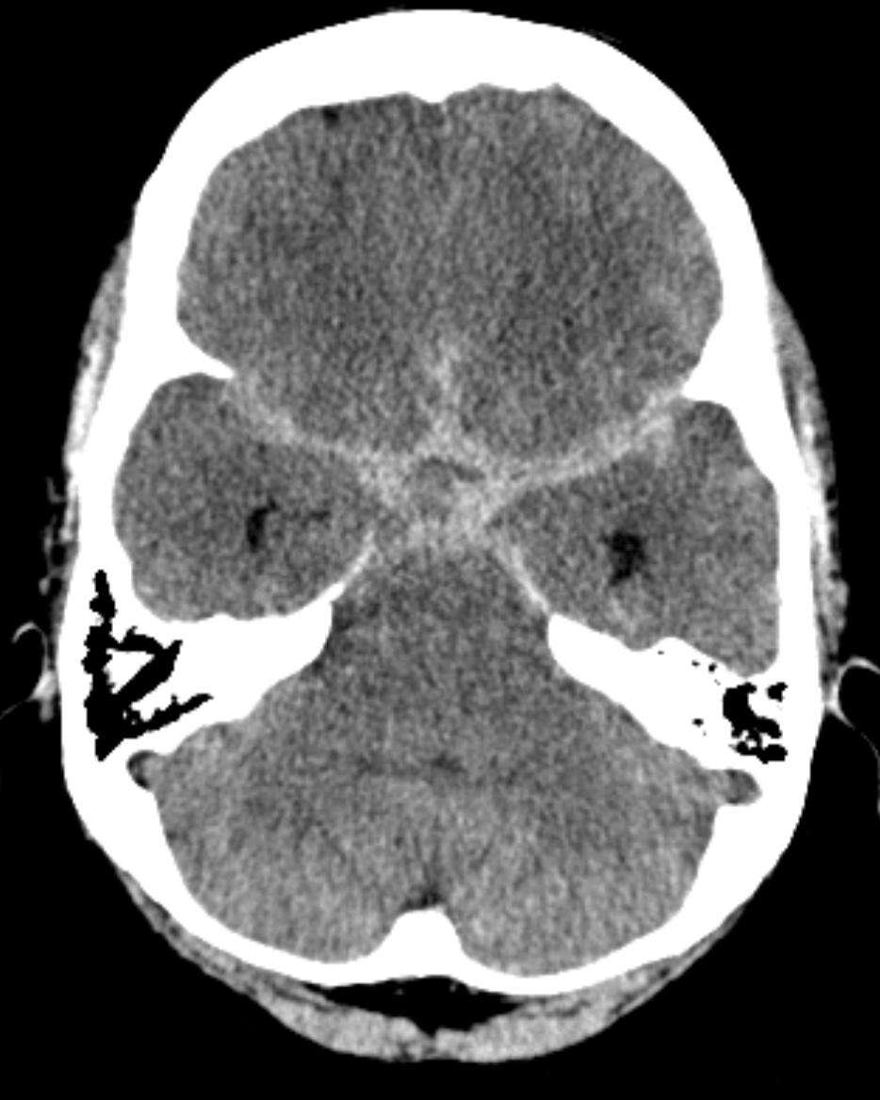
- Think SAH for any sudden, severe headache that peaks within an hour. In an Ontario study, 5.4% of SAH patients had been missed at an earlier ED visit. Patients triaged as low acuity were missed more often.1,2
- The Ottawa SAH Rule rules out, it does not rule in. It applies only to alert patients with a normal neurologic exam. In three cohorts it caught every SAH, but specificity was only 7.6–15.3%.3,4,5,6
- A normal CT within 6 hours of onset can rule out SAH if the patient is neurologically intact and the scan is good quality and read by an expert.3,1 After 6 hours, or with a new deficit, add an LP.1
- Before the aneurysm is secured: control blood pressure gradually with short-acting drugs, avoid hypotension, and reverse anticoagulants at once. Routine tranexamic acid does not improve outcome.1,7
- Give oral nimodipine 60 mg every 4 hours, never IV. Transfer early to a high-volume center so the aneurysm can be treated, preferably within 24 hours.1,8
Recognize
- Classic story: a headache that is sudden and reaches its worst within moments. A warning (sentinel) headache comes before the main bleed in 10–43% of cases.1
- How often it is SAH: in ED patients whose headache peaked within an hour, 6–7% had SAH.3 Case fatality is about 40%, and up to 50% in some series.9,3
- Atypical presentations, such as neck pain alone, syncope, seizure, or a new focal deficit, fall outside most CT studies. They still need imaging and a full workup.1
- No single feature rules SAH out. Neck pain or stiffness is strongly associated with SAH, but don't rely on one sign or symptom.3
- Grade severity with the Hunt and Hess or World Federation of Neurosurgical Societies (WFNS) scale. It predicts outcome and helps the conversation with family.1
Ottawa SAH Rule
Use it only in alert patients older than 15 with a new, severe, nontraumatic headache that peaked within 1 hour and a normal neurologic exam.1,3 Don't use it with a new deficit, a prior aneurysm or SAH, a known brain tumor, or recurrent headaches of the same kind (3 or more over more than 6 months).10
| Any one of these means SAH is not ruled out |
|---|
| Age 40 or older |
| Neck pain or stiffness |
| Witnessed loss of consciousness |
| Onset during exertion |
| Thunderclap headache (pain peaks instantly) |
| Limited neck flexion on exam |
Items from the AHA/ASA guideline and the ACEP clinical policy.1,3 ACEP gives the rule a Level B recommendation; AHA/ASA rates it Class 2b.3,1
| Study | Patients (SAH) | Sensitivity | Specificity |
|---|---|---|---|
| Derivation, 10 Canadian EDs | 2,131 (132) | 100% (97.2–100) | 15.3% |
| Prospective validation, 6 EDs | 1,153 (67) | 100% (94.6–100) | 13.6% |
| External validation, Mayo Clinic chart review | 454 (9) | 100% (62.9–100) | 7.6% |
| Implementation study, 6 EDs | 3,672 (188) | 100% (98.1–100) | — |
Sources in row order.4,5,6,11 In the Mayo cohort, only 9% of ED headache visits met the rule's entry criteria.6 With a positive likelihood ratio of about 1.17, a positive rule barely changes the chance of SAH. Use it to stop testing, not to start it.3,12
Diagnostic workup
- Apply the Ottawa SAH Rule if the patient qualifies. If every item is negative, it rules out SAH without further testing.3,1
- Noncontrast head CT for everyone else. Note the time from headache onset to the scan.1
- CT within 6 hours, normal neuro exam, CT normal: SAH is ruled out (ACEP Level B). ACEP asks for at least a third-generation scanner. AHA/ASA (Class 2a) asks for a high-quality scanner and a board-certified neuroradiologist's read.3,1
- CT after 6 hours, or a new deficit, and CT normal: do an LP (AHA/ASA Class 1).1 ACEP accepts either LP or CTA here (Level C) and advises shared decision-making.3
- SAH confirmed: CTA is the usual next test. If concern for an aneurysm stays high and the CTA is negative or unclear, digital subtraction angiography is indicated (Class 1). With diffuse SAH, get it whatever the CTA shows.1
How sensitive is early CT?
- In 3,132 neurologically intact patients, CT found all 121 SAHs among the 953 scanned within 6 hours (sensitivity 100%, 95% CI 97.0–100). Across all times, sensitivity was 92.9%.13
- A meta-analysis of 8,907 patients scanned within 6 hours found 13 missed SAHs, about 1.5 per 1,000. Sensitivity was 98.7%, and the likelihood ratio of a negative CT was 0.010.14
- When the 6-hour CT rule was put into practice prospectively, its sensitivity was 95.5%. It missed 5 SAHs: one radiology misread, two incidental aneurysms, one non-aneurysmal bleed, and one patient with profound anemia.11
Reading the LP
- In 1,739 LPs for possible SAH, 36.9% had red cells in the last tube or xanthochromia, but only 15 patients (0.9%) had aneurysmal SAH.15
- Fewer than 2,000 RBC/mm³ and no xanthochromia excluded aneurysmal SAH: sensitivity 100% (95% CI 74.7–100), specificity 91.2%. The study reported 2,000 × 10⁶/L, which is the same number.15
- Xanthochromia measured by spectrophotometry after a negative or unclear CT was 100% sensitive and 95.2% specific in pooled data from 1,235 patients.1
LP or CTA after a negative CT?
- LP downsides: it takes time, yields little, often is traumatic or hard to interpret, and causes post-LP headache.3
- CTA downsides: it finds incidental aneurysms that can lead to unneeded procedures, adds radiation, and misses other diagnoses an LP might find.3
- CTA looks for vessel lesions, not blood. Its sensitivity is about 97.2%, and only about 61% for ruptured aneurysms under 3 mm. No study has compared CTA with LP as the next test.1
After a negative CT beyond 6 hours, AHA/ASA says an LP should be done (Class 1).1 ACEP lets you choose LP or CTA with the patient (Level C).3 Within 6 hours, both accept CT alone, but AHA/ASA ties this to expert neuroradiology reads.1,3 First10EM argues the 100% figure is too optimistic because many patients never had a reference-standard test.12 The implementation study's 95.5% sensitivity supports that caution.11
First hour after diagnosis
- Grade the patient with Hunt and Hess or WFNS (Class 1).1
- Reverse any anticoagulant at once with the appropriate agent, following standard protocols for life-threatening bleeding (AHA/ASA Class 1).1
- Control blood pressure with short-acting drugs and frequent checks. Avoid severe hypertension, hypotension, and big swings (Class 1).1 Targets are in the next section.
- Start oral nimodipine as soon as possible, within 96 hours of onset.8,1
- Call neurosurgery and neurointerventional radiology, and transfer from a low-volume hospital to a high-volume center with neurocritical care (Class 1).1
- Look for hydrocephalus on the CT. Acute symptomatic hydrocephalus needs urgent CSF drainage (Class 1).1 A large hematoma with a depressed level of consciousness needs emergency evacuation (Class 1).1
Blood pressure before the aneurysm is secured
- AHA/ASA: lower blood pressure gradually when it is severe (above 180–200 mm Hg), and keep the MAP at 65 or higher. Watch the neuro exam while you lower it.1
- AHA/ASA sets no number. Rebleeding was more common with systolic pressures above 160 in a meta-analysis, and older guidelines used under 160 or under 180, but the evidence does not support a specific target.1
- ESO: if systolic pressure stays above 160–180 after analgesia, oral nimodipine and a urinary catheter, consider bringing it to about 160. Use a continuous short-acting infusion such as labetalol, avoid diuretics, and lower MAP by no more than about 10% in the first 2 hours.9
AHA/ASA declines to set a target and focuses on avoiding hypotension and variability.1 ESO suggests a systolic target of about 160 after treating pain and other triggers, as expert opinion on very low-quality evidence.9 Neither has trial evidence that a specific target improves outcome.1,9
| Agent | Adult dose (label) | Notes |
|---|---|---|
| Nicardipine IV infusion | Start 5 mg/h. Increase by 2.5 mg/h every 5–15 min. Max 15 mg/h. | Stop for unacceptable hypotension or tachycardia. Restart at 3–5 mg/h once stable.16 |
| Labetalol IV | 20 mg over 2 min, then 40–80 mg every 10 min. Max total 300 mg. | Can also be given as a slow continuous infusion.17 ESO names labetalol as an infusion option.9 |
Unreviewed doses. Verify against the current label and your institution's protocol before giving anything.
Doses are the FDA label's general hypertension dosing. Neither guideline gives SAH-specific doses.16,17
Medical treatment
| Treatment | Adult dose | Recommendation | Notes |
|---|---|---|---|
| Nimodipine (oral or NG) | 60 mg every 4 hours for 21 days | AHA/ASA Class 1, LOE A; ESO strong | Start as soon as possible, within 96 h. Cirrhosis: 30 mg every 4 hours.8,1,9 |
| Anticoagulant reversal | Per your life-threatening bleeding protocol | AHA/ASA Class 1 (expert opinion) | Not studied in SAH itself; supported by other intracranial bleeding.1 |
| Antiseizure drug, if seizures at presentation | Per protocol | AHA/ASA Class 2a | Up to 7 days. Without prior epilepsy, longer treatment does not cut later seizure risk.1 |
| Seizure prophylaxis, high-risk only | Per protocol | AHA/ASA Class 2b | High risk: MCA aneurysm, high grade, ICH, hydrocephalus, cortical infarct. Without these, prophylaxis has no benefit (Class 3).1 |
| Phenytoin | Avoid | AHA/ASA Class 3: Harm | Excess morbidity and mortality.1 It also lowers nimodipine levels.8 |
| Tranexamic acid, routine | Not recommended | AHA/ASA Class 3: No benefit; ESO strong against | Did not improve functional outcome.1,9,7 |
| Statins, IV magnesium | Not recommended | AHA/ASA Class 3: No benefit | No outcome benefit.1 |
Unreviewed doses. Verify against the current label and your institution's protocol before giving anything.
Nimodipine
- Never give it IV. Injecting capsule contents has caused cardiac arrest, cardiovascular collapse, and death.8
- If the patient can't swallow: pierce the capsule, draw the liquid into an oral syringe labeled "Not for IV use", give it by nasogastric tube, and flush with 30 mL of saline.8
- Evidence: in the British trial (n = 554), cerebral infarction fell from 33% to 22% and poor outcome from 33% to 20%.18 Across 16 trials (n = 3,361), oral nimodipine reduced poor outcome (RR 0.67). Other calcium antagonists and IV nimodipine did not show a significant benefit.19
- Hypotension: keep giving it if standard measures can manage the blood pressure. Pause only if it causes major swings.1
- Interactions: avoid strong CYP3A4 inducers such as phenytoin, carbamazepine, phenobarbital, and rifampin, which can sharply cut its effect.8
Tranexamic acid: the ULTRA trial
ULTRA (n = 955) gave tranexamic acid at the referring hospital right after CT diagnosis, for up to 24 hours. Good outcome at 6 months was 60% with the drug and 64% without. Rebleeding was 10% vs 14%, not statistically significant.7 AHA/ASA notes a short course might still have a role when aneurysm treatment will be delayed, but that is a research question, not a recommendation.1
Volume
Aim for euvolemia (Class 2a). Do not use prophylactic hemodynamic augmentation (Class 3: Harm) or hypervolemia.1
Disposition
- Transfer from low-volume hospitals to high-volume centers with neurocritical care, comprehensive stroke capabilities, and cerebrovascular surgeons or neurointerventionalists (AHA/ASA Class 1).1 ESO suggests centers treating at least 70 SAH patients a year (35 in remote areas).9
- Admit to a dedicated neurocritical care unit with a multidisciplinary team (Class 1).1
- Aneurysm treatment should happen as early as feasible, preferably within 24 hours of onset (AHA/ASA Class 1).1 ESO suggests the same window as expert consensus, provided the most experienced team is available.9
- Coiling vs clipping is a specialist decision. ESO recommends coiling when both suit a patient in good clinical condition (WFNS I–III).9
Pitfalls
- Being reassured by a well-looking patient. Low-acuity triage more than doubled the odds of a missed SAH (OR 2.65).2
- Applying the Ottawa rule to patients it excludes, such as those with recurrent similar headaches or a new deficit.10,12
- Trusting a normal CT done more than 6 hours after onset. Across all scan times, CT sensitivity was 92.9%, against 100% within 6 hours.13
- Trusting early CT in a patient with severe anemia. Anemia caused one of the misses in the implementation study.11
- Ordering nimodipine IV, or drawing it up in a needle-compatible syringe.8
- Dropping blood pressure fast. Sudden, profound reductions should be avoided.1
- Loading phenytoin for seizure prophylaxis.1
How strong is the evidence?
The diagnostic rules rest on large prospective Canadian cohorts, but the external validation was small (9 SAHs).4,5,6 Nimodipine is the only drug with high-quality evidence of benefit (AHA/ASA LOE A).1,19 Blood pressure targets and anticoagulant reversal rest on expert opinion.1 ESO judged that most of its questions had low, very low or no evidence.9
On-shift teaching
Questions to ask a learner at the bedside. Tap a question to see the answer. Every answer uses facts cited above.
Q1Name the six items of the Ottawa SAH Rule, and who it applies to.
Q2Why can't a positive Ottawa rule be used to decide who has SAH?
Q3A neurologically intact patient had a normal CT 4 hours after onset. Is SAH ruled out?
Q4What LP result reasonably excludes aneurysmal SAH?
Q5What is the nimodipine dose, and what is the deadly error to avoid?
References
- 1Hoh BL, Ko NU, Amin-Hanjani S, et al. 2023 Guideline for the Management of Patients With Aneurysmal Subarachnoid Hemorrhage: a guideline from the American Heart Association/American Stroke Association. Stroke. 2023;54(7):e314–e370.
- 2Vermeulen MJ, Schull MJ. Missed diagnosis of subarachnoid hemorrhage in the emergency department. Stroke. 2007;38(4):1216–1221.
- 3American College of Emergency Physicians Clinical Policies Subcommittee on Acute Headache; Godwin SA, Cherkas DS, Panagos PD, et al. Clinical policy: critical issues in the evaluation and management of adult patients presenting to the emergency department with acute headache. Ann Emerg Med. 2019;74(4):e41–e74.
- 4Perry JJ, Stiell IG, Sivilotti ML, et al. Clinical decision rules to rule out subarachnoid hemorrhage for acute headache. JAMA. 2013;310(12):1248–1255.
- 5Perry JJ, Sivilotti MLA, Sutherland J, et al. Validation of the Ottawa Subarachnoid Hemorrhage Rule in patients with acute headache. CMAJ. 2017;189(45):E1379–E1385.
- 6Bellolio MF, Hess EP, Gilani WI, et al. External validation of the Ottawa subarachnoid hemorrhage clinical decision rule in patients with acute headache. Am J Emerg Med. 2015;33(2):244–249.
- 7Post R, Germans MR, Tjerkstra MA, et al. Ultra-early tranexamic acid after subarachnoid haemorrhage (ULTRA): a randomised controlled trial. Lancet. 2021;397(10269):112–118.
- 8Nimodipine capsules, liquid filled (Bionpharma). FDA prescribing information, DailyMed.
- 9Vergouwen MDI, Ramos-Pachon A, Terecoasa EO, et al. European Stroke Organisation (ESO), European Association of Neurosurgical Societies (EANS) and European Society for Minimally Invasive Neurological Therapy (ESMINT) guideline on aneurysmal subarachnoid haemorrhage. Eur Stroke J. 2026;11(5):aakag043.
- 10MDCalc. Ottawa Subarachnoid Hemorrhage (SAH) Rule for Headache Evaluation (entry and exclusion criteria only).
- 11Perry JJ, Sivilotti MLA, Émond M, et al. Prospective implementation of the Ottawa Subarachnoid Hemorrhage Rule and 6-Hour Computed Tomography Rule. Stroke. 2020;51(2):424–430.
- 12Morgenstern J. Subarachnoid hemorrhage: what is the role of LP? First10EM; September 2020, updated December 2023.
- 13Perry JJ, Stiell IG, Sivilotti ML, et al. Sensitivity of computed tomography performed within six hours of onset of headache for diagnosis of subarachnoid haemorrhage: prospective cohort study. BMJ. 2011;343:d4277.
- 14Dubosh NM, Bellolio MF, Rabinstein AA, Edlow JA. Sensitivity of early brain computed tomography to exclude aneurysmal subarachnoid hemorrhage: a systematic review and meta-analysis. Stroke. 2016;47(3):750–755.
- 15Perry JJ, Alyahya B, Sivilotti ML, et al. Differentiation between traumatic tap and aneurysmal subarachnoid hemorrhage: prospective cohort study. BMJ. 2015;350:h568.
- 16Nicardipine hydrochloride in sodium chloride injection (WG Critical Care). FDA prescribing information, DailyMed.
- 17Labetalol hydrochloride injection (Hospira). FDA prescribing information, DailyMed.
- 18Pickard JD, Murray GD, Illingworth R, et al. Effect of oral nimodipine on cerebral infarction and outcome after subarachnoid haemorrhage: British aneurysm nimodipine trial. BMJ. 1989;298(6674):636–642.
- 19Dorhout Mees SM, Rinkel GJ, Feigin VL, et al. Calcium antagonists for aneurysmal subarachnoid haemorrhage. Cochrane Database Syst Rev. 2007;(3):CD000277.
- 20Emergency Medicine Cases. Subarachnoid hemorrhage. Further reading; not used for any claim above.
AI-generated draft. Not reviewed by a physician. This page is for education only and may contain errors, including in doses. Do not use it to diagnose, treat or make decisions about any patient. Rely on your own clinical judgment, your institution's protocols and current drug labeling. Reading this page does not create a physician-patient relationship. Full terms