Aortic dissection
Bottom line
- Score it. ADD-RS counts how many of three categories are present: predisposing conditions, high-risk pain, high-risk exam findings (0–3).5
- ADD-RS 2–3: go straight to CT angiography. ADD-RS 0–1: a D-dimer under 500 ng/mL makes dissection unlikely, but the combined pathway is not yet externally validated.3,5
- Rate first, then pressure. IV beta-blocker to a heart rate of 60–80 and systolic BP under 120 (or the lowest that keeps organs perfused). Add a vasodilator only if BP stays high.2
- Type A is a surgical emergency. Call cardiac surgery immediately (Class 1). Stable patients may do better transferred to a high-volume aortic center (Class 2a).1
- Uncomplicated type B is medical. Intervene for rupture, malperfusion, extension, enlargement, intractable pain or uncontrolled hypertension.2
Recognize: ADD-RS
| Category (1 point if any present) | Features |
|---|---|
| High-risk conditions | Marfan or other connective tissue disease; family history of aortic disease; known aortic valve disease; recent aortic manipulation; known thoracic aortic aneurysm |
| High-risk pain | Chest, back or abdominal pain that is abrupt and/or severe, and tearing, ripping or sharp |
| High-risk exam | Pulse deficit, systolic BP differential, or focal neurological deficit (with pain); new aortic regurgitation murmur (with pain); hypotension or shock |
The score is the number of categories present, not the number of features. A score of 0 lowers the probability substantially but does not exclude dissection.5
Ruling out
- ADD-RS 2–3: proceed directly to CT angiography or other definitive imaging.5
- ADD-RS 0–1: check a D-dimer. Under 500 ng/mL, consider stopping the dissection workup. At or above 500, image.5
What ADvISED showed (1,850 patients)
Imaging and classification
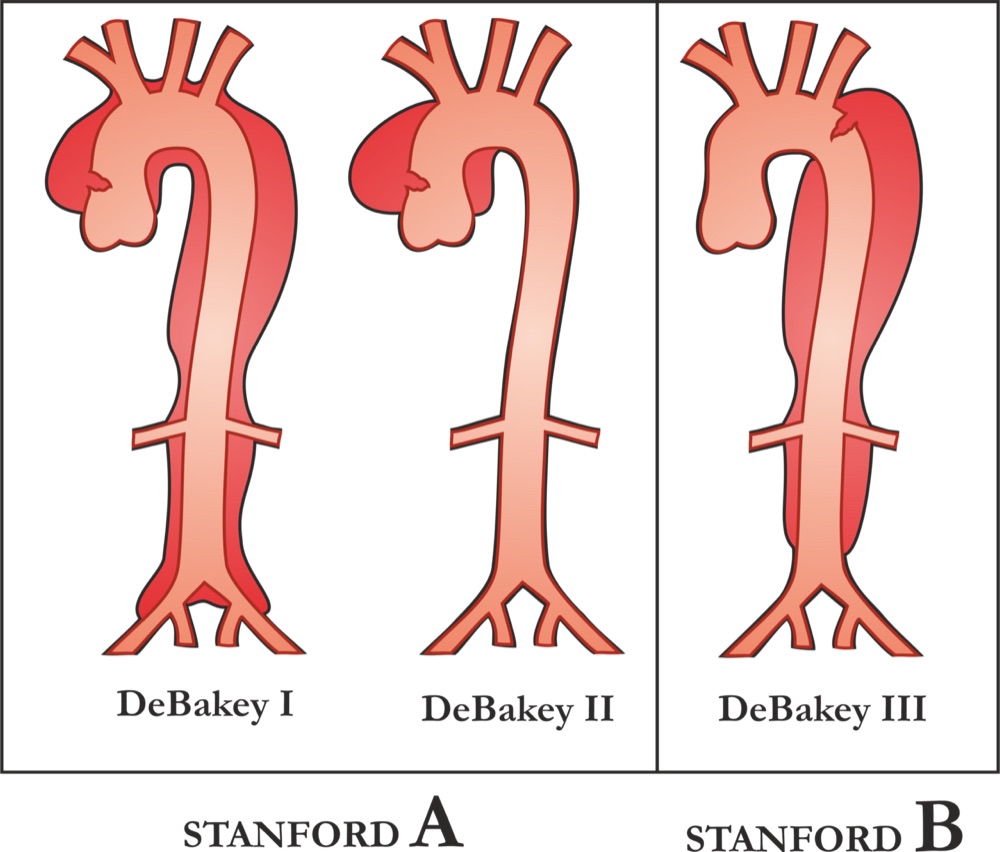
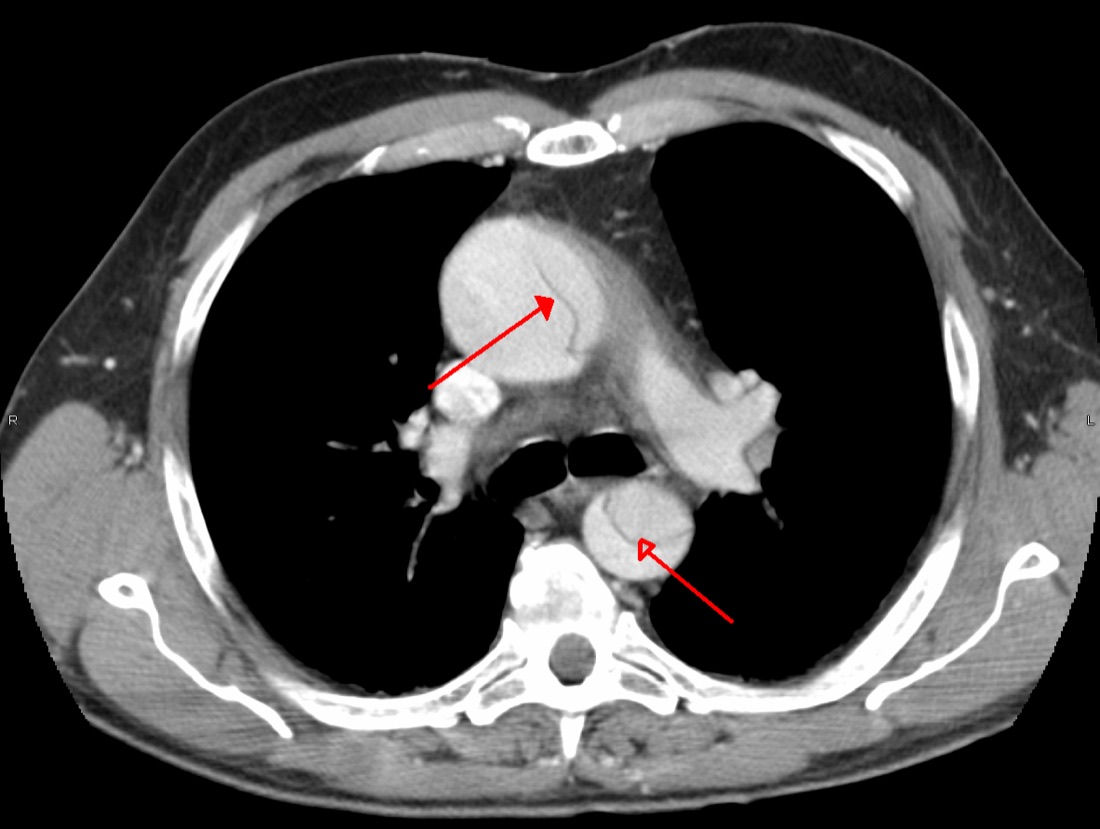
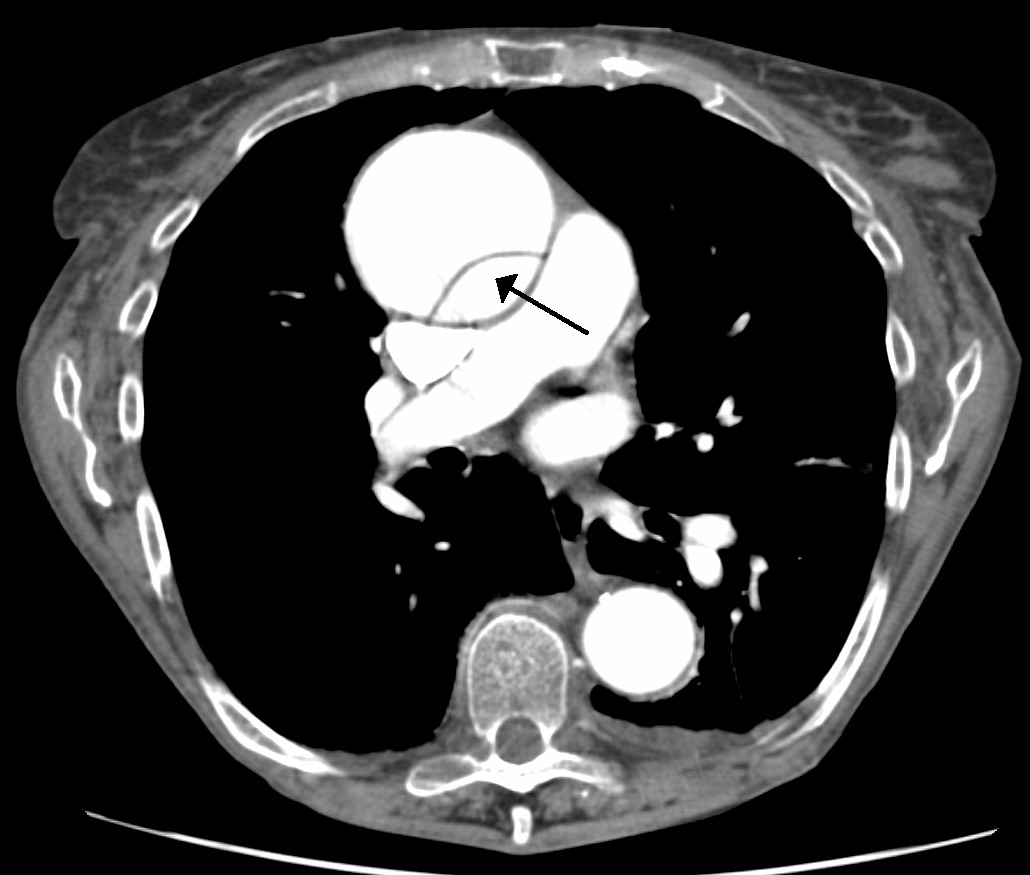
CT has become the main diagnostic test. In over 7,300 registry patients from more than 51 sites in 12 countries, CT use rose over 20 years, along with surgery for type A and endovascular repair for type B.4
Initial management
| Goal | Target or action |
|---|---|
| Heart rate | 60–80 bpm |
| Systolic BP | < 120 mm Hg, or the lowest that maintains end-organ perfusion |
| First line | IV beta-blocker, unless contraindicated |
| BP still high | Add a vasodilator after the beta-blocker |
| Pain | Treat it; pain control is part of initial therapy |
Targets from the ACC summary of the 2022 ACC/AHA guideline.2 The guideline frames immediate medical therapy as aggressive heart rate and blood pressure control plus pain control, alongside surgical evaluation.1
- Labetalol (label): 20 mg slow IV over 2 minutes, then 40–80 mg every 10 minutes as needed, up to 300 mg total. A continuous infusion is the alternative.6
- Esmolol is a short-acting, titratable IV option. Dose per your institutional protocol and the product label.
Type A
- Emergency surgical consultation and immediate repair when type A is suspected or confirmed (Class 1).1
- Malperfusion of the kidneys, gut or legs: immediate operative repair.2
- Transfer: for clinically stable patients, transfer from a low-volume to a high-volume aortic center is reasonable to improve survival (Class 2a).1
- Type A intramural hematoma: prompt surgical repair, even if uncomplicated.2
Type B
- Uncomplicated: medical therapy first.2
- Complicated, intervene for: rupture, branch-artery occlusion with malperfusion, extension of the dissection, progressive aortic enlargement, intractable pain, or uncontrolled hypertension.2
- Rupture with suitable anatomy: endovascular stent-graft over open repair.2
- Type B intramural hematoma: medical therapy if uncomplicated; urgent repair with malperfusion, periaortic hematoma, tamponade, refractory pain or rupture.2
- Penetrating aortic ulcer: urgent repair with rupture, or in the ascending aorta with hematoma; repair if pain persists.2
Disposition and follow-up
Pitfalls
- Starting a vasodilator before the beta-blocker.2
- Using a D-dimer to rule out dissection when ADD-RS is 2–3.5
- Treating ADD-RS 0 alone as a rule-out.5
- Delaying the surgical call for a suspected type A while workup continues.1
- Missing malperfusion: check pulses, neurology, gut and kidneys, since malperfusion changes the timing of repair.2
How strong is the evidence?
Management recommendations come from the 2022 ACC/AHA guideline, largely based on registry and observational data.1,4 The guideline's full text was not retrievable for this draft, so targets come from the ACC's official summary and quoted guideline statements; each is cited.1,2 The rule-out pathway rests on one large prospective study.3 For podcast-style review, see Emergency Medicine Cases.7
On-shift teaching
Questions to ask a learner at the bedside. Tap a question to see the answer. Every answer uses facts cited above.
Q1How is the ADD-RS scored?
Q2ADD-RS is 1 and the D-dimer is 320 ng/mL. What next?
Q3What are the heart rate and blood pressure targets, and which drug goes first?
Q4What separates Stanford A from B, and why does it matter?
Q5What makes a type B dissection "complicated"?
Q6A stable type A arrives at a hospital without aortic surgery. What's the move?
References
- 1Isselbacher EM, et al. 2022 ACC/AHA Guideline for the Diagnosis and Management of Aortic Disease. Circulation. 2022;146(24):e334–e482.
- 2American College of Cardiology. 2022 ACC/AHA Aortic Disease Guideline Key Perspectives: Part 2 of 2.
- 3Nazerian P, Mueller C, Soeiro AM, et al. Diagnostic accuracy of the aortic dissection detection risk score plus D-dimer for acute aortic syndromes: the ADvISED prospective multicenter study. Circulation. 2018;137(3):250–258.
- 4Evangelista A, Isselbacher EM, Bossone E, et al. Insights from the International Registry of Acute Aortic Dissection: a 20-year experience of collaborative clinical research. Circulation. 2018;137(17):1846–1860.
- 5Rogers J, Hayes J. Aortic Dissection Detection Risk Score (ADD-RS). Life in the Fast Lane; June 12, 2025.
- 6Labetalol hydrochloride injection prescribing information (Hospira). DailyMed, US National Library of Medicine.
- 7Emergency Medicine Cases. Aortic dissection. Further reading; not used for any claim above.
AI-generated draft. Not reviewed by a physician. This page is for education only and may contain errors, including in doses. Do not use it to diagnose, treat or make decisions about any patient. Rely on your own clinical judgment, your institution's protocols and current drug labeling. Reading this page does not create a physician-patient relationship. Full terms