Alcohol withdrawal
Bottom line
- Medicate moderate and severe withdrawal early. Benzodiazepines are first-line.1 In a meta-analysis they cut delirium by 4.9 and seizures by 7.7 cases per 100 patients.2
- After an alcohol-related seizure, give a benzodiazepine. In an ED trial, 2 mg of IV lorazepam cut second seizures within 6 hours from 24% to 3%.3
- CIWA-Ar grades severity. It does not make the diagnosis. It is a 10-item scale.4 Other illnesses raise the score, and it relies on what the patient reports, so don't use it in delirium.1
- Phenobarbital is a reasonable ED option, on weak evidence. SAEM suggests adding it to benzodiazepines for admitted patients with moderate to severe withdrawal.5 A meta-analysis of ED studies found no difference in ICU or hospital admission.6
- Give thiamine, but never delay glucose for it. Thiamine and glucose can go in either order.1 Among 120 intoxicated veterans given dextrose before thiamine, none developed Wernicke encephalopathy.7
Time course
Symptoms usually start 6–24 hours after the patient stops or cuts down drinking. Early signs include anxiety, poor sleep, headache, nausea, sweating, tachycardia, hypertension and brisk reflexes. Patients don't always move through the stages in order: a seizure can come with few other signs, and older adults may follow a different timeline.1
When delirium starts: the ASAM guideline says 72–96 hours after the last drink in one passage, and typically 24–48 hours (up to 3–5 days) in another.1 LITFL puts seizures at about 48 hours and delirium after 48 hours.8 Treat the timeline as a rough guide, and don't let "too early" or "too late" talk you out of delirium.
First hour
- Ask when the patient last drank, and how much and how often. Ask about past seizures, past delirium and other sedatives. Family and friends can fill gaps.1
- Look for mimics and passengers. Rule out other serious illness. In delirium, look for every cause, not just alcohol. A seizure needs a neurological exam.1
- Grade severity with CIWA-Ar if the patient can talk to you, or RASS or CAM-ICU if delirious (table below).1
- Severe withdrawal or high risk: give medication now. That reduces the risk of seizures and delirium.1 Don't wait for labs.1
- Send a CBC and a metabolic panel with liver tests and magnesium. Check pregnancy in anyone who could be pregnant.1
- Give thiamine. IV or IM is preferred for poorly nourished patients and severe withdrawal.1
Severity and risk
Bands from the ASAM guideline. It calls withdrawal complicated when there is a seizure, confusion, clouded sensorium or new hallucinations, whatever the score. ASAM notes that cut-offs vary widely across studies, and clinical judgment decides.1
Who is at risk of severe or complicated withdrawal
- Strongest factors: past withdrawal delirium or seizure, many previous withdrawal episodes, a seizure in this episode, marked autonomic hyperactivity on arrival, age over 65, long heavy drinking, a serious medical or surgical illness (especially traumatic brain injury), and dependence on benzodiazepines or barbiturates.1
- Other factors: other substance use, withdrawal signs while the blood alcohol is still positive, and an active psychiatric disorder. Risk climbs as factors add up.1
- A positive blood alcohol neither rules withdrawal in nor out.1
- In 246 trauma patients with withdrawal, 11% progressed to delirium. An initial CIWA-Ar of 10 or more (OR 6.05) and age 55 or older (OR 3.24) predicted it. Mortality was 11.1% in those who developed delirium.9
- PAWSS predicts complicated withdrawal before symptoms start. In 403 medical and surgical inpatients, a score of 4 or more had 93.1% sensitivity and 99.5% specificity.10 ASAM lists it as a helpful tool for hospitalized patients.1
Treatment
| Agent | Adult dose | Use | Notes |
|---|---|---|---|
| Benzodiazepines (first-line) | |||
| Diazepam | Front loading: 20 mg every hour until CIWA-Ar < 10, or every hour for 1–2 hours | Severe withdrawal | Long-acting, so it tapers itself. Preferred for front loading with chlordiazepoxide.1 Label: 10 mg PO 3–4 times in the first 24 h; some patients need more.11 |
| Chlordiazepoxide | 25–100 mg PO every 4–6 h when CIWA-Ar ≥ 10. Front loading: 50–100 mg PO every 1–2 h | Symptom-triggered or front loading | Label: 50–100 mg PO first, repeated until agitation is controlled, up to 300 mg/day.1,12 |
| Lorazepam | Per institutional protocol and label | After a seizure | ASAM names it as a fast-acting choice after a seizure.1 |
| Phenobarbital (teams experienced with it) | |||
| Phenobarbital, adjunct | 10 mg/kg IV over 30 min, once | Added to benzodiazepines in the ED | Narrow therapeutic window. Watch for oversedation and respiratory depression.1 |
| Phenobarbital, alone | 260 mg IV, then 130 mg IV every 30 min at the physician's discretion | Alternative to benzodiazepines | ASAM's example ED regimen.1 |
| Supportive | |||
| Thiamine | 100 mg IV/IM daily for 3–5 days | All patients treated for withdrawal | Prevents Wernicke encephalopathy. Give it with glucose in either order.1 |
| Magnesium | Per institutional protocol | Low magnesium, arrhythmia, electrolyte problems, past withdrawal seizure | No evidence it treats withdrawal itself.1 |
Unreviewed doses. Verify against the current label and your institution's protocol before giving anything.
Doses are the guideline's example regimens, plus FDA label text where it exists.1,11,12 Front loading means giving moderate to high doses of a long-acting benzodiazepine early, then letting it wear off on its own. With signs of significant liver disease, ASAM advises a benzodiazepine with less liver metabolism.1
The diazepam label suggests 10 mg 3–4 times in the first 24 hours.11 ASAM's front-loading example is 20 mg every hour until symptoms settle.1 For severe withdrawal, ASAM recommends front loading.1 Delirium can need doses much higher than usual, and ASAM tells clinicians not to hold back while watching for oversedation.1
Symptom-triggered dosing
- ASAM prefers symptom-triggered dosing for inpatients, with fixed-schedule dosing if that isn't possible.1
- In a 101-patient randomized trial, symptom-triggered chlordiazepoxide meant a median of 9 hours of treatment instead of 68, and 100 mg instead of 425 mg. Severity, seizures and delirium did not differ.13
- Scoring only works if someone reassesses: every 1–4 hours for the first 24 hours in moderate to severe withdrawal.1
Phenobarbital in the ED
- Adjunct RCT (n = 102): a single 10 mg/kg IV dose added to a lorazepam protocol cut ICU admission from 25% to 8%, with no difference in adverse events.14
- Head-to-head RCT (n = 44): phenobarbital and lorazepam worked about equally for mild to moderate withdrawal, in the ED and at 48 hours.15
- Meta-analysis (8 studies, 1,507 patients): compared with benzodiazepines, phenobarbital did not change ICU admission (RR 0.92), hospital admission (RR 0.98) or adverse events (RR 1.1). Study quality was low to moderate.6
- SAEM's systematic review found few direct studies, but judged phenobarbital a reasonable approach.16
- Recent cohorts: in one ED (777 encounters), phenobarbital alone was linked to fewer admissions (52.1% vs 74.0% with benzodiazepines alone).17 In a community hospital, a weight-based phenobarbital order set was linked to a 2.2-day shorter stay with no change in safety outcomes.18 Both are retrospective.
SAEM GRACE-4 (2024) suggests adding phenobarbital to benzodiazepines for ED patients with moderate to severe withdrawal who are being admitted (low to very low certainty).5 ASAM (2020) keeps benzodiazepines first-line. It reserves phenobarbital for clinicians experienced with it, as an alternative or as an adjunct where monitoring is close. It limits parenteral phenobarbital to highly supervised settings, and counts the ED as one of them.1
Adjuncts and what not to use
- Clonidine, dexmedetomidine and beta-blockers can help persistent hypertension, tachycardia or anxiety once benzodiazepines are on board. They do not prevent seizures or delirium, so never use them alone.1,2
- Antipsychotics are an add-on for hallucinations or delirium not controlled by benzodiazepines. Don't use them alone.1
- Carbamazepine, gabapentin and valproic acid are adjunct or alternative options for mild to moderate withdrawal. Avoid valproic acid in liver disease and in women who could become pregnant.1
- Don't use oral or IV alcohol. There is not enough evidence for baclofen.1
Withdrawal seizures
- Treat right away to prevent the next seizure. Benzodiazepines are first-line, and a fast-acting one such as lorazepam or diazepam is preferred. Give it IV if you can; IM also works.1
- The trial: in 186 ED patients after a witnessed generalized seizure, 3% of the lorazepam group seized again within 6 hours, against 24% of the placebo group. Fewer lorazepam patients were admitted (29% vs 42%).3
- Don't use phenytoin unless the patient also has an underlying seizure disorder. Beta-blockers can lower the seizure threshold.1
- Work up first seizures and new patterns with EEG or neuroimaging. A known withdrawal-seizure patient with a generalized seizure, a nonfocal exam and no concern for meningitis may not need more neurological testing.1
- Admit to a monitored setting and reassess every 1–2 hours for 6–24 hours.1
Delirium and resistant withdrawal
- Aim for light somnolence with benzodiazepines, given IV when possible. Intermittent IV doses work, and continuous infusions have not been shown to be better.1
- Monitor closely: one-to-one observation for agitated patients, often in an ICU, with resuscitation equipment at hand when doses are high.1
- Repeated high IV doses of lorazepam or diazepam can cause hyponatremia and metabolic acidosis.1
- Resistant withdrawal has no agreed definition. Studies have used 200 mg of diazepam in 4 hours, or 40–50 mg of IV diazepam in 1 hour.1 Add phenobarbital where monitoring is close. In the ICU, dexmedetomidine is an option, and propofol suits patients already on a ventilator.1
- Delirium lasting over 72 hours: look for drug-induced delirium or withdrawal from another sedative such as gabapentin or carisoprodol.1
Thiamine and Wernicke encephalopathy
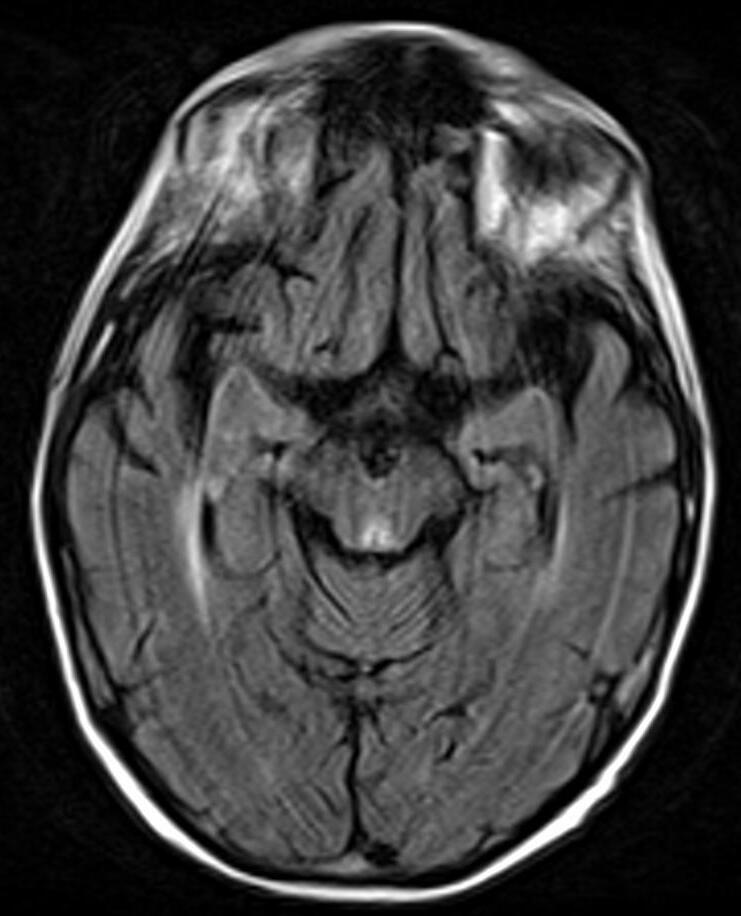
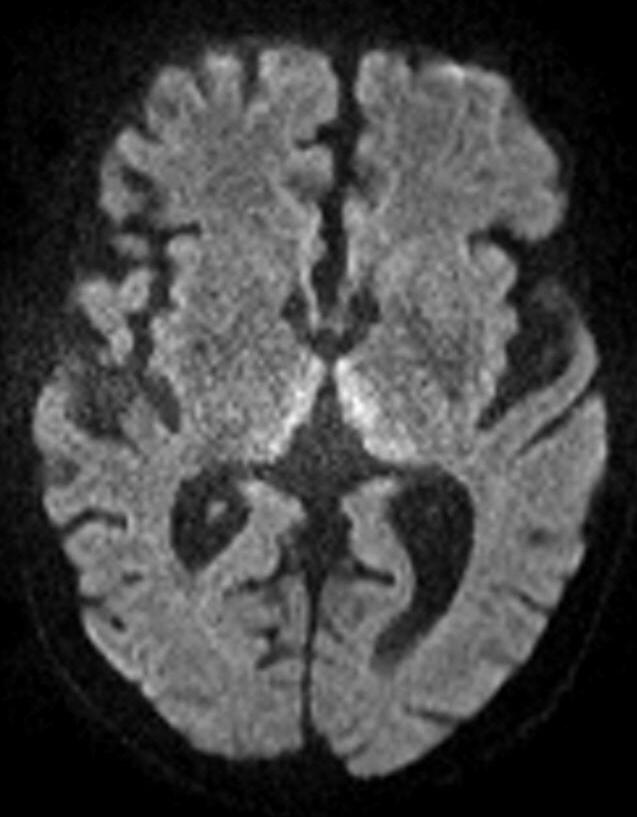
- Look for it: confusion, abnormal eye movements or nystagmus, and ataxia. Other illness can mimic or mask it. Untreated, it can progress to irreversible Korsakoff syndrome.1
- Prevention: thiamine 100 mg IV or IM daily for 3–5 days in patients being treated for withdrawal.1
- Suspected Wernicke: ASAM cites a study that recommends 200–500 mg IV every 8 hours, with magnesium and folate.1
- Glucose first is fine. ASAM dropped its old thiamine-before-glucose rule for lack of evidence.1 In a 10-year VA ED sample, no Wernicke cases followed dextrose given before thiamine.7
Disposition
- Discharge may suit patients with mild withdrawal (CIWA-Ar < 10), or moderate withdrawal (10–18) with no complicating factors, who are not intoxicated, have no history of withdrawal seizures or delirium, have no serious medical or psychiatric illness, and can attend follow-up.1
- Discharge prescription: a short supply, for example 1–2 days, of withdrawal medication until follow-up.1
- Admit after a withdrawal seizure, and for delirium, usually to an ICU.1 Patients at active risk of suicide need a setting that can manage it.1
- Start treatment for alcohol use disorder. SAEM suggests a prescription for naltrexone, or acamprosate if naltrexone is contraindicated, for patients who want to stop drinking (low certainty).5
Pitfalls
- Using CIWA-Ar to diagnose withdrawal, or scoring a delirious patient with it.1
- Ruling out withdrawal because the blood alcohol is still positive.1
- Treating tachycardia with a beta-blocker or clonidine alone, which leaves seizures and delirium untreated.1,2
- Discharging after a withdrawal seizure without a benzodiazepine. In the trial, 7 placebo patients came back to a Boston ED with another seizure within 48 hours of discharge.3
- Holding glucose for a hypoglycemic patient until thiamine arrives.1,7
- Calling it "just withdrawal" in a confused patient without looking for infection, head injury, hypoglycemia or Wernicke.1
How strong is the evidence?
The case for benzodiazepines rests on older randomized trials pooled in a 1997 meta-analysis.2 ASAM combined the evidence with expert judgment, using the RAND/UCLA appropriateness method.1 The phenobarbital data are small trials and retrospective cohorts of low to moderate quality.6,16 SAEM rates its own phenobarbital recommendation low to very low certainty.5
On-shift teaching
Questions to ask a learner at the bedside. Tap a question to see the answer. Every answer uses facts cited above.
Q1A patient had a generalized seizure after stopping drinking and is now awake. Why give a benzodiazepine?
Q2Why can't CIWA-Ar diagnose alcohol withdrawal, and when shouldn't you use it at all?
Q3What CIWA-Ar bands does ASAM use, and what makes withdrawal complicated?
Q4Can clonidine or a beta-blocker treat alcohol withdrawal on its own?
Q5What did the Rosenson trial show about a single dose of phenobarbital in the ED?
References
- 1American Society of Addiction Medicine. The ASAM Clinical Practice Guideline on Alcohol Withdrawal Management. J Addict Med. 2020;14(3S Suppl 1):1–72.
- 2Mayo-Smith MF. Pharmacological management of alcohol withdrawal: a meta-analysis and evidence-based practice guideline. JAMA. 1997;278(2):144–151.
- 3D'Onofrio G, Rathlev NK, Ulrich AS, Fish SS, Freedland ES. Lorazepam for the prevention of recurrent seizures related to alcohol. N Engl J Med. 1999;340(12):915–919.
- 4Sullivan JT, Sykora K, Schneiderman J, Naranjo CA, Sellers EM. Assessment of alcohol withdrawal: the revised Clinical Institute Withdrawal Assessment for Alcohol scale (CIWA-Ar). Br J Addict. 1989;84(11):1353–1357.
- 5Borgundvaag B, Bellolio F, Miles I, et al. Guidelines for Reasonable and Appropriate Care in the Emergency Department (GRACE-4): alcohol use disorder and cannabinoid hyperemesis syndrome management in the emergency department. Acad Emerg Med. 2024;31(5):425–455.
- 6Lee CM, Dillon DG, Tahir PM, Murphy CE. Phenobarbital treatment of alcohol withdrawal in the emergency department: a systematic review and meta-analysis. Acad Emerg Med. 2024;31(5):515–524.
- 7Jasti J, Sherman K, Gummin D, et al. Prevalence of Wernicke's encephalopathy when receiving dextrose before thiamine: a national study of veterans. Acad Emerg Med. 2025;32(11):1197–1202.
- 8Nickson C. Alcohol withdrawal. Life in the Fast Lane, CCC Toxicology; December 2024.
- 9Salottolo K, McGuire E, Mains CW, van Doorn EC, Bar-Or D. Occurrence, predictors, and prognosis of alcohol withdrawal syndrome and delirium tremens following traumatic injury. Crit Care Med. 2017;45(5):867–874.
- 10Maldonado JR, Sher Y, Das S, et al. Prospective validation study of the Prediction of Alcohol Withdrawal Severity Scale (PAWSS) in medically ill inpatients. Alcohol Alcohol. 2015;50(5):509–518.
- 11Valium (diazepam) tablets. Prescribing information. DailyMed.
- 12Chlordiazepoxide hydrochloride capsules. Prescribing information. DailyMed.
- 13Saitz R, Mayo-Smith MF, Roberts MS, et al. Individualized treatment for alcohol withdrawal: a randomized double-blind controlled trial. JAMA. 1994;272(7):519–523.
- 14Rosenson J, Clements C, Simon B, et al. Phenobarbital for acute alcohol withdrawal: a prospective randomized double-blind placebo-controlled study. J Emerg Med. 2013;44(3):592–598.
- 15Hendey GW, Dery RA, Barnes RL, Snowden B, Mentler P. A prospective, randomized, trial of phenobarbital versus benzodiazepines for acute alcohol withdrawal. Am J Emerg Med. 2011;29(4):382–385.
- 16Punia K, Scott W, Manuja K, et al. SAEM GRACE: phenobarbital for alcohol withdrawal management in the emergency department: a systematic review of direct evidence. Acad Emerg Med. 2024;31(5):481–492.
- 17Briggs B, Smith L, Yates N, Green R, Cline D. Fewer admissions, shorter stays: phenobarbital use for alcohol withdrawal in the emergency department. Acad Emerg Med. 2026;33(2):e70170.
- 18Wolpaw BJ, Oren H, Quinnan-Hostein L, et al. Hospital-wide implementation, clinical outcomes, and safety of phenobarbital for alcohol withdrawal. JAMA Netw Open. 2025;8(8):e2528694.
- 19Emergency Medicine Cases. Alcohol withdrawal. Further reading; not used for any claim above.
AI-generated draft. Not reviewed by a physician. This page is for education only and may contain errors, including in doses. Do not use it to diagnose, treat or make decisions about any patient. Rely on your own clinical judgment, your institution's protocols and current drug labeling. Reading this page does not create a physician-patient relationship. Full terms