


Viral respiratory infections in adults
Bottom line
- Admitted with influenza? Start oseltamivir now, whatever the illness duration, and don't wait for the test result.1
- COVID-19 with an oxygen saturation of 94% or less on room air counts as severe. Give dexamethasone 6 mg daily for up to 10 days. Don't give steroids to patients who need no oxygen.2,12
- High-risk outpatients: IDSA recommends antivirals for influenza and for COVID-19.1,2 Newer trials and the 2024 WHO guideline question how much oseltamivir, and nirmatrelvir-ritonavir in vaccinated patients, prevent admission.4,6,10
- Nirmatrelvir-ritonavir is the first choice for COVID-19 outpatients, but ritonavir causes serious drug interactions. Review the full medication list first.2,18
- No antibiotics for uncomplicated viral illness.4,5 Look for bacterial coinfection in severe pneumonia, hypotension, or a patient who gets worse after improving.1
First steps
- Judge severity first. For COVID-19, mild to moderate illness means an oxygen saturation above 94% without supplemental oxygen; 94% or less on room air is severe; mechanical ventilation, ECMO or organ dysfunction is critical.2
- Test when the result changes care. During influenza season, test every patient being admitted with an acute respiratory illness, anyone with a flare of COPD, asthma or heart failure, and immunocompromised or high-risk patients.1
- Use a molecular test. Rapid molecular assays detect influenza better than rapid antigen tests. In admitted patients, use RT-PCR, and don't rely on a negative antigen test.1
- Start antivirals without waiting for the result when you admit a patient with suspected influenza.1
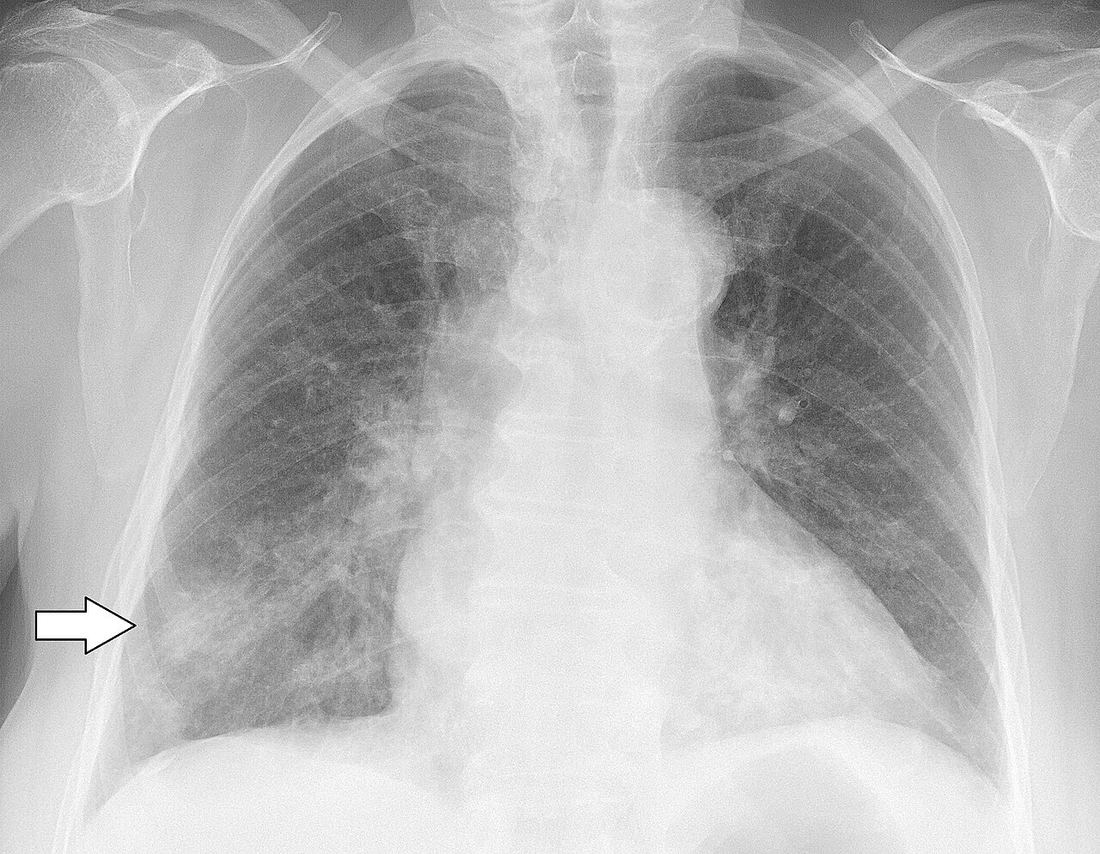
- Decide on bacterial coverage. Treat empirically for coinfection when influenza presents with extensive pneumonia, respiratory failure or hypotension.1
- For outpatients, check the risk factors and the time since symptom onset; both decide who is offered an antiviral (table below).1,2
- Needs oxygen, has pneumonia, or is being admitted?YesInfluenza: oseltamivir now, whatever the illness duration, without waiting for the test.1 75 mg twice daily; reduce for renal impairment.16COVID-19 on oxygen: dexamethasone 6 mg daily for up to 10 days, and remdesivir unless ventilated.2,12Extensive pneumonia, respiratory failure or hypotension: also treat for bacterial coinfection.1
- No: going homeInfluenza and high risk (65 or older, pregnant or 2 weeks postpartum, chronic disease, immunocompromised)?
- No
- No
Who is at high risk?
| Virus | Higher-risk adults | Source |
|---|---|---|
| Influenza | Age 65 or older; pregnant or within 2 weeks postpartum; chronic medical conditions; immunocompromised | IDSA1 |
| COVID-19 | One high-risk condition, or several factors that each raise risk somewhat. Risk is a continuum, and the guideline's examples are not exhaustive. | IDSA2 |
| RSV | Hospitalization rates rise steeply with age; adults 75 and older account for nearly half of admissions and most in-hospital deaths. | RSV-NET13 |
A current-season vaccine does not rule out influenza.1
Influenza
- Treat as soon as possible: everyone admitted with influenza, whatever the illness duration; outpatients with severe or progressive illness; high-risk outpatients; and pregnant patients up to 2 weeks postpartum.1
- Consider treating low-risk outpatients seen within 2 days of onset, and those who live with or care for severely immunocompromised people.1
- Use one drug. Don't combine neuraminidase inhibitors, and don't use higher doses routinely.1
- Oseltamivir is preferred in admitted patients and in pregnancy.1 Given by nasogastric tube in critical illness, it still reaches adequate drug levels in most studies.1
- Longer courses can be considered for immunocompromised patients and severe pneumonia, where the virus keeps replicating.1
- No corticosteroids for influenza or influenza pneumonia unless another indication exists.1,4
IDSA recommends oseltamivir for high-risk outpatients.1 The 2024 WHO guideline no longer recommends oseltamivir for nonsevere influenza; it suggests baloxavir for patients at high risk of progression, and oseltamivir for severe illness.3,4,5 In a network meta-analysis of 73 trials, oseltamivir had little or no effect on admission in high-risk patients (risk difference −0.4%, high certainty); baloxavir may have lowered it (−1.6%, low certainty).6 In another meta-analysis of 15 trials, oseltamivir did not reduce hospitalization in outpatients (RR 0.79, 95% CI 0.48–1.29) and caused more nausea and vomiting.7 SGEM does not recommend routine oseltamivir to prevent hospitalization.20
- What oseltamivir does do: in trials of mostly low-risk outpatients treated within about 2 days, neuraminidase inhibitors shortened fever and symptoms by about 1–2 days.1 Baloxavir probably shortens symptoms by about a day, without more side effects.6
- In severe influenza, trial data are scarce. Oseltamivir may shorten the hospital stay (by about 1.6 days, low certainty), and its effect on mortality is very uncertain.8 Observational data favored treating admitted adults, with benefit even when started late.1
COVID-19
Outpatients (mild to moderate)
- High risk, or several risk factors: IDSA recommends nirmatrelvir-ritonavir or IV remdesivir over no antiviral (strong, moderate certainty).2
- Increased but not high risk: nirmatrelvir-ritonavir or remdesivir is suggested. Declining is reasonable for patients who would rather avoid side effects, interactions or daily infusions.2
- No risk factors: IDSA suggests against routine antivirals.2
- Nirmatrelvir-ritonavir first, because it is oral and effective. Remdesivir needs 3 days of IV infusions. Molnupiravir only when neither is possible, in a high-risk patient; IDSA strongly recommends against it without risk factors.2
- Ritonavir interactions are the main hazard. Clopidogrel should not be given with it, and with tacrolimus or cyclosporine it can cause kidney injury or neurotoxicity.2 Check every medication (for example with the Liverpool interaction checker).2,18
IDSA's strong recommendation rests on trials such as EPIC-HR, in unvaccinated high-risk adults, where nirmatrelvir-ritonavir started within 3 days cut COVID-19-related hospitalization or death from 7.0% to 0.8%.2,9 In the 2026 PANORAMIC and CanTreatCOVID trials of vaccinated higher-risk adults, it did not reduce hospitalization or death (PANORAMIC: 0.8% vs 0.7%).10 Molnupiravir likewise showed no benefit in high-risk vaccinated adults (hospitalization or death 1% in both groups).11 IDSA's last literature search was in September 2024, before the 2026 trial.2
Admitted patients
- Dexamethasone 6 mg daily for 10 days or until discharge: recommended in critical illness and suggested in severe illness. Equivalents are methylprednisolone 32 mg or prednisone 40 mg.2
- Not without hypoxemia. IDSA suggests against steroids when no oxygen is needed.2 In RECOVERY, dexamethasone lowered 28-day mortality overall (22.9% vs 25.7%), most clearly on ventilation (29.3% vs 41.4%), but not in patients on no respiratory support (17.8% vs 14.0%).12
- Remdesivir is suggested for patients with severe disease. Five days is suggested over 10 for patients on oxygen, and IDSA suggests against starting it routinely on invasive ventilation or ECMO.2
RSV
- RSV fills adult beds. In the US, it caused an estimated 123,000–193,000 adult admissions a year before vaccines, with the highest rates at 75 and older.13
- Watch the heart. Among 6,248 adults 50 and older admitted with RSV, 22.4% had an acute cardiac event, most often acute heart failure (15.8%). Those patients more often needed the ICU (25.8% vs 16.5%) and more often died (8.1% vs 4.0%).14
- There is no recommended antiviral. Ribavirin, the only approved RSV antiviral, is no longer recommended, so care is supportive.15
Treatment
| Drug | Adult dose | Window | Notes |
|---|---|---|---|
| Influenza | |||
| Oseltamivir PO | 75 mg twice daily for 5 days | Outpatients: label ≤ 48 h. Admitted: any time | CrCl > 30–60: 30 mg twice daily. CrCl > 10–30: 30 mg once daily. Hemodialysis: 30 mg, then 30 mg after each session.1,16 |
| Baloxavir PO | 40 mg once (< 80 kg); 80 mg once (≥ 80 kg) | ≤ 48 h | Labeled for uncomplicated influenza.17 WHO's choice for high-risk nonsevere illness.4 |
| COVID-19, outpatients | |||
| Nirmatrelvir-ritonavir PO | 300 mg/100 mg twice daily for 5 days | ≤ 5 days | eGFR 30–60: 150 mg/100 mg twice daily. eGFR < 30 or dialysis: 300 mg/100 mg once on day 1, then 150 mg/100 mg once daily.2,18 Review interactions first.18 |
| Remdesivir IV | 200 mg day 1, then 100 mg days 2–3 | ≤ 7 days | No renal dose adjustment.19 |
| Molnupiravir PO | Dose per the EUA | — | Only if no other option; not in pregnancy.2 |
| COVID-19, admitted | |||
| Dexamethasone IV or PO | 6 mg daily for 10 days or until discharge | — | Only when oxygen is needed.2 |
| Remdesivir IV | 200 mg day 1, then 100 mg daily | — | 5 days suggested for patients on oxygen.2,19 |
Unreviewed doses. Verify against the current label and your institution's protocol before giving anything.
Bacterial coinfection
- Investigate and treat in influenza with extensive pneumonia, respiratory failure, hypotension and fever, and in patients who get worse after first improving.1
- Consider it when a patient fails to improve after 3–5 days of antivirals, and look for other causes.1
- Otherwise, no antibiotics. WHO strongly recommends against them in nonsevere influenza.4
Disposition
- Going home: high-risk patients leave with an antiviral prescription when one is indicated.1,2 Getting worse after first improving is a reason to come back, because it suggests bacterial coinfection.1
- Being admitted: start the influenza antiviral in the ED without waiting for the test, and in COVID-19 with hypoxemia, start dexamethasone.1,2
- RSV in older adults: look for acute heart failure and ischemia, which were common in those admitted.14
Pitfalls
- Withholding oseltamivir from an admitted patient because symptoms began more than 48 hours ago.1
- Trusting a negative rapid antigen test in an admitted patient.1
- Giving dexamethasone to a COVID-19 patient who needs no oxygen.2,12
- Prescribing nirmatrelvir-ritonavir without a full medication review, especially with clopidogrel, tacrolimus or cyclosporine.2,18
- Starting antibiotics by reflex for an uncomplicated viral illness.4
- Ruling out influenza because the patient was vaccinated.1
How strong is the evidence?
Most influenza recommendations rest on observational data and expert opinion; there are no completed placebo-controlled trials of oseltamivir in admitted patients.1 WHO rated the antiviral evidence low to very low certainty.4 The COVID-19 outpatient antiviral recommendations rest largely on trials in unvaccinated patients, and a large 2026 trial in vaccinated patients found no benefit.2,10 The dexamethasone evidence comes from a large randomized trial.12
On-shift teaching
Questions to ask a learner at the bedside. Tap a question to see the answer. Every answer uses facts cited above.
Q1A patient is admitted with influenza on day 5 of illness. Is it too late for oseltamivir?
Q2Which COVID-19 patients get dexamethasone, and what happened in RECOVERY to those on no oxygen?
Q3Why do WHO and IDSA differ on oseltamivir for high-risk outpatients?
Q4Before prescribing nirmatrelvir-ritonavir, which two drug classes in the guideline's examples should stop you?
Q5What did EPIC-HR and the 2026 PANORAMIC trial show about nirmatrelvir-ritonavir?
Q6An 80-year-old with RSV looks well apart from mild breathlessness. What complication should you look for?
References
What this page is built on
20 sources, cited 127 times. Dots are sources, filled by how far each was read; stronger color means a larger share of the citations. Tap a tier to see its sources.
Checked by the writer, not a physician. The dots show how each source was read, not that anyone has confirmed the claims.
- 1Uyeki TM, Bernstein HH, Bradley JS, et al. Clinical practice guidelines by the Infectious Diseases Society of America: 2018 update on diagnosis, treatment, chemoprophylaxis, and institutional outbreak management of seasonal influenza. Clin Infect Dis. 2019;68(6):e1–e47.
- 2Bhimraj A, Morgan RL, Shumaker AH, et al. Infectious Diseases Society of America guidelines on the treatment and management of patients with COVID-19. Clin Infect Dis. 2024;78(7):e250–e349. Living web version; antiviral sections updated October 14, 2025.
- 3World Health Organization. Clinical practice guidelines for influenza. Geneva: WHO; 2024.
- 4Vandvik PO, Agarwal A, Rylance J, et al. Summary of WHO clinical practice guidelines for influenza. BMJ. 2026;392:e087397.
- 5Shen Y. Critical updates in the 2024 influenza clinical practice guidelines of the World Health Organization. Infect Dis Immun. 2025;5(3):150–154.
- 6Gao Y, Zhao Y, Liu M, et al. Antiviral medications for treatment of nonsevere influenza: a systematic review and network meta-analysis. JAMA Intern Med. 2025;185(3):293–301.
- 7Hanula R, Bortolussi-Courval É, Mendel A, et al. Evaluation of oseltamivir used to prevent hospitalization in outpatients with influenza: a systematic review and meta-analysis. JAMA Intern Med. 2024;184(1):18–27.
- 8Gao Y, Guyatt G, Uyeki TM, et al. Antivirals for treatment of severe influenza: a systematic review and network meta-analysis of randomised controlled trials. Lancet. 2024;404(10454):753–763.
- 9Hammond J, Leister-Tebbe H, Gardner A, et al. Oral nirmatrelvir for high-risk, nonhospitalized adults with Covid-19 (EPIC-HR). N Engl J Med. 2022;386(15):1397–1408.
- 10Butler CC, Pinto AD, Harris V, et al. Oral nirmatrelvir-ritonavir for Covid-19 in higher-risk outpatients (PANORAMIC and CanTreatCOVID). N Engl J Med. 2026;394(16):1583–1594.
- 11Butler CC, Hobbs FDR, Gbinigie OA, et al. Molnupiravir plus usual care versus usual care alone as early treatment for adults with COVID-19 at increased risk of adverse outcomes (PANORAMIC). Lancet. 2023;401(10373):281–293.
- 12RECOVERY Collaborative Group; Horby P, Lim WS, et al. Dexamethasone in hospitalized patients with Covid-19. N Engl J Med. 2021;384(8):693–704.
- 13Havers FP, Whitaker M, Melgar M, et al. Burden of respiratory syncytial virus-associated hospitalizations in US adults, October 2016 to September 2023. JAMA Netw Open. 2024;7(11):e2444756.
- 14Woodruff RC, Melgar M, Pham H, et al. Acute cardiac events in hospitalized older adults with respiratory syncytial virus infection. JAMA Intern Med. 2024;184(6):602–611.
- 15Ruckel CE, Wolf JD, Plemper RK. Status of advanced respiratory syncytial virus antiviral therapeutics 2025. Curr Opin Virol. 2025;73:101477.
- 16Tamiflu (oseltamivir phosphate) prescribing information. Genentech.
- 17Xofluza (baloxavir marboxil) prescribing information.
- 18Paxlovid (nirmatrelvir and ritonavir) prescribing information. Pfizer.
- 19Veklury (remdesivir) prescribing information. Gilead Sciences.
- 20Swaminathan A. SGEM#409: Same as it ever was: Tamiflu for influenza. The Skeptics' Guide to Emergency Medicine; July 2023.
AI-generated draft. Not reviewed by a physician. This page is for education only and may contain errors, including in doses. Do not use it to diagnose, treat or make decisions about any patient. Rely on your own clinical judgment, your institution's protocols and current drug labeling. Reading this page does not create a physician-patient relationship. Full terms