


Septic arthritis
Bottom line
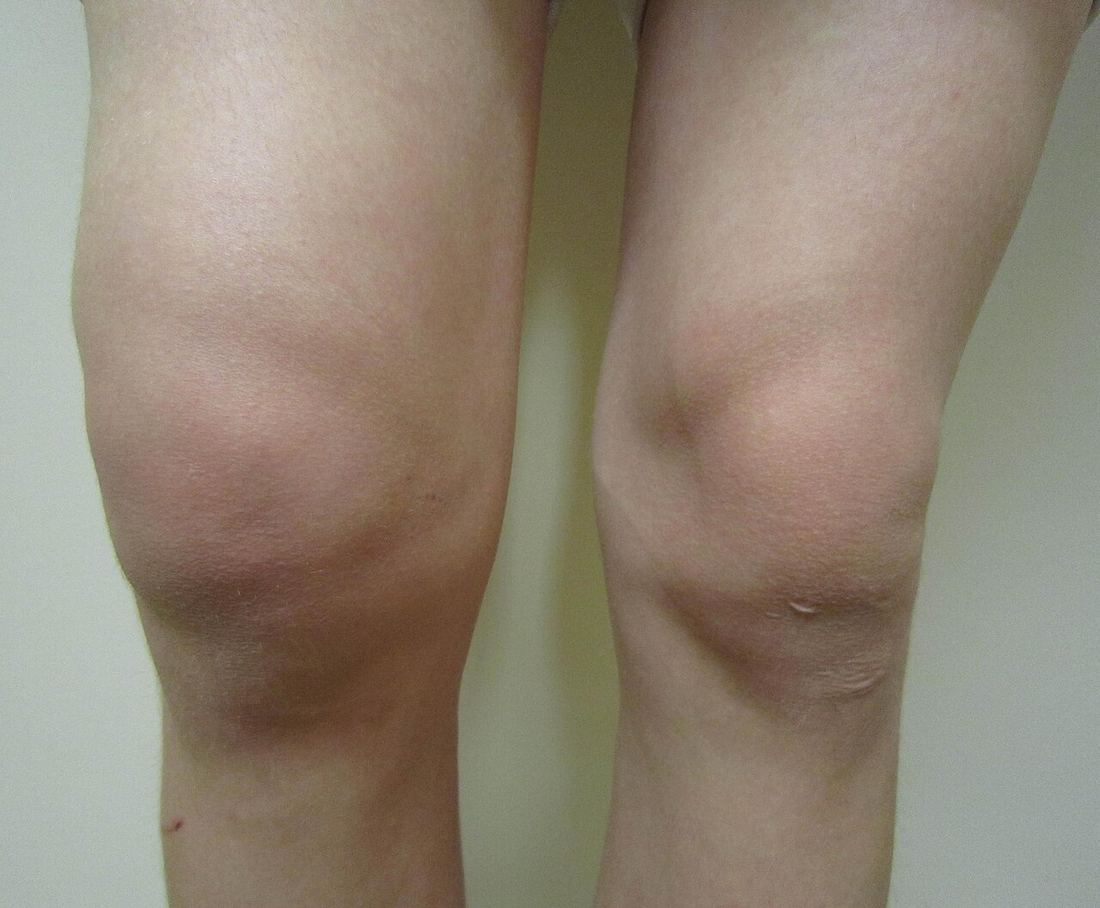
- Any hot, swollen joint may be septic. No history, exam finding or blood test confirms or excludes it, with or without fever.1,2,3
- Tap the joint before antibiotics, unless the patient has sepsis or septic shock. Send fluid for culture, cell count with differential, and crystals, in that order if fluid is scarce.1
- The synovial count shifts probability; it has no clean cut-off. The likelihood ratio is 0.32 under 25,000/µL and 28 over 100,000/µL. Crystals do not exclude infection.3,1
- After cultures, start empiric IV antibiotics chosen by Gram stain and resistance risk, and call orthopedics for washout.1,4
- It kills. After knee washout for septic arthritis in England, 90-day mortality was 7.05%, and 22.69% in patients older than 79.5
Recognize
- How common: about 27% of ED patients with one acutely painful joint had nongonococcal septic arthritis in a meta-analysis.2 In a later prospective ED cohort of 71 adults with knee symptoms, it was 7%.6
- Symptoms: only joint pain (85%), a history of swelling (78%) and fever (57%) occur in more than half of patients. Sweats (27%) and rigors (19%) are less common.3
- Risk factors: age, diabetes, rheumatoid arthritis, joint surgery, a hip or knee prosthesis, skin infection and HIV.3 Only recent joint surgery (+LR 6.9) and skin infection over a prosthetic joint (+LR 15.0) clearly raised the probability.2
- Which joint: the knee most often, then the hip, shoulder and elbow. Up to 20% of cases involve more than one joint, mostly in immunocompromised patients.4
- Gonococcal arthritis is a common cause in younger adults. Look for migratory polyarthritis, a pustular rash, urethritis and tenosynovitis.4
- A joint that moves can still be septic. Tap it even when range of motion is good.7
First steps
- Look for sepsis first. With sepsis or septic shock, start antibiotics as soon as possible under your sepsis protocol; don't wait for the tap.1
- Draw at least 2 sets of blood cultures (aerobic and anaerobic) if the patient is febrile or bacteremia or sepsis is suspected.1 They are positive in over a third of patients.4
- Tap the joint as soon as you suspect infection.1 Use strict aseptic technique. Never go through a subcutaneous abscess, and avoid overlying cellulitis if you can. Use ultrasound, fluoroscopy or CT for joints that are hard to reach or after a dry tap. Don't inject saline to get more fluid.1
- Send the fluid: at least 1 mL in a sterile tube for culture, a cell count with neutrophil percentage, and crystals. Gram stain it. Put any fluid left over into blood culture bottles.1
- Prosthetic joint: talk to orthopedics before you tap it.4,7
- Sexually active patient: send gonorrhea NAAT and cultures from every exposed urogenital and extragenital site, and from the synovial fluid.8
- Image: a plain film shows fracture, osteomyelitis, arthritis or implants and serves as a baseline. Ultrasound, CT or MRI can show an effusion or a nearby abscess.1
- Sepsis or septic shock?YesAntibiotics as soon as possible under your sepsis protocol. Don't wait for the tap.1
- Either way
- Native jointTap now, before antibiotics. Culture, cell count with neutrophils, crystals and Gram stain; spare fluid into blood culture bottles. Blood cultures if febrile.1
- Then
- NoAnother diagnosis is clear: treat that, and stop any antibiotics already started.1
Reading the synovial fluid
| Synovial finding | Likelihood ratio |
|---|---|
| White cell count (per µL) | |
| Under 25,000 | 0.32 (0.23–0.43) |
| 25,000 or more | 2.9 (2.5–3.4) |
| Over 50,000 | 7.7 (5.7–11.0) |
| Over 100,000 | 28.0 (12.0–66.0) |
| Neutrophils | |
| 90% or more | 3.4 (2.8–4.2) |
| Under 90% | 0.34 (0.25–0.47) |
Summary likelihood ratios for nongonococcal septic arthritis from 14 studies (6,242 patients).3 A separate meta-analysis found interval likelihood ratios of 0.33 for 0–25,000, 1.06 for 25,000–50,000, 3.59 for 50,000–100,000 and infinity above 100,000.2
- The guideline's reading: over 50,000/µL suggests infection but is not enough alone; under 25,000/µL lowers the probability but cannot exclude it. These cut-offs may not hold in immunosuppressed patients.1
- Gram stain has limited sensitivity but excellent specificity, so a positive stain is early proof and guides empiric treatment.1 Sensitivity is 29–65% for gram-positive infection and about 25% for gonococcal.4
- Culture grows an organism in about 80% of nongonococcal cases.4 If the patient was already on antibiotics or cultures stay negative despite high suspicion, synovial PCR is recommended.1
- Blood tests don't decide it. Serum white count, ESR and CRP did not usefully change the probability.2 The guideline uses CRP trends only to support the diagnosis and follow the response.1
- Synovial lactate: at 10 mmol/L or more on a point-of-care analyzer, sensitivity was 0.27 and specificity 0.97 in 39 ED patients.9
- Leukocyte esterase strip: pooled sensitivity 0.94 and specificity 0.74 in a meta-analysis.10 The guideline says bedside strips may add information (weak recommendation, very low-quality evidence).1
A 2019 emergency medicine review calls synovial lactate the most accurate synovial marker, with a +LR above 20 at levels over 10 mmol/L.4 A 2020 prospective ED study found synovial lactate and PCR inaccurate, and named the synovial white count and Gram stain as the best tests.6 The guideline lists lactate only as an optional extra.1
Crystals do not end the workup
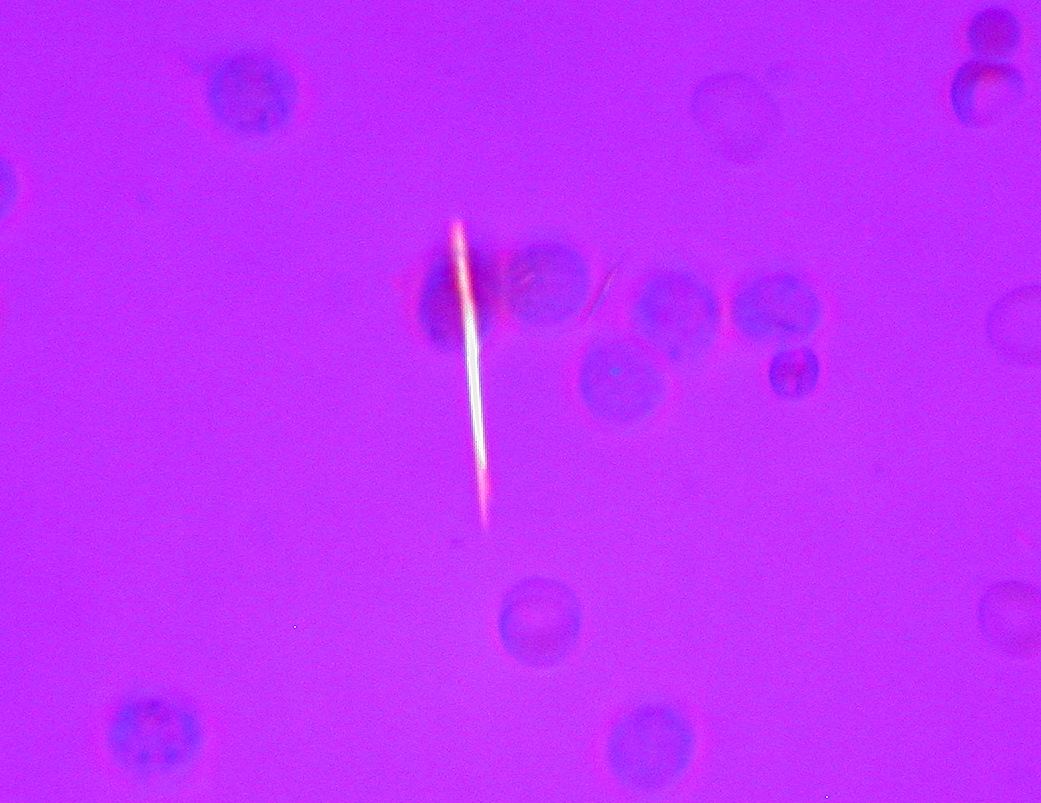
- Of 265 joint aspirates with crystals, 4 (1.5%) grew bacteria. All 4 had a synovial count over 50,000/µL and significant comorbidities.11
- In another series, 5% of crystal-positive joints were also infected. Infection was very unlikely when the Gram stain was negative, CRP was under 10 mg/dL (100 mg/L) and the synovial count was under 10,000/µL.12
- In a third series, 3 joints had both crystals and infection, and each had a count of 85,000/µL or more.13
- In that second series, 90% of shoulder infections were bacteremic.12
Antibiotics
- Timing: start antibiotics after the synovial fluid and blood cultures are drawn, unless the patient has sepsis or septic shock. Stop them if a reasonable alternative diagnosis appears.1
- Choice: use local resistance patterns, the Gram stain, and the patient's risk of MRSA or resistant gram-negative bacilli, including Pseudomonas.1
- Nothing into the joint: there is no ED role for intra-articular antibiotics or steroids.4
| Situation | Agents | Adult dose | Source |
|---|---|---|---|
| No resistance risk, Gram stain negative (European guideline) | |||
| Native joint | Cefazolin or cloxacillin, plus ceftriaxone; or amoxicillin-clavulanate alone | Ceftriaxone 1–2 g IV once daily (label). Others per institutional protocol and label | 1,14 |
| Strong concern or critically ill (US review) | |||
| Covers MRSA and gram-negatives | Vancomycin plus cefepime or another antipseudomonal beta-lactam | Vancomycin per institutional protocol; the label's usual adult dose is 2 g a day (1 g every 12 h). Cefepime per institutional protocol and label | 4,15 |
| Gonococcal arthritis | |||
| Arthritis or arthritis-dermatitis | Ceftriaxone; doxycycline if chlamydia is not excluded | Ceftriaxone 1 g IV or IM every 24 h, at least 7 days in total. Doxycycline 100 mg PO twice daily for 7 days | 8 |
Unreviewed doses. Verify against the current label and your institution's protocol before giving anything.
The European guideline suggests cefazolin or cloxacillin plus ceftriaxone, or amoxicillin-clavulanate, when there is no resistance risk and the Gram stain is negative.1 A US emergency medicine review advises vancomycin plus cefepime for strong concern or critical illness.4 Follow local resistance data and your antibiotic protocol.
Later, on the ward: the guideline suggests 1–2 weeks of IV therapy, then 2–4 weeks of oral treatment once the patient improves. No trials have tested the duration in adults.1 For gonococcal infection, the CDC allows an oral switch guided by susceptibility testing 24–48 hours after substantial improvement.8
Washout
- Surgical debridement is recommended, especially in larger joints. Arthroscopy is adequate for most early stages; open surgery is considered for advanced stages.1
- Timing: in a patient without sepsis, surgery may wait up to 24 hours, but only if the joint has been aspirated and irrigated, antibiotics have started, and an experienced surgeon will do it. Delays beyond 24–48 hours may increase the need for repeat debridement.1
- Hip involvement and failure of serial aspiration often call for surgical drainage. Sternoclavicular infection calls for a cardiothoracic surgery consult.4
Outcomes
- Knee washout in England (n = 12,132): 90-day mortality 7.05%, rising to 22.69% over age 79. Over 15 years, the yearly risk of joint replacement was about 6 times that of the general population.5
- Taiwan national cohort (n = 31,491): mortality was 4.3% at 30 days, 8.6% at 90 days and 16.4% at 1 year. Hip, shoulder or multiple-joint infection, male sex, age 65 or older and comorbidities predicted death.16
Disposition
- Admit patients with suspected septic arthritis for antibiotics, monitoring and likely surgery.7
- Involve orthopedics early, because some patients need arthroscopy, serial aspiration or open drainage.4
- Gonococcal infection: hospitalize for initial treatment with an infectious diseases consult, especially when the diagnosis is uncertain or the effusion is purulent.8
Pitfalls
- Letting a normal temperature, white count or CRP talk you out of a tap.2,3
- Calling it gout because the fluid has crystals.1,11,12
- Treating a synovial count under 25,000/µL as a rule-out, especially in an immunosuppressed patient.1
- Giving antibiotics before the tap in a stable patient, which risks a falsely negative culture.1
- Tapping through a subcutaneous abscess.1
- Skipping the tap because the joint still moves.7
How strong is the evidence?
Guideline recommendations are graded B to D, meaning moderate- to very low-quality evidence, and none is graded A. The most common grade is D2: very low-quality evidence and a weak recommendation. The 24-hour surgery window is a consensus statement, and no trials have tested antibiotic duration in adults.1 The likelihood ratios come from meta-analyses of mostly older diagnostic studies.2,3 The crystal data are retrospective and small.11,12,13 The European guideline's antibiotic choices may not fit US resistance patterns.1,4
On-shift teaching
Questions to ask a learner at the bedside. Tap a question to see the answer. Every answer uses facts cited above.
Q1How much does a synovial white count under 25,000/µL lower the odds of septic arthritis, and how much does one over 100,000/µL raise them?
Q2The tap shows urate crystals. Can you call it gout and send the patient home?
Q3When should antibiotics go in before the joint is tapped?
Q4Which history or exam findings actually raise the probability?
Q5Orthopedics wants to wash the knee out in the morning. Is that acceptable?
Q6A 22-year-old has migrating joint pain, tenosynovitis and a few pustules. What do you send and give?
References
What this page is built on
16 sources, cited 104 times. Dots are sources, filled by how far each was read; stronger color means a larger share of the citations. Tap a tier to see its sources.
Checked by the writer, not a physician. The dots show how each source was read, not that anyone has confirmed the claims.
- 1Ravn C, Neyt J, Benito N, et al.; SANJO guideline group. Guideline for management of septic arthritis in native joints (SANJO). J Bone Jt Infect. 2023;8(1):29–37.
- 2Carpenter CR, Schuur JD, Everett WW, Pines JM. Evidence-based diagnostics: adult septic arthritis. Acad Emerg Med. 2011;18(8):781–796.
- 3Margaretten ME, Kohlwes J, Moore D, Bent S. Does this adult patient have septic arthritis? JAMA. 2007;297(13):1478–1488.
- 4Long B, Koyfman A, Gottlieb M. Evaluation and management of septic arthritis and its mimics in the emergency department. West J Emerg Med. 2019;20(2):331–341.
- 5Abram SGF, Alvand A, Judge A, Beard DJ, Price AJ. Mortality and adverse joint outcomes following septic arthritis of the native knee: a longitudinal cohort study of patients receiving arthroscopic washout. Lancet Infect Dis. 2020;20(3):341–349.
- 6Carpenter CR, Vandenberg J, Solomon M, et al. Diagnostic accuracy of synovial lactate, polymerase chain reaction, or clinical examination for suspected adult septic arthritis. J Emerg Med. 2020;59(3):339–347.
- 7Tse AB, Gilberti B. Episode 170.0: Septic arthritis. Core EM; September 22, 2019.
- 8Centers for Disease Control and Prevention. Sexually Transmitted Infections Treatment Guidelines, 2021: Gonococcal infections among adolescents and adults (disseminated gonococcal infection).
- 9Shu E, Farshidpour L, Young M, Darracq M, Ives Tallman C. Utility of point-of-care synovial lactate to identify septic arthritis in the emergency department. Am J Emerg Med. 2019;37(3):502–505.
- 10Dey M, Al-Attar M, Peruffo L, et al. Assessment and diagnosis of the acute hot joint: a systematic review and meta-analysis. Rheumatology (Oxford). 2023;62(5):1740–1756.
- 11Shah K, Spear J, Nathanson LA, McCauley J, Edlow JA. Does the presence of crystal arthritis rule out septic arthritis? J Emerg Med. 2007;32(1):23–26.
- 12Papanicolas LE, Hakendorf P, Gordon DL. Concomitant septic arthritis in crystal monoarthritis. J Rheumatol. 2012;39(1):157–160.
- 13Luo TD, Jarvis DL, Yancey HB, et al. Synovial cell count poorly predicts septic arthritis in the presence of crystalline arthropathy. J Bone Jt Infect. 2020;5(3):118–124.
- 14Ceftriaxone for injection. FDA label (Hikma Pharmaceuticals), DailyMed.
- 15Vancomycin hydrochloride for injection. FDA label (Sagent Pharmaceuticals), DailyMed.
- 16Huang YC, Ho CH, Lin YJ, et al. Site-specific mortality in native joint septic arthritis: a national population study. Rheumatology (Oxford). 2020;59(12):3826–3833.
AI-generated draft. Not reviewed by a physician. This page is for education only and may contain errors, including in doses. Do not use it to diagnose, treat or make decisions about any patient. Rely on your own clinical judgment, your institution's protocols and current drug labeling. Reading this page does not create a physician-patient relationship. Full terms