
Pericarditis
Bottom line
- Diagnose with the presentation plus more than one supporting finding: a rub, PR depression or widespread ST elevation, a new or growing effusion, or a raised CRP.1
- Think of ACS first. Any ST depression in aVL was present in all 154 inferior STEMIs and none of 49 pericarditis ECGs in one ED study.5
- Most patients go home. Admit those with high-risk features: fever over 38 °C, signs of tamponade, an effusion over 20 mm, NSAID failure, or incessant disease. See everyone else again within 1–2 weeks.1
- Full-dose aspirin or an NSAID plus colchicine (both Class I). Adding colchicine cut incessant or recurrent pericarditis from 37.5% to 16.7% (NNT 4).1,7
- Don't start with steroids unless there is a specific reason (Class III). Steroid use was an independent risk factor for recurrence (OR 4.30).1,8
First steps
- Assess everyone the same way: history, exam, ECG, chest X-ray, echo, and blood tests including CRP and troponin (Class I).1
- Think about ACS first. Use coronary angiography or coronary CT when ACS is suspected (Class I).1
- Look for high-risk features (table below). Any one means admission and a search for the cause.1
- Start treatment: full-dose aspirin or an NSAID every 8 hours with a proton pump inhibitor, plus colchicine.1
- Restrict exercise until remission, for at least 1 month (Class I).1
- Low risk: discharge with review in 1–2 weeks to check the response.1
- Suspected pericarditis: history, exam, ECG, chest X-ray, echo, CRP and troponin.1
- NoPresentation plus more than one supporting finding?NoPossible (one finding) or unlikely (none). CMR is recommended when clinical criteria can't settle the diagnosis.1
- Yes
- Either wayAny high-risk feature?YesAdmit, search for the cause, and start anti-inflammatory therapy. Tamponade needs drainage.1
- NoIbuprofen 600–800 mg or aspirin 750–1000 mg three times daily with a PPI, plus colchicine 0.5 mg twice daily (once daily under 70 kg or with severe renal impairment).1
- Restrict exercise until remission, for at least 1 month.1
- Good response at 1–2 weeks?NoReassess risk. Intermediate risk: admit or follow closely and look for a cause. High risk: admit.1
- YesTaper the NSAID or aspirin once symptoms and CRP settle. Continue colchicine for at least 3 months.1
Diagnosis
| Finding | How often | Notes |
|---|---|---|
| Clinical presentation | ||
| Chest pain | 85–90% | Sharp and pleuritic. Better sitting up and leaning forward; worse on inspiration, lying flat and swallowing.1 |
| Additional criteria | ||
| Pericardial friction rub | ≤ 33% | Scratchy or squeaking. Can disappear as an effusion builds.1 |
| ECG: PR depression, widespread ST elevation | Up to 60% | More common in young patients. Suggests the myocardium is involved too.1 |
| New or worsening effusion | Up to 60% | Usually mild. A normal echo does not rule out pericarditis.1 |
| Raised CRP | 79–90% | Also a marker of disease activity, used to guide treatment length.1 |
Definite: the clinical presentation plus more than one additional criterion. Possible: the presentation plus one. Unlikely: the presentation alone. Pericardial edema or late gadolinium enhancement on CMR also counts as a criterion.1
- The pericardium is electrically silent. The ESC reads ECG changes as a sign of myocardial inflammation and advises looking for myocarditis.1
- Myopericarditis is common and usually benign. It made up 14.6% of 274 viral or idiopathic cases. At 12 months, echo, ECG and treadmill tests were normal in 98%.6
- ECG changes and troponin rise were usually not markers of a worse outcome when the patient had an infarct-like presentation but normal ventricular function.1
- Older patients more often report dyspnea than pain.1
The ECG, and telling it from STEMI
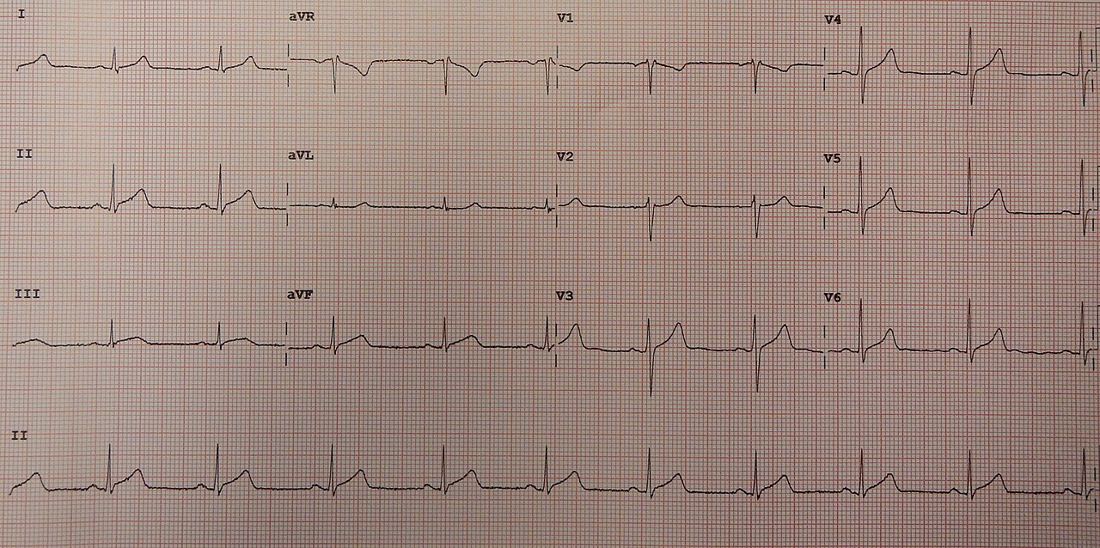
- Typical pericarditis: concave ST elevation of about 0.5–1 mm in many leads, PR depression in the same leads, and ST depression with PR elevation in aVR (sometimes V1).4
- Favors STEMI: ST depression anywhere other than aVR and V1, ST elevation higher in III than II, and convex or horizontal ST elevation.4
- Check aVL. In one ED study, every inferior STEMI (154 of 154) had some ST depression in aVL, and no pericarditis ECG (0 of 49) did. It was present in 49 of 54 subtle inferior occlusion MIs.5
- PR depression doesn't settle it. About 12% of STEMIs show it, and pain that changes with position or breathing occurs in STEMI too.4
- The ECG evolves over weeks: ST elevation, then flat T waves, then T inversion, then normal. Fewer than half of patients go through every stage.4
Who to admit
| Risk | Clinical | Imaging | Plan |
|---|---|---|---|
| High | Signs of tamponade; fever > 38 °C; effusive-constrictive pericarditis; NSAID failure; incessant pericarditis | Effusion > 20 mm at end-diastole; tamponade; extensive pericardial LGE on CMR | Admit, search for the cause, anti-inflammatory therapy |
| Intermediate | Signs of right heart failure | Effusion 10–20 mm; constrictive physiology | Admit or follow closely, and search for the cause |
| Low | Responds to therapy within 1–2 weeks | No or mild effusion; no pericardial LGE | Outpatient treatment |
From the 2025 ESC risk table and triage flowchart. Admission for high-risk pericarditis is Class I, level B.1
- Where the high-risk features come from: in 453 prospectively followed patients, fever over 38 °C (HR 3.56), a subacute course (HR 3.97), a large effusion or tamponade (HR 2.15) and aspirin or NSAID failure (HR 2.50) predicted a specific underlying cause. A large effusion or tamponade (HR 2.51) and NSAID failure (HR 5.50) predicted complications.2
- About 25% of patients have at least one poor-prognosis feature and need admission.1
- In-hospital mortality is about 1%. In a Finnish national registry it was 1.1%, rising with age (HR 3.26 per decade) and with severe co-infection such as pneumonia or sepsis.1,3
Treatment
| Drug | Adult dose | Duration | Taper | Notes |
|---|---|---|---|---|
| First line: pick one, plus colchicine | ||||
| Ibuprofen | 600–800 mg PO three times daily | 1–2 weeks | 200 mg every 1–2 weeks | Usually the first NSAID tried.1 |
| Aspirin | 750–1000 mg PO three times daily | 1–2 weeks | 250 mg every 1–2 weeks | Preferred with ischemic heart disease or existing aspirin use.1 |
| Colchicine | 0.5 mg PO twice daily; once daily if < 70 kg or severe renal impairment | ≥ 3 months (≥ 6 if recurrent) | Not required | Class I, level A. Stop it last.1 |
| Proton pump inhibitor | With every aspirin or NSAID course | — | — | Recommended by the ESC.1 |
| Second line | ||||
| Prednisone | 0.2–0.5 mg/kg/day | 2–4 weeks | Slow, over months | Only if aspirin/NSAIDs are contraindicated or fail, or for a specific indication (Class IIa).1 |
| Indomethacin | 25–50 mg PO three times daily | 1–2 weeks | 25 mg every 1–2 weeks | Usually reserved for incessant or recurrent cases.1 |
Unreviewed doses. Verify against the current label and your institution's protocol before giving anything.
Doses from the 2025 ESC guideline (Table 13). Keep the starting dose until symptoms resolve and CRP normalizes, then taper. With moderate to severe renal impairment, adjust the aspirin/NSAID dose or use a corticosteroid.1
The ESC doses colchicine in 0.5 mg steps. Colcrys tablets in the US are 0.6 mg, and the US label covers gout and familial Mediterranean fever, not pericarditis.1,11 Dose per institutional protocol.
Colchicine
- ICAP (n = 240, first episode, double-blind): incessant or recurrent pericarditis 16.7% vs 37.5% (NNT 4). Colchicine also halved symptom persistence at 72 hours (19.2% vs 40.0%) and cut hospitalization (5.0% vs 14.2%).7
- COPE (n = 120, open-label): recurrence at 18 months 10.7% vs 32.3%. Diarrhea stopped colchicine in 8.3%.8
- Cochrane (4 trials, 564 patients): colchicine reduced recurrence after acute pericarditis (HR 0.40, moderate quality). More patients stopped it for side effects, mostly GI (RR 1.87).9
- Check interactions. Fatal colchicine toxicity has been reported with clarithromycin, a strong CYP3A4 inhibitor, and with cyclosporine, a P-gp inhibitor. With kidney or liver impairment, these combinations are contraindicated.11
Corticosteroids
- Not a first option without a specific indication (Class III, level C).1 Specific indications include systemic inflammatory disease already on steroids, post-pericardiotomy syndromes, post-vaccine pericarditis, severe renal failure, and oral anticoagulation.1
- High doses with a fast taper raise the risk of recurrence or chronic disease. Avoid higher doses except briefly, and taper slowly, especially below 15 mg/day.1
- In COPE, steroid use was an independent risk factor for recurrence (OR 4.30).8
Activity and heart rate
- Restrict exercise until remission, for at least 1 month, in athletes and non-athletes alike (Class I, level C). The ESC prefers an individual plan over fixed 3- to 6-month bans.1
- Consider a beta-blocker if symptoms persist despite full anti-inflammatory therapy and the resting heart rate is over 75 (Class IIa, level C).1
Recurrent pericarditis
- Recurrence is the most common complication: 20–30% of patients not treated with colchicine.1
- Colchicine still works after several recurrences. In CORP-2 (n = 240, ≥ 2 prior recurrences), recurrence was 21.6% vs 42.5% (NNT 5).10
- When a recurrence happens on a steroid taper, continue colchicine and add an NSAID rather than raising the steroid dose.1
- Anti-IL-1 drugs (anakinra or rilonacept) are recommended after first-line drugs and steroids fail and CRP is raised (Class I, level A).1
- RHAPSODY: after a run-in on rilonacept, recurrence was 7% on continued rilonacept vs 74% on placebo.12 AIRTRIP: recurrence was 18.2% on anakinra vs 90% on placebo, in 21 patients.13
Disposition
- Low risk: treat as an outpatient and arrange review within 1–2 weeks.1
- No response at 1–2 weeks: reassess the risk. Intermediate risk means admission or close follow-up with a search for the cause; high risk means admission.1
- Expected course: remission within 4–6 weeks. Tamponade and constriction each occur in under 1% of acute pericarditis.1
- Bacterial pericarditis is different: the risk of constriction is 20–30%, especially if purulent.1
Pitfalls
- Calling an inferior STEMI pericarditis. Look for ST depression in aVL.4,5
- Giving NSAIDs at analgesic doses instead of full anti-inflammatory doses every 8 hours.1
- Leaving out colchicine, a key risk factor for recurrence.1,7
- Starting prednisone first-line, or at high dose with a fast taper.1,8
- Prescribing colchicine alongside clarithromycin or another strong CYP3A4 or P-gp inhibitor.11
- Discharging a febrile patient or one with a large effusion.1
How strong is the evidence?
Colchicine has the strongest support: several randomized trials and a Cochrane review, rated level A by the ESC.1,7,9 Aspirin and NSAIDs are level B.1 Advice on steroids, exercise and beta-blockers is expert opinion (level C).1 The anti-IL-1 trials were small, randomized-withdrawal designs in selected patients.12,13
On-shift teaching
Questions to ask a learner at the bedside. Tap a question to see the answer. Every answer uses facts cited above.
Q1What makes a diagnosis of pericarditis definite under the 2025 ESC criteria?
Q2Inferior ST elevation and pleuritic pain. Which single lead helps most?
Q3Why add colchicine to the NSAID for a first episode?
Q4Which patients need admission?
Q5Why not just give prednisone?
References
What this page is built on
13 sources, cited 92 times. Dots are sources, filled by how far each was read; stronger color means a larger share of the citations. Tap a tier to see its sources.
Checked by the writer, not a physician. The dots show how each source was read, not that anyone has confirmed the claims.
- 1Schulz-Menger J, Collini V, Gröschel J, et al. 2025 ESC Guidelines for the management of myocarditis and pericarditis. Eur Heart J. 2025;46(40):3952–4041.
- 2Imazio M, Cecchi E, Demichelis B, et al. Indicators of poor prognosis of acute pericarditis. Circulation. 2007;115(21):2739–2744.
- 3Kytö V, Sipilä J, Rautava P. Clinical profile and influences on outcomes in patients hospitalized for acute pericarditis. Circulation. 2014;130(18):1601–1606.
- 4Life in the Fast Lane. Pericarditis ECG library.
- 5Bischof JE, Worrall C, Thompson P, Marti D, Smith SW. ST depression in lead aVL differentiates inferior ST-elevation myocardial infarction from pericarditis. Am J Emerg Med. 2016;34(2):149–154.
- 6Imazio M, Cecchi E, Demichelis B, et al. Myopericarditis versus viral or idiopathic acute pericarditis. Heart. 2008;94(4):498–501.
- 7Imazio M, Brucato A, Cemin R, et al. A randomized trial of colchicine for acute pericarditis (ICAP). N Engl J Med. 2013;369(16):1522–1528.
- 8Imazio M, Bobbio M, Cecchi E, et al. Colchicine in addition to conventional therapy for acute pericarditis: results of the COlchicine for acute PEricarditis (COPE) trial. Circulation. 2005;112(13):2012–2016.
- 9Alabed S, Cabello JB, Irving GJ, Qintar M, Burls A. Colchicine for pericarditis. Cochrane Database Syst Rev. 2014;(8):CD010652.
- 10Imazio M, Belli R, Brucato A, et al. Efficacy and safety of colchicine for treatment of multiple recurrences of pericarditis (CORP-2). Lancet. 2014;383(9936):2232–2237.
- 11Colcrys (colchicine) tablets. US prescribing information. DailyMed.
- 12Klein AL, Imazio M, Cremer P, et al. Phase 3 trial of interleukin-1 trap rilonacept in recurrent pericarditis (RHAPSODY). N Engl J Med. 2021;384(1):31–41.
- 13Brucato A, Imazio M, Gattorno M, et al. Effect of anakinra on recurrent pericarditis among patients with colchicine resistance and corticosteroid dependence: the AIRTRIP randomized clinical trial. JAMA. 2016;316(18):1906–1912.
AI-generated draft. Not reviewed by a physician. This page is for education only and may contain errors, including in doses. Do not use it to diagnose, treat or make decisions about any patient. Rely on your own clinical judgment, your institution's protocols and current drug labeling. Reading this page does not create a physician-patient relationship. Full terms