

Otitis media and otitis externa
Bottom line
- Diagnose otitis media only with fluid behind the drum. That means a moderately to severely bulging drum, or new otorrhea not caused by otitis externa. A red drum alone is not enough.1,2
- Otitis externa is a canal problem. Expect canal swelling or redness and pain when the tragus or pinna moves. Treat it with topical drops, not oral antibiotics, unless infection has spread beyond the canal or the host is high risk.3,4
- If the drum may be perforated, or a tube is in place, use non-ototoxic drops. Quinolones are the only drops approved for the middle ear.3,4
- Antibiotics help children with otitis media only a little. They did not reduce pain at 24 hours. One in 20 children had less pain at 2–3 days, and one in 14 had a side effect.5 For nonsevere disease, observation with a recheck in 48–72 hours is an option.1,2
- Know the two ear emergencies. Mastoiditis follows otitis media, mostly in children.6 Necrotizing otitis externa mostly affects older men with diabetes and is often referred late.7 Both need IV antibiotics and an ENT surgeon.6,4
First steps
- Look at the canal and the drum. Remove wax that hides the drum.2
- Decide where the problem is. Otitis media: fluid behind the drum, shown by bulging or new otorrhea.1,2 Otitis externa: symptoms that began quickly, canal swelling or redness, and tenderness when the tragus or pinna moves.4
- Look for red flags. Mastoid tenderness or swelling, or an ear pushed forward, suggests mastoiditis.6 Granulation tissue in the canal, a cranial nerve palsy, or diabetes or immune suppression suggests necrotizing otitis externa.4
- Treat pain in everyone. Both guidelines recommend it.1,2,3
- Choose antibiotics by site: oral for otitis media when needed, drops for otitis externa.2,3
- Arrange a recheck in 48–72 hours if symptoms don't improve.2,3
Acute otitis media: diagnosis
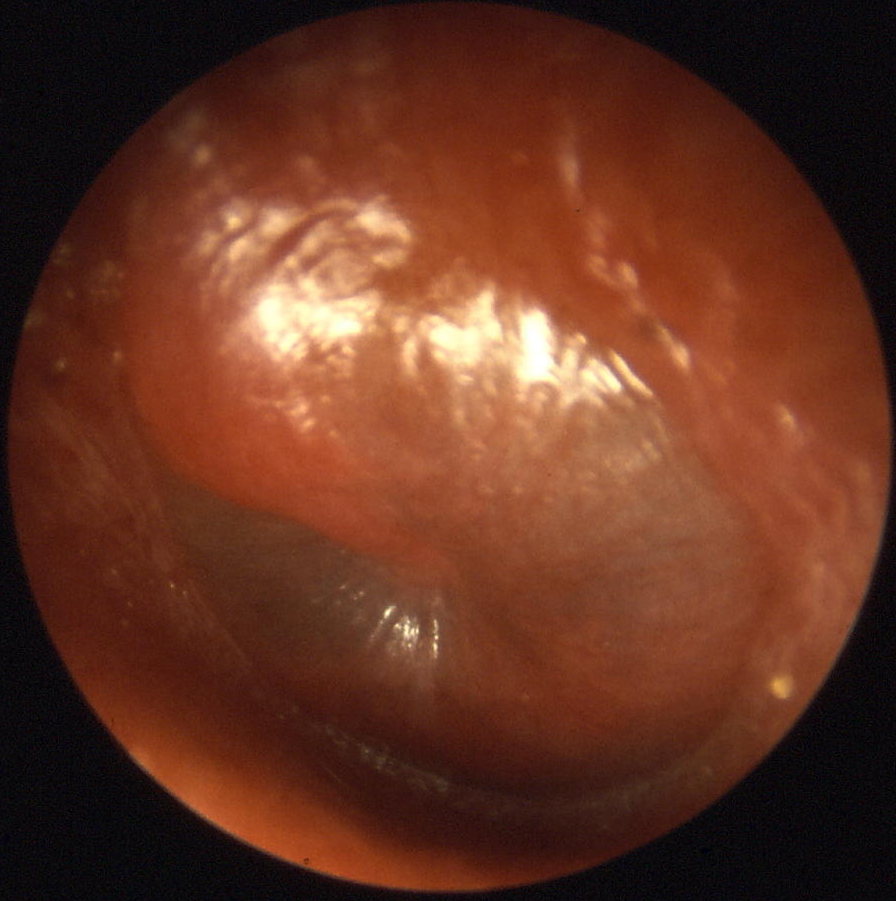
- Diagnose it with a moderately to severely bulging drum, or new otorrhea not caused by otitis externa. Mild bulging counts if ear pain began within 48 hours or the drum is intensely red.1,2
- Don't diagnose it without an effusion. Pneumatic otoscopy is up to 94% sensitive and 90% specific for middle ear fluid.2
- Otitis media with effusion is the common mimic. Its drum is neutral or retracted, not bulging, and amber or blue rather than white or pale yellow.2
- A red drum alone is not enough. Crying and viral myringitis also redden the drum.2
- Nonverbal children: holding, tugging or rubbing the ear can stand in for ear pain.2
Acute otitis media: treatment
| Child (6 months and older) | Initial plan |
|---|---|
| Otorrhea | Antibiotics |
| Severe symptoms, or follow-up can't be assured | Antibiotics |
| Both ears, no otorrhea, 6 months to 2 years | Antibiotics |
| Both ears, no otorrhea, 2 years and older | Antibiotics, or observe with a recheck in 48–72 hours |
| One ear, no otorrhea | Antibiotics, or observe with a recheck in 48–72 hours |
Adapted from the AAP guideline as summarized in American Family Physician. Severe means a toxic-appearing child, ear pain for more than 48 hours, or a temperature of 39°C (102.2°F) or higher in the past 48 hours.1,2
- First choice is high-dose amoxicillin. Use amoxicillin-clavulanate if the child took amoxicillin for otitis media in the past 30 days or has purulent conjunctivitis.1,2
- Penicillin allergy: the review authors suggest cefdinir or azithromycin.2
- Single-dose IM ceftriaxone works as well as amoxicillin for an isolated episode, but keep it in reserve: it leaves few options if it fails.1,2 The ceftriaxone label reports a lower cure rate than 10 days of oral amoxicillin-clavulanate in one of its two trials.10
- Duration: 10 days under age 2 or with severe symptoms; without severe symptoms, 7 days at ages 2–5 and 5–7 days from age 6.1,2 In children 6–23 months, 5 days of amoxicillin-clavulanate failed more often than 10 (34% vs 16%).11
- Treatment failure means severe symptoms and an unchanged drum after 48–72 hours, or otitis media again within 30 days. Switch amoxicillin to amoxicillin-clavulanate.2
- Pain: ibuprofen or acetaminophen. Evidence is too thin to recommend anesthetic ear drops routinely, and they should not be used if the drum may be perforated.2
What the trials show
- Cochrane review, antibiotics vs placebo (13 trials, 3,401 children): no effect on pain at 24 hours. Fewer children had pain at 2–3 days (number needed to treat 20). More had vomiting, diarrhea or rash (number needed to harm 14). Serious complications were rare and did not differ between groups.5
- Under age 2 (n = 291, stringent diagnosis): amoxicillin-clavulanate lowered the symptom burden and clinical failure by day 10–12 (16% vs 51%). Diarrhea and diaper dermatitis were more common. One child on placebo developed mastoiditis.12
Watching young children is debated. The AAP allows observation for one-ear, nonsevere otitis media from 6 months of age.1,2 A trial in children under 2 found antibiotics cut clinical failure sharply.12 The Cochrane authors conclude that observation seems justified for most children with mild disease in high-income countries.5
Infants and adults
- Infants 8 weeks and younger are at higher risk of sepsis, meningitis and mastoiditis. A febrile neonate under 2 weeks with apparent otitis media needs a full sepsis workup. After 2 weeks of age, amoxicillin is first-line.2 The AAP guideline does not cover infants under 6 months.1
- Adults: otitis media is much less common, about 5 per 1,000 person-years in people 15 and older in Dutch primary care, and falls with age.13 Adult treatment is extrapolated from children, with amoxicillin first-line. No trials have tested observation in adults, so the review authors advise antibiotics at the first visit.2
- Recurrent or persistent disease in adults (more than 2 episodes a year, or fluid lasting more than 6 weeks): refer to ENT to look for eustachian tube obstruction.2
Acute otitis externa
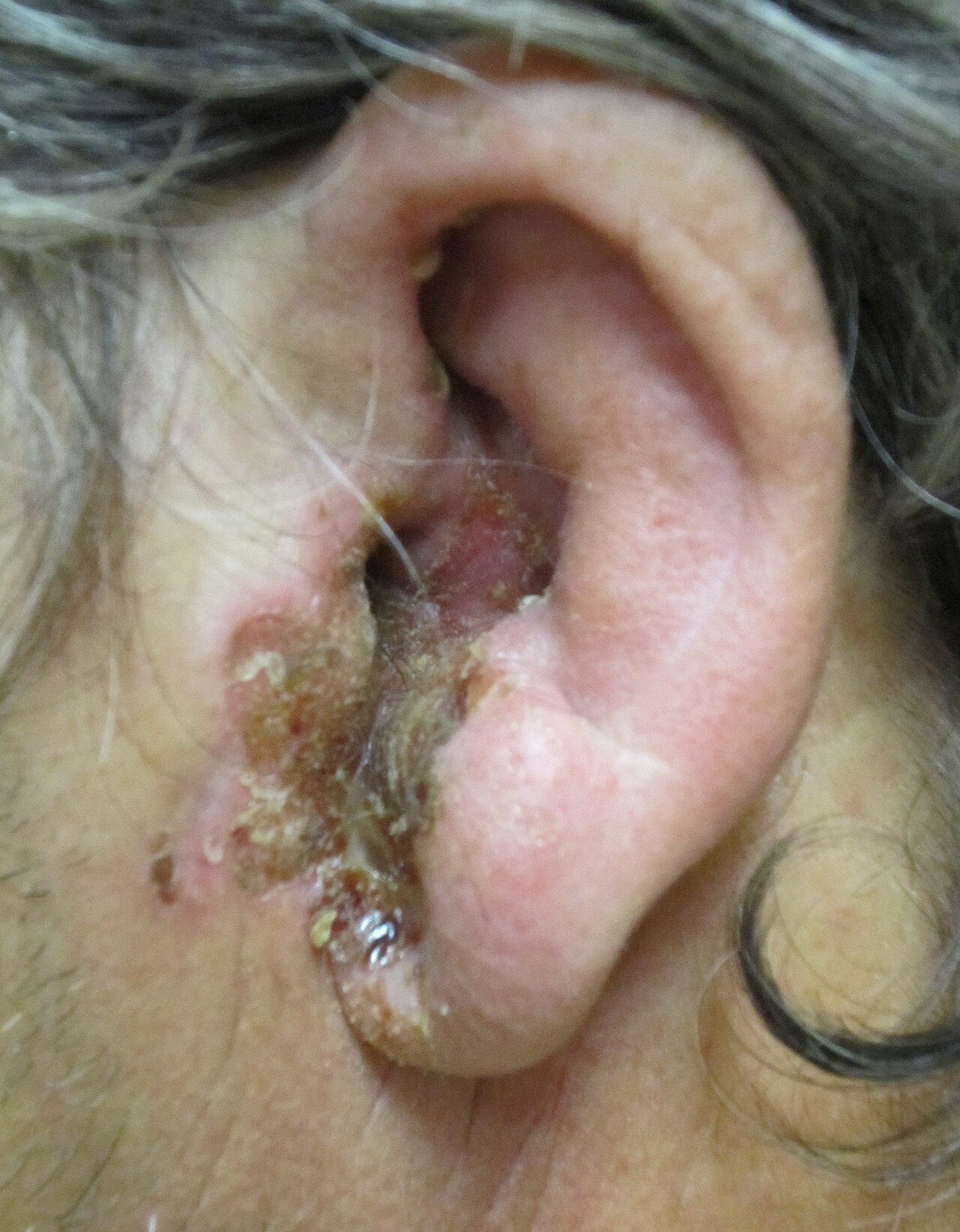
- Diagnose it from symptoms that began quickly (usually within 48 hours) in the past 3 weeks, with canal pain, itch or fullness, and tenderness on moving the tragus or pinna or diffuse canal swelling or redness.4
- Pseudomonas aeruginosa and Staphylococcus aureus cause most cases, so cultures are usually not needed. Swimming is the most common risk factor.4
- Check for factors that change treatment: a perforated drum or tympanostomy tube, diabetes, immune suppression or prior radiotherapy.3
- Drops are first-line. Topical antimicrobials beat placebo, and no class clearly beats another.14,4 Acetic acid was less effective than antibiotic-steroid drops when treatment ran past the first week.14
- Most patients improve within 24–72 hours. Resolution by 7–10 days ranged from 65% to 90%.4
- Help the drops get in. Teach how to give them, and clean the canal or place a wick if it is blocked.3 No trials have tested wicks.4
- Oral antibiotics are overused. 20–40% of patients get them, often agents such as amoxicillin that miss Pseudomonas and S. aureus.4 Reserve them for spread beyond the canal, immune suppression or uncontrolled diabetes, or when drops can't be given.3,4
- Reassess at 48–72 hours if there is no response, to confirm the diagnosis and look for other causes.3
Doses
| Drug | Dose | Notes |
|---|---|---|
| Acute otitis media | ||
| Amoxicillin, child | 80–90 mg/kg/day PO in 2 divided doses | Guideline high dose; first-line.1,2 |
| Amoxicillin, adult | 500 mg PO every 12 h (or 250 mg every 8 h); severe: 875 mg every 12 h (or 500 mg every 8 h) | Label dose for ear, nose and throat infections.8 |
| Amoxicillin-clavulanate | Dose per label and institutional protocol | Amoxicillin in the past 30 days, purulent conjunctivitis, or amoxicillin failure.2 |
| Acute otitis externa | ||
| Ofloxacin 0.3% otic | 10 drops in the affected ear once daily for 7 days (age 13 and older) | Can be used with a perforated drum.15,4 Age 6 months to 13 years: 5 drops.15 |
| Ciprofloxacin 0.3% / dexamethasone 0.1% otic | 4 drops in the affected ear twice daily for 7 days (age 6 months and older) | Can be used with a perforated drum.16,4 |
| Neomycin / polymyxin B / hydrocortisone otic | Not if the drum may be perforated | Ototoxic; can cause contact sensitivity.4 |
Unreviewed doses. Verify against the current label and your institution's protocol before giving anything.
Warm otic drops in the hand for 1–2 minutes before use to avoid dizziness, and keep the treated ear up afterward.15,16
Ear emergencies
Mastoiditis
- Suspect it after otitis media that is not responding, or with mastoid tenderness, redness behind the ear, an ear pushed forward, fever and malaise. It mostly affects children.6
- A normal white count or inflammatory markers does not exclude it.6
- Treat with IV antibiotics, such as ampicillin-sulbactam or ceftriaxone, and consult ENT.6
- Complications include subperiosteal and intracranial abscess, facial nerve palsy, meningitis and venous sinus thrombosis.6
When to scan: an emergency medicine review recommends contrast CT of the temporal bones when the diagnosis is uncertain.6 A pediatric emergency medicine blog argues the diagnosis is clinical and reserves CT for neurological or cranial nerve signs, cholesteatoma, or a child who worsens on treatment.17
Necrotizing (malignant) otitis externa
- Who gets it: typically older, male and diabetic patients. Delays before referral are common.7
- What to look for: granulation or necrotic tissue in the canal, cranial nerve involvement, a raised ESR or CT changes, in a diabetic or immunosuppressed patient.4
- Consensus criteria include canal swelling, otorrhea and granulation; ear pain, often worse at night; CT or MRI changes; symptoms despite treatment for at least 2 weeks; and at least one risk factor for impaired immunity. Cultures do not have to be positive.9
- It is an emergency: consult ENT, admit, and start IV antibiotics; debridement may be needed.4 Strong evidence on diagnostic criteria and treatment is lacking.7
Disposition
- Home: most otitis media and otitis externa, with pain control and clear return advice.2,4
- Observation without antibiotics: only with a way to recheck in 48–72 hours.1,2
- Return at once for vomiting, high fever, headache or pain behind the ear.2
- Admit suspected mastoiditis or necrotizing otitis externa for IV antibiotics and ENT care.6,4
- Refer to ENT for otitis externa that worsens despite treatment or a canal too swollen to clean or wick.4
Pitfalls
- Calling a red drum in a crying child otitis media. Look for bulging or otorrhea.1,2
- Treating otitis externa with oral amoxicillin. It misses the usual organisms; drops are the treatment.4
- Putting neomycin-containing drops into an ear that may have a perforation or a tube.3,4
- Writing 5 days of antibiotics for a child under 2. Give 10.1,2,11
- Sending home an older diabetic with stubborn otitis externa and granulation tissue as a simple case.4,7
- Ruling out mastoiditis with a normal white count.6
How strong is the evidence?
The AAP guideline covers children 6 months to 12 years with uncomplicated otitis media.1 The review that summarizes it grades most of its key recommendations C: guideline advice resting on observational studies.2 Antibiotic effects in children are well studied in placebo-controlled trials.5 Adult otitis media has almost no trial evidence.2 For otitis externa, topical drops are well supported, but most comparisons rest on small, low-quality trials.14 Necrotizing otitis externa lacks strong evidence for diagnosis or treatment.7
On-shift teaching
Questions to ask a learner at the bedside. Tap a question to see the answer. Every answer uses facts cited above.
Q1What exam finding do you need before calling it acute otitis media?
Q2How much do antibiotics help a child with otitis media?
Q3Which children with otitis media should get antibiotics right away?
Q4Why not give oral amoxicillin for swimmer's ear?
Q5The drum can't be seen and may be perforated. Which drops?
References
What this page is built on
17 sources, cited 153 times. Dots are sources, filled by how far each was read; stronger color means a larger share of the citations. Tap a tier to see its sources.
Checked by the writer, not a physician. The dots show how each source was read, not that anyone has confirmed the claims.
- 1Lieberthal AS, Carroll AE, Chonmaitree T, et al. The diagnosis and management of acute otitis media. Pediatrics. 2013;131(3):e964–e999.
- 2Gaddey HL, Wright MT, Nelson TN. Otitis media: rapid evidence review. Am Fam Physician. 2019;100(6):350–356.
- 3Rosenfeld RM, Schwartz SR, Cannon CR, et al. Clinical practice guideline: acute otitis externa. Otolaryngol Head Neck Surg. 2014;150(1 Suppl):S1–S24.
- 4Jackson EA, Geer K. Acute otitis externa: rapid evidence review. Am Fam Physician. 2023;107(2):145–151.
- 5Venekamp RP, Sanders SL, Glasziou PP, et al. Antibiotics for acute otitis media in children. Cochrane Database Syst Rev. 2023;11(11):CD000219.
- 6Bridwell RE, Koyfman A, Long B. High risk and low prevalence diseases: acute mastoiditis. Am J Emerg Med. 2024;79:63–69.
- 7Mahdyoun P, Pulcini C, Gahide I, et al. Necrotizing otitis externa: a systematic review. Otol Neurotol. 2013;34(4):620–629.
- 8Amoxil (amoxicillin) for oral suspension. US prescribing information. DailyMed.
- 9Lodhi S, Dodgson K, Dykes M, et al. Diagnostic criteria and core outcome set development for necrotising otitis externa: the COSNOE Delphi consensus study. J Laryngol Otol. 2024;138(9):913–920.
- 10Ceftriaxone for injection. US prescribing information (Hospira). DailyMed.
- 11Hoberman A, Paradise JL, Rockette HE, et al. Shortened antimicrobial treatment for acute otitis media in young children. N Engl J Med. 2016;375(25):2446–2456.
- 12Hoberman A, Paradise JL, Rockette HE, et al. Treatment of acute otitis media in children under 2 years of age. N Engl J Med. 2011;364(2):105–115.
- 13Rijk MH, Hullegie S, Schilder AGM, et al. Incidence and management of acute otitis media in adults: a primary care-based cohort study. Fam Pract. 2021;38(4):448–453.
- 14Kaushik V, Malik T, Saeed SR. Interventions for acute otitis externa. Cochrane Database Syst Rev. 2010;(1):CD004740.
- 15Ofloxacin otic solution 0.3%. US prescribing information. DailyMed.
- 16Ciprodex (ciprofloxacin 0.3% and dexamethasone 0.1%) otic suspension. US prescribing information. DailyMed.
- 17Fox SM. Mastoiditis. Pediatric EM Morsels; October 5, 2012.
AI-generated draft. Not reviewed by a physician. This page is for education only and may contain errors, including in doses. Do not use it to diagnose, treat or make decisions about any patient. Rely on your own clinical judgment, your institution's protocols and current drug labeling. Reading this page does not create a physician-patient relationship. Full terms