Opioid overdose
Bottom line
- Treat the breathing, not the coma. Titrate naloxone to a respiratory rate over 10 and oxygen saturation over 92% with protected airway reflexes. Full wakefulness is not the goal.1
- Start small and repeat. The UK guideline gives 100–200 micrograms IV every 60 seconds. Some patients still need a total of 2–4 mg.1 The US label allows 0.4–2 mg IV, repeated every 2–3 minutes.2
- Overshooting has a cost. Too much naloxone causes withdrawal and can unmask stimulant toxicity.1 Prehospital totals over 4.4 mg were associated with more pulmonary complications (42% vs 26%).3
- Observation time is disputed. The UK guideline advises at least 4 hours after the last naloxone dose and 6 hours after use.1 The St. Paul's rule allows discharge after a normal check 1 hour after naloxone.4,5
- The visit is a chance to prevent death. In Massachusetts, 5.5% of patients discharged after an overdose died within a year.6 ED-started buprenorphine nearly doubled engagement in addiction treatment at 30 days (78% vs 37%).7
Recognize
- The classic triad is drowsiness, slow or shallow breathing, and pinpoint pupils.1
- Other features include vomiting, itching or hives, hypotension, bradycardia, seizures, and hypothermia from exposure.1
- Look for complications: aspiration pneumonia, rhabdomyolysis, compartment syndrome, skin necrosis and hypoxic brain injury.8
- Expect co-ingestants. Alcohol, benzodiazepines and pregabalin deepen respiratory depression. Cocaine or synthetic cannabinoids can mask the toxidrome.1
- The diagnosis is clinical. A urine drug screen has no role in immediate management. A trial of naloxone can help confirm it in a drowsy patient with poor breathing.1
- Naloxone does not reverse non-opioid drugs. Partial agonists such as buprenorphine may reverse incompletely or need higher doses.2
First 10 minutes
- Support ventilation first. If naloxone gives an incomplete response, assist breathing mechanically.2
- Give naloxone IV in small steps: 100–200 micrograms every 60 seconds until the respiratory rate is over 10.1
- No IV access? Give it IM, intranasally or IO. These routes reach peak levels more slowly.1
- Aim for a respiratory rate over 10 and oxygen saturation over 92% on room air (88–92% in COPD). Nasal end-tidal CO₂ can help if your team uses it.1
- Needs more boluses after the first response? Start an infusion (below).1
- No response after 10 mg? Question whether opioids are the cause.2
- Drowsy with respiratory depression. Open the airway and support ventilation.2
- IV access?NoGive naloxone IM, intranasally or IO. Expect a slower peak.1
- YesNaloxone 100–200 micrograms IV every 60 seconds.1
- Respiratory rate over 10, oxygen saturation over 92%?No, after 10 mgQuestion the diagnosis. Keep ventilating.2
- YesBreathing stays adequate without more boluses?No: needs a second roundStart an infusion: per hour, 60% of the second round's total dose.1
- YesObserve. At least 4 hours after the last dose and 6 hours after use; longer for long-acting opioids.1
Naloxone
| Use | Adult dose | Notes |
|---|---|---|
| Bolus | ||
| IV, ED titration | 100–200 micrograms every 60 s | Repeat until respiratory rate > 10. Totals of 2–4 mg may be needed.1 |
| IV, US label | 0.4–2 mg, repeat every 2–3 min | IM or subcutaneous if IV is not available. Question the diagnosis after 10 mg.2 |
| Intranasal spray | 4 mg per spray | One spray per device.9 In the ED, use it only when IV access is difficult.1 |
| Infusion | ||
| Starting rate | 60% of the second-round dose, per hour | Mix 4 mg in 40 mL total (100 micrograms/mL).1 |
| Recurrent depression on infusion | Bolus 100–200 micrograms every 60 s, up to 2 mg | Then raise the hourly rate by 60% of the bolus total.1 |
| Withdrawal on infusion | Cut the rate by 50% | If very agitated, stop. Restart after 30–60 min at half the rate.1 |
Unreviewed doses. Verify against the current label and your institution's protocol before giving anything.
Starting dose: the UK guideline titrates from 100–200 micrograms to avoid withdrawal.1 The US label starts at 0.4–2 mg.2 In one prehospital cohort, a first dose above 0.4 mg was associated with more pulmonary complications (27% vs 13%).3 Outside cardiac or respiratory arrest, start low.
Infusion rates
| Total bolus that worked | Start at | Rate at 100 micrograms/mL |
|---|---|---|
| 200 micrograms | 120 micrograms/h | 1.2 mL/h |
| 400 micrograms | 240 micrograms/h | 2.4 mL/h |
| 800 micrograms | 480 micrograms/h | 4.8 mL/h |
| 1,000 micrograms | 600 micrograms/h | 6.0 mL/h |
| 2,000 micrograms | 1,200 micrograms/h | 12.0 mL/h |
Selected rows from the RCEM/NPIS starting-rate table.1
- Observe every 15 minutes for the first hour, then every 30 minutes. Restart that schedule whenever the rate changes.1
- Hold the rate for at least 4 hours, then wean by 25% of the maximum rate every 2 hours.1
- Don't stop it between midnight and 6 am unless the patient is in withdrawal. Recurrence is harder to spot in a sleeping patient.1
Harms of too much naloxone
- Withdrawal: yawning, rhinorrhea, tearing, dilated pupils, tachycardia, hypertension, diarrhea, tremor, anxiety and restlessness.1
- Unmasked stimulants: after cocaine or methamphetamine, reversal can leave an agitated patient who needs restraint or intubation. Withdrawal also makes people avoid care.1
- Pulmonary complications: in 1,831 Pittsburgh patients, totals over 4.4 mg had higher odds after adjustment (OR 1.85). Pulmonary edema itself occurred in 1.1%. The study was retrospective and cannot show cause.3
- Cardiac events such as pulmonary edema, ventricular arrhythmias and arrest are reported after abrupt postoperative reversal, mostly in patients with heart disease.2
Routes, fentanyl and newer opioids
- Intranasal is slower than IM at the same dose. In a blinded trial at a supervised injecting site (n = 197), 800 micrograms intranasally needed a rescue dose more often than 800 micrograms IM (23.1% vs 8.6%).10
- Nitazenes and other novel potent opioids can be stronger and longer acting than heroin. Isotonitazene is about twice as potent as fentanyl.1
- In a small US cohort, patients with novel potent opioids needed more in-hospital naloxone boluses than fentanyl-only patients (9 vs 11 patients).11
Cardiac arrest
The role of naloxone once the heart has stopped is uncertain. The American Heart Association calls it a critical evidence gap.12 In 3,811 Californian arrests in adults under 50 that nobody witnessed, EMS naloxone was associated with higher survival to discharge (8.1% vs 4.4%; adjusted difference 2.75 points). Among patients who also got epinephrine, the benefit was not seen. The data are observational.12
Observation and disposition
- UK standard: observe at least 4 hours after the last naloxone dose and at least 6 hours after the suspected time of use. Discharge when observations and mental state are normal.1
- Long-acting opioids such as methadone or a novel synthetic opioid: extend observation up to 12 hours.1
- How long toxicity lasts: about 6 hours for heroin, up to 12 hours for controlled-release products, and more than 24 hours for methadone and oxycodone.8
- Ongoing infusion: admit. Weaning is rarely finished in the ED.1
- Don't give IM naloxone alongside IV doses or just before discharge.1
| St. Paul's rule: 1 hour after naloxone | Discharge if all are met |
|---|---|
| Mobility | Can walk as usual |
| Oxygen saturation, room air | > 92% (95% in the validation study) |
| Respiratory rate | > 10 and < 20 /min |
| Temperature | > 35.0 and < 37.5 °C |
| Heart rate | > 50 and < 100 /min |
| Glasgow Coma Scale | 15 |
- Derivation (Vancouver, n = 573): sensitivity 99% and specificity 40% for adverse events within 24 hours.4 No discharged patient had a serious adverse event within 24 hours.13
- Validation (Buffalo, n = 538, after prehospital naloxone): adverse events in 15.4%. Sensitivity 84.1%, specificity 62.1%, negative predictive value 95.6%.5
- Refusing transport: across observational studies of 5,443 patients treated without transport, 4 died of rebound toxicity.14
The UK guideline sets a 4–6 hour minimum and calls for research on safe discharge criteria.1 A systematic review concluded that 1 hour is enough if the patient walks normally, has normal vital signs and a GCS of 15.14 The St. Paul's rule was derived in 2000. Its validation, run as synthetic opioids emerged, found lower sensitivity (84% vs 99%).4,5
Before they leave
- Risk of death is high, and early. Of 11,557 Massachusetts patients, 1.1% died within a month and 0.25% within 2 days.6 In Ontario, 5.3% died within a year, 1.9% from opioids.15
- Higher-risk groups in Ontario: men, and people on opioid agonist therapy or benzodiazepines in the prior year.15
- Offer brief intervention and referral to drug services. Offer blood-borne virus testing.1
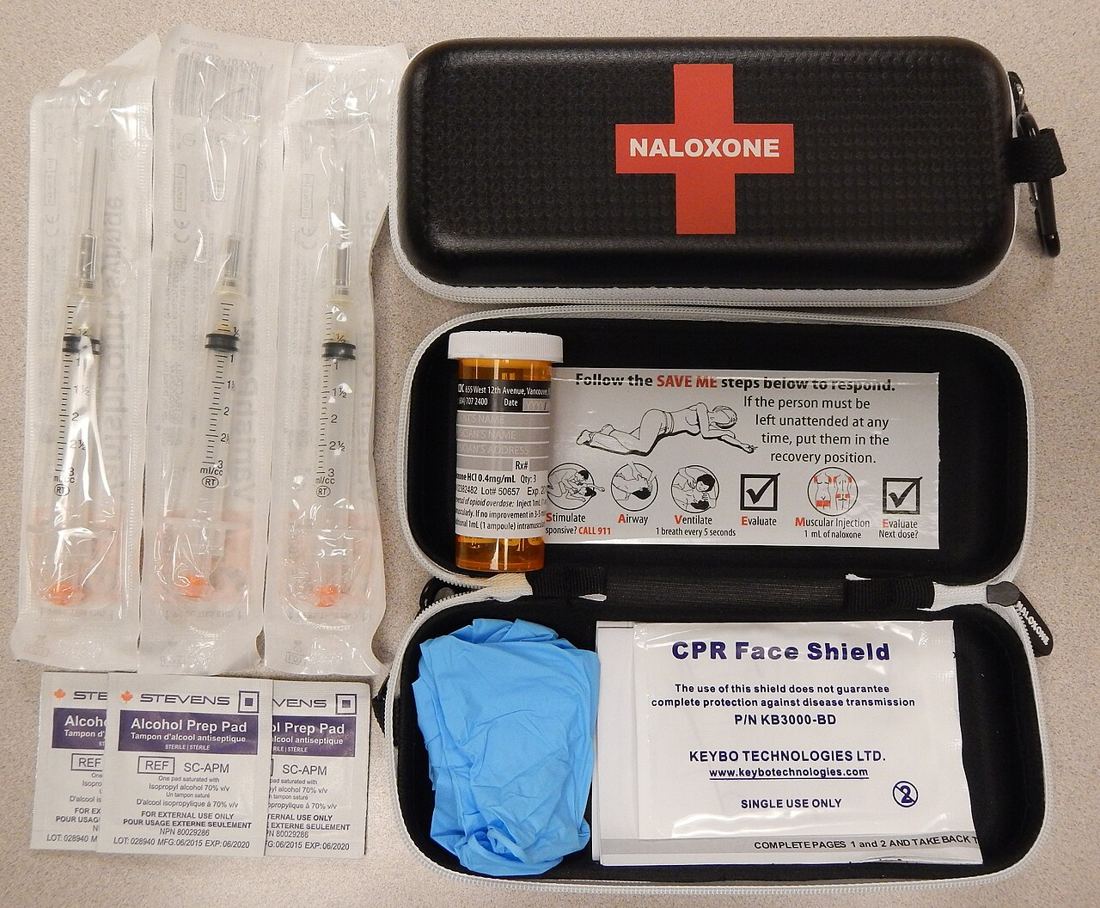
- Hand out take-home naloxone. It is known to reduce drug deaths.1
- Offer buprenorphine. In 329 opioid-dependent ED patients, ED-started buprenorphine raised treatment engagement at 30 days to 78%, versus 37% with referral and 45% with brief intervention.7
- Injectable or sublingual both work. In 1,994 patients, 76% of them fentanyl-positive, engagement at 7 days was 40.5% with 7-day extended-release injection vs 38.5% sublingual. Precipitated withdrawal occurred in under 1%.16
Pitfalls
- Pushing naloxone until the patient is fully awake. The target is breathing and airway reflexes.1
- Giving IM naloxone "for the road." The UK guideline actively discourages it.1
- Discharging at 1 hour after methadone, a controlled-release product or a suspected novel opioid.1,8
- Missing a co-ingested sedative or stimulant. Alcohol and benzodiazepines deepen respiratory depression.1
- Forgetting the ECG after methadone or oxycodone, which can prolong the QT.8
- Discharging without naloxone, a referral, or an offer of buprenorphine.1,7
How strong is the evidence?
The UK guideline is a best-practice consensus without graded recommendations, and it names discharge criteria as a research priority.1 Observation rules rest on two single-region cohorts.4,5 The link between high naloxone doses and lung complications is retrospective.3 Naloxone in cardiac arrest has only observational support.12 The strongest data are the randomized trials of intranasal naloxone and ED-started buprenorphine.10,7,16
On-shift teaching
Questions to ask a learner at the bedside. Tap a question to see the answer. Every answer uses facts cited above.
Q1What are you titrating naloxone to?
Q2A patient needed 800 micrograms to breathe, then slowed again and needed another 800. What infusion rate do you start?
Q3Why not just give 2 mg IV up front?
Q4What are the six St. Paul's criteria for discharge 1 hour after naloxone?
Q5When do you extend observation to 12 hours?
References
What this page is built on
16 sources, cited 92 times. Dots are sources, filled by how far each was read; stronger color means a larger share of the citations. Tap a tier to see its sources.
Checked by the writer, not a physician. The dots show how each source was read, not that anyone has confirmed the claims.
- 1Royal College of Emergency Medicine and National Poisons Information Service. Guideline for the Assessment and Management of Acute Opioid Toxicity in Adults in the Emergency Department. April 2024. Published as Blundell M, Gill R, Thanacoody R, et al. Emerg Med J. 2024;41(7):440–445.
- 2Naloxone hydrochloride injection, USP. Prescribing information. Somerset Therapeutics. DailyMed.
- 3Farkas A, Lynch MJ, Westover R, et al. Pulmonary complications of opioid overdose treated with naloxone. Ann Emerg Med. 2020;75(1):39–48.
- 4Christenson J, Etherington J, Grafstein E, et al. Early discharge of patients with presumed opioid overdose: development of a clinical prediction rule. Acad Emerg Med. 2000;7(10):1110–1118.
- 5Clemency BM, Eggleston W, Shaw EW, et al. Hospital Observation Upon Reversal (HOUR) with naloxone: a prospective clinical prediction rule validation study. Acad Emerg Med. 2019;26(1):7–15.
- 6Weiner SG, Baker O, Bernson D, Schuur JD. One-year mortality of patients after emergency department treatment for nonfatal opioid overdose. Ann Emerg Med. 2020;75(1):13–17.
- 7D'Onofrio G, O'Connor PG, Pantalon MV, et al. Emergency department-initiated buprenorphine/naloxone treatment for opioid dependence: a randomized clinical trial. JAMA. 2015;313(16):1636–1644.
- 8Long N. Opioid toxicity. Life in the Fast Lane Toxicology Library; November 2020.
- 9Narcan (naloxone hydrochloride) nasal spray 4 mg. Drug Facts. DailyMed.
- 10Dietze P, Jauncey M, Salmon A, et al. Effect of intranasal vs intramuscular naloxone on opioid overdose: a randomized clinical trial. JAMA Netw Open. 2019;2(11):e1914977.
- 11Amaducci A, Aldy K, Campleman SL, et al. Naloxone use in novel potent opioid and fentanyl overdoses in emergency department patients. JAMA Netw Open. 2023;6(8):e2331264.
- 12Wang RC, Toy J, Montoy JCC, et al. Naloxone and clinical outcomes in suspected opioid-associated out-of-hospital cardiac arrests. JAMA Netw Open. 2026;9(5):e2615539.
- 13Etherington J, Christenson J, Innes G, et al. Is early discharge safe after naloxone reversal of presumed opioid overdose? CJEM. 2000;2(3):156–162.
- 14Willman MW, Liss DB, Schwarz ES, Mullins ME. Do heroin overdose patients require observation after receiving naloxone? Clin Toxicol (Phila). 2017;55(2):81–87.
- 15Leece P, Chen C, Manson H, et al. One-year mortality after emergency department visit for nonfatal opioid poisoning: a population-based analysis. Ann Emerg Med. 2020;75(1):20–28.
- 16D'Onofrio G, Herring AA, Hawk KF, et al. Emergency department-initiated buprenorphine for opioid use disorder: a randomized clinical trial. JAMA. 2026;335(11):948–960.
AI-generated draft. Not reviewed by a physician. This page is for education only and may contain errors, including in doses. Do not use it to diagnose, treat or make decisions about any patient. Rely on your own clinical judgment, your institution's protocols and current drug labeling. Reading this page does not create a physician-patient relationship. Full terms