


Low back pain without red flags
Bottom line
- Look for red flags first; they are uncommon but they matter. Serious spinal disease needing urgent treatment was found in 2.5–5.1% of ED back pain in prospective studies.1 The most useful flags include a history of cancer, saddle anesthesia, urinary retention, a procedure-related infection, and older age.2
- No red flags, no imaging. Routine imaging does not improve pain or function.3,4,5 Consider it only if pain fails to improve after about 6 weeks of treatment, or if red flags appear.5
- An NSAID is the drug to give. NICE and the American College of Physicians (ACP) both support it.3,6 Acetaminophen alone works no better than placebo for acute back pain.7
- Adding more drugs did not help in ED trials. Cyclobenzaprine, oxycodone-acetaminophen, orphenadrine, methocarbamol, baclofen, metaxalone, tizanidine and diazepam each failed to beat an NSAID plus placebo at 1 week.8,9,10,11
- Reassure and keep the patient moving. Pain falls steeply in the first week after an ED visit, though some persists at 6 months.12 Advise staying active and returning to normal activities.3
First steps
- Take a focused history and examine. Ask about cancer, injection drug use, indwelling catheters, other infection, steroid use, trauma, and bladder or saddle symptoms.1,13,2
- Exclude specific causes such as cancer, infection, fracture and inflammatory disease. If you suspect one, follow that pathway instead; this page covers back pain without red flags.3 For bladder, saddle or bilateral leg symptoms, see the EMA Cited article on cauda equina syndrome.
- Do not image in the absence of red flags.3,5
- Treat pain with an NSAID unless it is contraindicated (dose table below).3,6
- Explain the expected course and give advice to stay active.12,3
- Discharge with return advice: come back for new or changing symptoms, which should prompt a fresh look for another diagnosis.3
- No
- Yes
- Either way
Red flags
Serious spinal disease is more common in the ED than in primary care. Across 22 studies (41,320 patients), conditions needing immediate or urgent treatment made up 2.5–5.1% of cases in prospective studies, and 0.7–7.4% in retrospective ones.1
| Condition | Flags with the best evidence | Source |
|---|---|---|
| Spinal cancer | History of cancer: post-test probability 33% in one review | 13,1 |
| Spinal epidural abscess | Injection drug use, indwelling vascular catheter, infection elsewhere | 1 |
| Vertebral fracture | Older age, prolonged corticosteroid use, severe trauma, contusion or abrasion. Several flags together raise the probability sharply | 13 |
| Cauda equina compression | Saddle anesthesia, urinary retention | 2 |
Most red flags have weak or untested accuracy. Many shift the probability of disease very little, and the accuracy of most was reported by a single study.13,1 Few exam findings reliably rule serious pathology in or out.2 Use them to decide who needs a workup, not as a checklist that guarantees safety.
Imaging
- Uncomplicated acute low back pain, with or without radiculopathy, does not need imaging. It is a benign, self-limited condition.5 NICE advises against routine imaging outside specialist settings.3
- Imaging does not change outcomes. In 6 trials (n = 1,804), immediate imaging did not improve pain or function at up to 3 months or at 6–12 months, compared with usual care.4 A 2026 review found the same in patients without signs of serious pathology.2
- When to image: red flags suggesting cauda equina syndrome, cancer, fracture or infection, or little improvement after up to 6 weeks of medical management and physical therapy.5
Treatment
Most patients with acute low back pain improve over time whatever the treatment. The ACP recommends nondrug treatment first (superficial heat, moderate-quality evidence), and an NSAID or skeletal muscle relaxant if a drug is wanted (strong recommendation, moderate-quality evidence).6 NICE recommends considering an oral NSAID at the lowest effective dose for the shortest time, taking into account GI, liver and cardio-renal toxicity and the patient's age.3
| Drug | Adult dose | Notes |
|---|---|---|
| First line | ||
| Naproxen | 500 mg PO, then 250 mg every 6–8 h as needed; max 1,250 mg/day | Label dosing for pain.14 The ED trials gave 500 mg twice daily.8,9 |
| Ibuprofen | 400 mg PO every 4–6 h as needed | In the label's pain trials, doses above 400 mg worked no better.15 Oral ibuprofen beat topical diclofenac gel at 2 days.17 |
| Ketorolac IV (in the ED) | 30 mg once; 15 mg if ≥ 65, renal impairment or < 50 kg | Total use, IV plus oral, no more than 5 days.18 In an ED trial, 10, 15 and 30 mg IV relieved acute pain equally.19 |
| Second line, if an NSAID can't be used | ||
| Cyclobenzaprine | 5 mg PO three times daily; may increase to 10 mg three times daily | Not for more than 2–3 weeks; start at 5 mg in older adults.20 Added nothing to naproxen in the ED.8 |
| Not recommended | ||
| Acetaminophen alone | — | No better than placebo for acute low back pain (high-quality evidence).7,3 |
| Opioids | — | Not routinely. Oxycodone gave no significant pain benefit over placebo at 6 weeks.3,21 |
| Diazepam | — | No better than placebo added to naproxen.11 |
Unreviewed doses. Verify against the current label and your institution's protocol before giving anything.
What the ED trials show
- Cyclobenzaprine or oxycodone-acetaminophen added to naproxen (n = 323): function improved by about 10 points on a 24-point disability scale in all three groups at 1 week, with no significant difference.8 REBEL EM concluded that naproxen alone is enough.22
- Orphenadrine or methocarbamol added to naproxen (n = 240): no clinically important difference at 1 week.9
- Baclofen, metaxalone or tizanidine added to ibuprofen (n = 320): no better than placebo at 1 week; about a third of every group still had moderate or severe pain.10
- Diazepam added to naproxen (n = 114): no improvement in function or pain at 1 week or 3 months, and more adverse events (21% vs 15%).11
- Opioids: in the OPAL trial (n = 347, primary care and ED), oxycodone-naloxone gave no significant pain benefit over placebo at 6 weeks and caused more constipation (7.5% vs 3.5%).21
- In the ED itself: ketoprofen gel beat placebo at 30 minutes for nonspecific back pain. IV acetaminophen and IV morphine beat placebo at 30 minutes for sciatica. Corticosteroids did not help either group by discharge.16
Muscle relaxants. The ACP recommends them as a first-line drug option (moderate-quality evidence)6, and a 2026 review found moderate confidence in some benefit.2 But a 2021 meta-analysis found only a small, not clinically important pain reduction (very low certainty) with more adverse events (RR 1.6)23, and six muscle relaxants added to an NSAID each failed in ED trials.8,9,10 A reasonable reading: an NSAID alone for most; a muscle relaxant only when an NSAID can't be used.
Nondrug care
- Advice and self-management at every step: what back pain is, and encouragement to continue normal activities.3
- Superficial heat is an ACP first-line option (moderate-quality evidence).6
- Not recommended by NICE: belts or corsets, traction, TENS, and acupuncture. Manual therapy only as part of a package that includes exercise.3
Sciatica
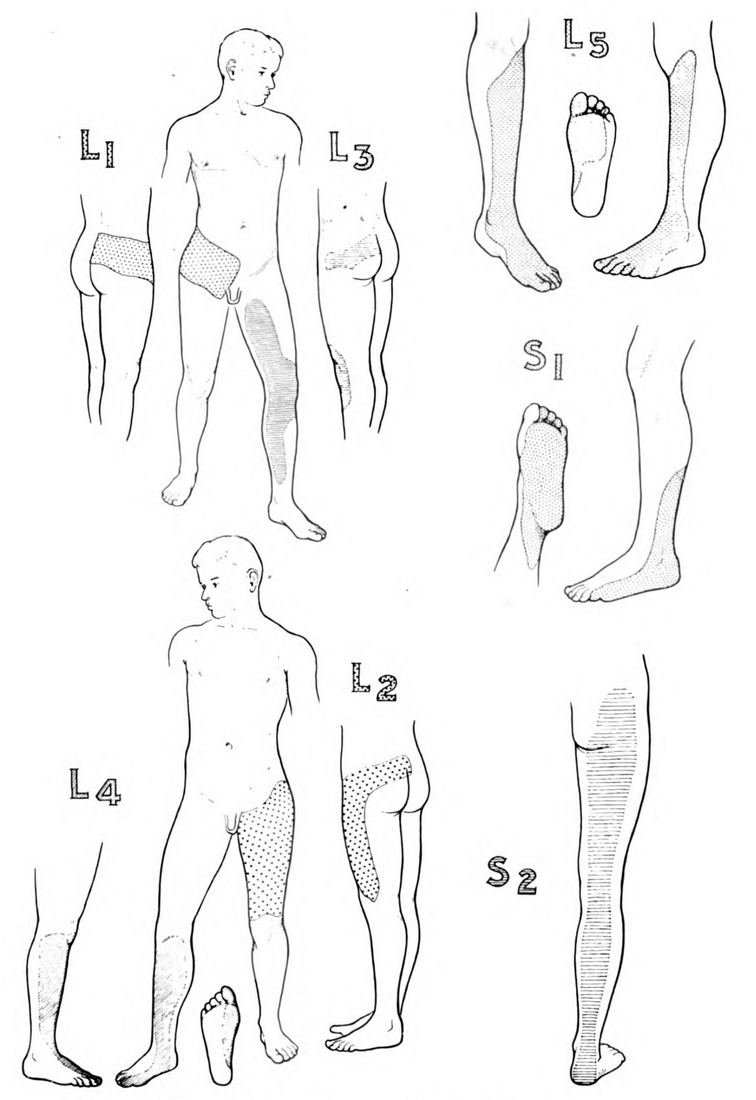
- The same approach applies. Uncomplicated radiculopathy needs no imaging.5
- Avoid gabapentinoids, other antiepileptics, oral corticosteroids and benzodiazepines; NICE found no overall benefit and evidence of harm.3
- NSAIDs: NICE notes limited evidence of benefit in sciatica, and advises the lowest effective dose for the shortest time.3
Systemic steroids for radiculopathy. NICE advises against oral corticosteroids for sciatica.3 A 2026 review found systemic steroids improved function in radiculopathy, with low confidence.2 In ED trials, corticosteroids did not reduce pain by discharge.16
Disposition and follow-up
- Expect improvement, not instant cure. In 8 studies (1,994 ED patients), mean pain on a 0–100 scale fell from 71 at presentation to 46 after 1 day and 42 after 1 week, and was 13.5 at 26 weeks. On average, some pain persisted at 6 months.12
- Who is likely to do worse: maladaptive coping, poor general health and psychiatric comorbidity predicted persistent disabling pain.2 NICE suggests a risk tool such as STarT Back to match the intensity of support to the risk of a poor outcome.3
- Promote return to work and normal daily activities.3
- Safety-net: return for new or changed symptoms, which should prompt a search for another diagnosis.3
Pitfalls
- Ordering a lumbar X-ray or CT "to reassure" a patient without red flags. It does not improve outcomes.4,5
- Prescribing a muscle relaxant, opioid or benzodiazepine on top of an NSAID by default.8,11,10
- Giving acetaminophen alone and calling it first-line.7,3
- Using ibuprofen doses above 400 mg expecting more pain relief.15
- Treating red flags as a guarantee. Most have poor accuracy, so reassess anyone whose symptoms change.13,3
- Missing infection in a patient who injects drugs or has an indwelling catheter.1
How strong is the evidence?
For most treatments, benefits are small and seen in the first few weeks.2 A network meta-analysis of 98 trials found the comparative effectiveness of analgesics for acute back pain uncertain, and tramadol raised the risk of adverse events (RR 2.6).24 The ED add-on trials are randomized and placebo-controlled, but all come from one research group working in urban EDs.8,9,10,11 The ACP guideline rests on evidence searched through November 2016.6 A 2026 multidisciplinary US guideline on acute low back pain has been published, but its recommendations were not openly readable for this page.25
On-shift teaching
Questions to ask a learner at the bedside. Tap a question to see the answer. Every answer uses facts cited above.
Q1How often does ED back pain turn out to be a serious spinal condition?
Q2Which red flag best predicts spinal cancer?
Q3A patient without red flags asks for an X-ray. What does the evidence say?
Q4Does adding cyclobenzaprine or oxycodone-acetaminophen to naproxen help?
Q5Why not acetaminophen as first-line?
References
What this page is built on
25 sources, cited 135 times. Dots are sources, filled by how far each was read; stronger color means a larger share of the citations. Tap a tier to see its sources.
Checked by the writer, not a physician. The dots show how each source was read, not that anyone has confirmed the claims.
- 1Galliker G, Scherer DE, Trippolini MA, et al. Low back pain in the emergency department: prevalence of serious spinal pathologies and diagnostic accuracy of red flags. Am J Med. 2020;133(1):60–72.e14.
- 2Skelly AC, Chou R, Brodt ED, et al. Assessment and treatment of acute low back pain (ALBP): a systematic review. Pain Med. 2026 (online ahead of print).
- 3National Institute for Health and Care Excellence. Low back pain and sciatica in over 16s: assessment and management (NG59). Published November 2016; last updated July 2026.
- 4Chou R, Fu R, Carrino JA, Deyo RA. Imaging strategies for low-back pain: systematic review and meta-analysis. Lancet. 2009;373(9662):463–472.
- 5Expert Panel on Neurological Imaging; Hutchins TA, Peckham M, et al. ACR Appropriateness Criteria® low back pain: 2021 update. J Am Coll Radiol. 2021;18(11S):S361–S379.
- 6Qaseem A, Wilt TJ, McLean RM, Forciea MA; Clinical Guidelines Committee of the American College of Physicians. Noninvasive treatments for acute, subacute, and chronic low back pain: a clinical practice guideline from the American College of Physicians. Ann Intern Med. 2017;166(7):514–530.
- 7Saragiotto BT, Machado GC, Ferreira ML, et al. Paracetamol for low back pain. Cochrane Database Syst Rev. 2016;(6):CD012230.
- 8Friedman BW, Dym AA, Davitt M, et al. Naproxen with cyclobenzaprine, oxycodone/acetaminophen, or placebo for treating acute low back pain: a randomized clinical trial. JAMA. 2015;314(15):1572–1580.
- 9Friedman BW, Cisewski D, Irizarry E, et al. A randomized, double-blind, placebo-controlled trial of naproxen with or without orphenadrine or methocarbamol for acute low back pain. Ann Emerg Med. 2018;71(3):348–356.e5.
- 10Friedman BW, Irizarry E, Solorzano C, et al. A randomized, placebo-controlled trial of ibuprofen plus metaxalone, tizanidine, or baclofen for acute low back pain. Ann Emerg Med. 2019;74(4):512–520.
- 11Friedman BW, Irizarry E, Solorzano C, et al. Diazepam is no better than placebo when added to naproxen for acute low back pain. Ann Emerg Med. 2017;70(2):169–176.e1.
- 12Coombs DM, Machado GC, Richards B, et al. Clinical course of patients with low back pain following an emergency department presentation: a systematic review and meta-analysis. Emerg Med J. 2021;38(11):834–841.
- 13Downie A, Williams CM, Henschke N, et al. Red flags to screen for malignancy and fracture in patients with low back pain: systematic review. BMJ. 2013;347:f7095.
- 14Naproxen tablets. FDA label (Amneal Pharmaceuticals). DailyMed.
- 15Ibuprofen tablets. FDA label (AscleMed USA). DailyMed.
- 16Oliveira CB, Amorim HE, Coombs DM, et al. Emergency department interventions for adult patients with low back pain: a systematic review of randomised controlled trials. Emerg Med J. 2021;38(1):59–68.
- 17Khankhel N, Friedman BW, Baer J, et al. Topical diclofenac versus oral ibuprofen versus diclofenac + ibuprofen for emergency department patients with acute low back pain: a randomized study. Ann Emerg Med. 2024;83(6):542–551.
- 18Ketorolac tromethamine injection. FDA label (Hospira). DailyMed.
- 19Motov S, Yasavolian M, Likourezos A, et al. Comparison of intravenous ketorolac at three single-dose regimens for treating acute pain in the emergency department: a randomized controlled trial. Ann Emerg Med. 2017;70(2):177–184.
- 20Cyclobenzaprine hydrochloride tablets. FDA label (Teva Pharmaceuticals USA). DailyMed.
- 21Jones CMP, Day RO, Koes BW, et al.; OPAL Investigators. Opioid analgesia for acute low back pain and neck pain (the OPAL trial): a randomised placebo-controlled trial. Lancet. 2023;402(10398):304–312.
- 22Arredondo A, Swaminathan A. What is the role of muscle relaxants or opiates in the treatment of acute non-traumatic LBP? REBEL EM; December 7, 2015.
- 23Cashin AG, Folly T, Bagg MK, et al. Efficacy, acceptability, and safety of muscle relaxants for adults with non-specific low back pain: systematic review and meta-analysis. BMJ. 2021;374:n1446.
- 24Wewege MA, Bagg MK, Jones MD, et al. Comparative effectiveness and safety of analgesic medicines for adults with acute non-specific low back pain: systematic review and network meta-analysis. BMJ. 2023;380:e072962.
- 25Skelly AC, Kansagara D, Oswald J, Chou R; Acute Low Back Pain Guideline Project Guideline Development Group. Assessment and treatment of acute low back pain: a multidisciplinary clinical practice guideline. Pain Med. 2026 (online ahead of print).
AI-generated draft. Not reviewed by a physician. This page is for education only and may contain errors, including in doses. Do not use it to diagnose, treat or make decisions about any patient. Rely on your own clinical judgment, your institution's protocols and current drug labeling. Reading this page does not create a physician-patient relationship. Full terms