
Intracerebral hemorrhage
Bottom line
- Hematoma growth drives outcome. Most growth happens between 30 minutes and 3 hours after onset.1 Each 10% of growth raised the hazard of death (HR 1.05).2
- For hematomas under 30 mL, lower systolic pressure below 140 mm Hg within 6 hours, ideally within 2. Don't drop it more than 70 mm Hg, or actively below 110.1 This is expert consensus; the trials were mixed.3,4
- Reverse anticoagulants immediately. Warfarin: 4-factor PCC plus vitamin K 10 mg IV. Dabigatran: idarucizumab 5 g.1 Factor Xa inhibitors in the US: PCC, since andexanet left the US market in December 2025.5
- Don't transfuse platelets for an antiplatelet-associated bleed. In PATCH, it raised the odds of death or dependence (OR 2.05).6
- Use a care bundle. Targets for blood pressure, glucose, fever and anticoagulant reversal within an hour improved functional outcome (OR 0.86 for a worse outcome).7
First hour
- Check for anticoagulants and reverse them now (table below). For warfarin, aim for an INR under 1.3 within an hour.1
- Lower blood pressure to a systolic under 140 mm Hg if the hematoma is under 30 mL. Be cautious above 220 mm Hg, with hematomas over 30 mL, or before planned evacuation.1
- Treat glucose and fever: glucose 110–141 mg/dL (6.1–7.8 mmol/L) without diabetes, 141–180 mg/dL (7.8–10 mmol/L) with diabetes, and temperature under 37.5 °C. Avoid hypoglycemia.1
- Look for a cause. Use CT or MR angiography to select patients for catheter angiography, and consider a structured tool such as DIAGRAM.1
- Call neurosurgery early for large bleeds, intraventricular blood, or a cerebellar hemorrhage.1
- Admit to a stroke unit, or to intensive care if needed (strong recommendation).1
- Don't limit care by default in the first 24 hours. The guideline advises against general do-not-resuscitate or treatment-limiting policies this early.1
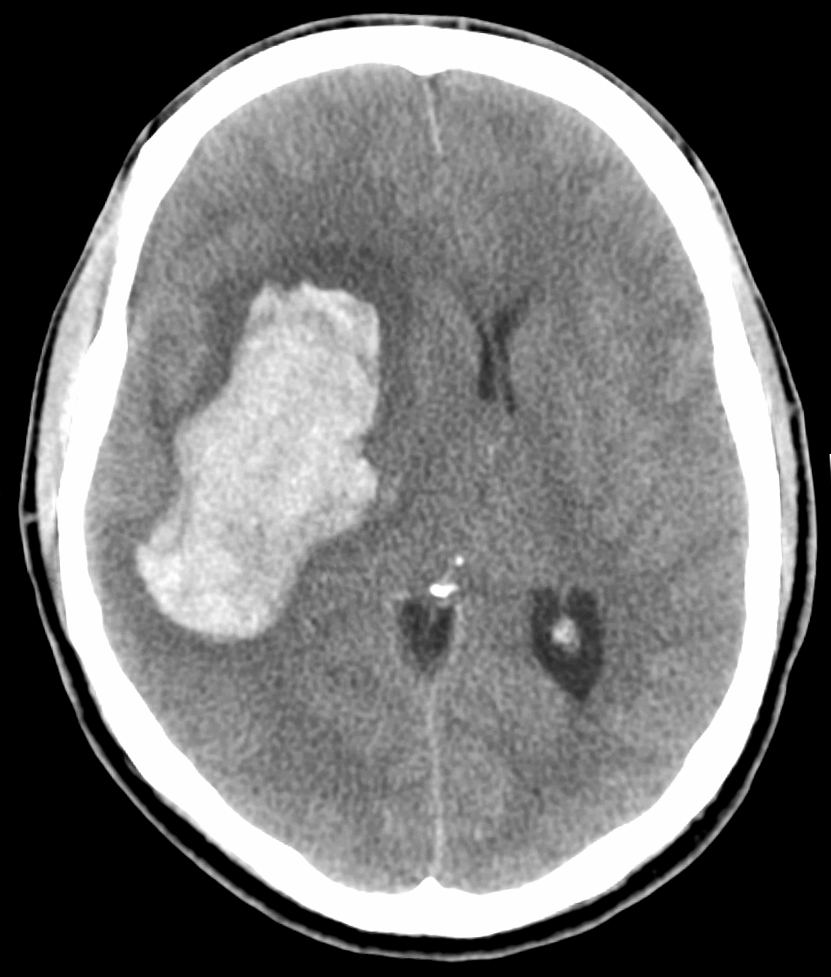
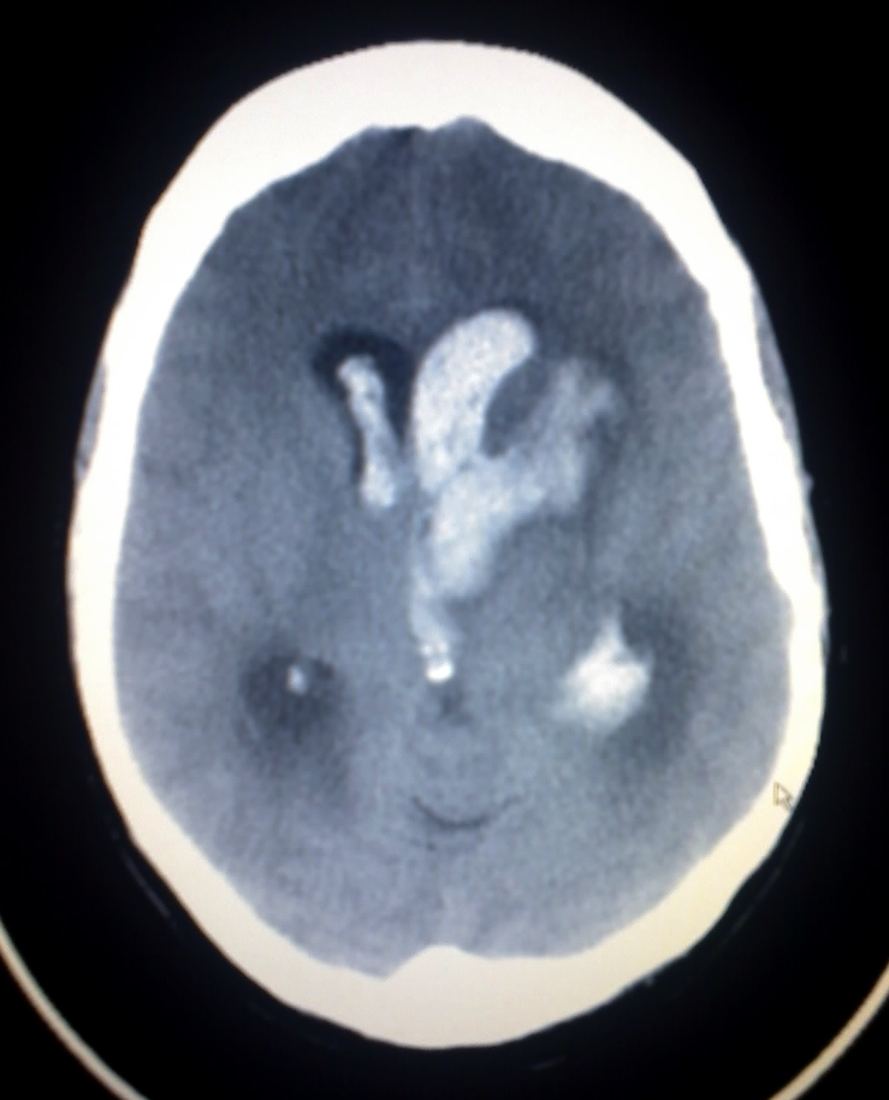
Severity: the ICH score
| Finding | Points |
|---|---|
| GCS 3–4 | 2 |
| GCS 5–12 | 1 |
| Age ≥ 80 | 1 |
| Infratentorial origin | 1 |
| Volume ≥ 30 mL | 1 |
| Intraventricular blood | 1 |
In the derivation cohort, all 26 patients scoring 0 survived and all 6 scoring 5 died at 30 days.8 Use the score to share prognosis, not as the main basis for decisions, because early pessimism can become a self-fulfilling prophecy.1
Mortality exceeds 90% with volumes of 60 mL or more, and runs about 30–55% at 30 mL or more.1
Blood pressure
- Who: hematomas under 30 mL. For systolic 150–220 mm Hg overall, the guideline calls the balance of benefit and harm uncertain.1
- When: at least within 6 hours, and as fast as possible. In the guideline's meta-analysis of 9 trials, the benefit grew the earlier treatment started.1
- How far: under 140 mm Hg. Avoid a fall of more than 70 mm Hg, and don't actively push below 110. Keep it under 140 for up to 7 days, and minimize swings.1
- Agent: the guideline names no specific drug. Use a titratable IV agent per your protocol.1
What the trials show
- INTERACT2 (n = 2,839): target under 140 within 1 hour vs under 180. Death or major disability was 52.0% vs 55.6%, which missed significance (P = 0.06). The ordinal analysis favored intensive lowering (OR 0.87).3
- ATACH-2 (n = 1,000; mean starting systolic 201): 110–139 vs 140–179 with nicardipine. Death or disability was 38.7% vs 37.7%, and kidney adverse events doubled (9.0% vs 4.0%).4
- INTERACT3 (n = 7,036, stepped-wedge cluster trial): a bundle of early blood pressure lowering, glucose and fever control, and warfarin reversal improved function at 6 months (common OR 0.86) and cut serious adverse events (16.0% vs 20.1%).7
Reversal and hemostatic drugs
| Situation | Adult dose | Notes |
|---|---|---|
| Anticoagulants | ||
| Warfarin, INR ≥ 2.0 | 4-factor PCC 30–50 IU/kg + vitamin K 10 mg IV | Expert consensus.1 |
| Warfarin, INR 1.3–1.9 | 4-factor PCC 10 IU/kg + vitamin K 10 mg IV | Expert consensus.1 |
| Dabigatran | Idarucizumab 2 × 2.5 g IV | Give immediately.1 |
| Apixaban, rivaroxaban | PCC, per institutional protocol | Benefit unproven; weigh thrombosis risk.1 Standard in the US.5 |
| Antiplatelets | ||
| Platelet transfusion | Not recommended | Weak recommendation against, moderate evidence.1 |
| Desmopressin | No recommendation | Uncertain; trials ongoing.1 |
| No antithrombotic drug | ||
| Recombinant factor VIIa | Not routinely | Weak recommendation against.1 |
| Tranexamic acid | May be considered | If trial enrollment isn't possible.1 |
Unreviewed doses. Verify against the current label and your institution's protocol before giving anything.
- INCH (n = 50): PCC 30 IU/kg brought the INR to 1.2 or less within 3 hours in 67% of patients, vs 9% with plasma 20 mL/kg. Five plasma-treated patients died of hematoma expansion; none in the PCC group did.9
- ANNEXA-I (n = 530, factor Xa inhibitor within 15 hours): andexanet improved hemostatic efficacy (67.0% vs 53.1%), but thrombotic events (10.3% vs 5.6%) and ischemic strokes (6.5% vs 1.5%) rose. Function and death at 30 days did not differ.10
- PATCH (n = 190): platelet transfusion raised the odds of death or dependence at 3 months (OR 2.05), and more patients died in hospital (24% vs 17%).6
- TICH-2 (n = 2,325): tranexamic acid within 8 hours did not improve function at 90 days (OR 0.88). Deaths by day 7 were fewer (9% vs 11%), but not by day 90.11
Surgery
- Lobar supratentorial: the guideline suggests minimally invasive evacuation within 24 hours. The effect in deep bleeds is uncertain.1
- ENRICH (n = 300; lobar or anterior basal ganglia, 30–80 mL, within 24 hours): surgery improved utility-weighted function (0.458 vs 0.374) and 30-day mortality (9.3% vs 18.0%). The benefit came from lobar bleeds.12
- MIND (n = 236; 20–80 mL, within 72 hours, mostly deep): no benefit (OR 1.03). It stopped early.13
- Cerebellar hemorrhage over 15 mL: surgical evacuation is suggested to improve survival.1
- Intraventricular blood with hydrocephalus and reduced consciousness: an external ventricular drain is recommended.1
- Severe deep bleeds (age 18–75, GCS 8–13, 30–100 mL, within 72 hours): consider decompressive craniectomy without evacuation.1
Other early decisions
Pitfalls
- Dropping a systolic of 220 straight to 110. The guideline caps the fall at 70 mm Hg.1
- Ordering platelets for a patient on aspirin or clopidogrel.6,1
- Reaching for plasma when PCC is available for warfarin reversal.9,1
- Ordering andexanet in a US hospital. It is no longer sold there.5
- Quoting a high ICH score as a reason to withhold care on day one.1
- Missing a cerebellar bleed that needs surgery.1
How strong is the evidence?
The guideline found strong evidence only for stroke unit care and long-term blood pressure control. Most acute recommendations are weak or expert consensus.1 The blood pressure trials missed their primary outcomes.3,4 The care bundle trial was positive, but it ran in mostly low- and middle-income countries.7 The 2022 American Heart Association guideline could not be accessed for this page.
On-shift teaching
Questions to ask a learner at the bedside. Tap a question to see the answer. Every answer uses facts cited above.
Q1Name the five components of the ICH score.
Q2A 15 mL bleed with a systolic of 210. What's your target, and what are the limits?
Q3Why not aim for 110–139?
Q4How do you reverse warfarin with an INR of 3.1?
Q5The patient takes clopidogrel. Should you transfuse platelets?
References
What this page is built on
13 sources, cited 68 times. Dots are sources, filled by how far each was read; stronger color means a larger share of the citations. Tap a tier to see its sources.
Checked by the writer, not a physician. The dots show how each source was read, not that anyone has confirmed the claims.
- 1Steiner T, Purrucker JC, Aguiar de Sousa D, et al. European Stroke Organisation (ESO) and European Association of Neurosurgical Societies (EANS) guideline on stroke due to spontaneous intracerebral haemorrhage. Eur Stroke J. 2025;10(4):1007–1086.
- 2Davis SM, Broderick J, Hennerici M, et al. Hematoma growth is a determinant of mortality and poor outcome after intracerebral hemorrhage. Neurology. 2006;66(8):1175–1181.
- 3Anderson CS, Heeley E, Huang Y, et al. Rapid blood-pressure lowering in patients with acute intracerebral hemorrhage (INTERACT2). N Engl J Med. 2013;368(25):2355–2365.
- 4Qureshi AI, Palesch YY, Barsan WG, et al. Intensive blood-pressure lowering in patients with acute cerebral hemorrhage (ATACH-2). N Engl J Med. 2016;375(11):1033–1043.
- 5Oliver W. Andexxa withdrawn from US market. University of Maryland Emergency Medicine (UMEM) Educational Pearls; February 12, 2026.
- 6Baharoglu MI, Cordonnier C, Al-Shahi Salman R, et al. Platelet transfusion versus standard care after acute stroke due to spontaneous cerebral haemorrhage associated with antiplatelet therapy (PATCH). Lancet. 2016;387(10038):2605–2613.
- 7Ma L, Hu X, Song L, et al. The third Intensive Care Bundle with Blood Pressure Reduction in Acute Cerebral Haemorrhage Trial (INTERACT3). Lancet. 2023;402(10395):27–40.
- 8Hemphill JC 3rd, Bonovich DC, Besmertis L, et al. The ICH score: a simple, reliable grading scale for intracerebral hemorrhage. Stroke. 2001;32(4):891–897.
- 9Steiner T, Poli S, Griebe M, et al. Fresh frozen plasma versus prothrombin complex concentrate in patients with intracranial haemorrhage related to vitamin K antagonists (INCH). Lancet Neurol. 2016;15(6):566–573.
- 10Connolly SJ, Sharma M, Cohen AT, et al. Andexanet for factor Xa inhibitor-associated acute intracerebral hemorrhage (ANNEXA-I). N Engl J Med. 2024;390(19):1745–1755.
- 11Sprigg N, Flaherty K, Appleton JP, et al. Tranexamic acid for hyperacute primary IntraCerebral Haemorrhage (TICH-2). Lancet. 2018;391(10135):2107–2115.
- 12Pradilla G, Ratcliff JJ, Hall AJ, et al. Trial of early minimally invasive removal of intracerebral hemorrhage (ENRICH). N Engl J Med. 2024;390(14):1277–1289.
- 13Arthur AS, Jahromi BS, Saphier PS, et al. Minimally invasive surgery vs medical management alone for intracerebral hemorrhage: the MIND randomized clinical trial. JAMA Neurol. 2025;82(11):1113–1121.
AI-generated draft. Not reviewed by a physician. This page is for education only and may contain errors, including in doses. Do not use it to diagnose, treat or make decisions about any patient. Rely on your own clinical judgment, your institution's protocols and current drug labeling. Reading this page does not create a physician-patient relationship. Full terms