


Hyperglycemia without DKA
Bottom line
- First make sure it isn't a crisis. DKA is defined by ketones and acidosis, not by how high the glucose is: about 10% of DKA presents with glucose under 200 mg/dL, mostly in people taking SGLT2 inhibitors. Measure blood β-hydroxybutyrate rather than urine ketones.1
- Look for the reason the glucose is high. Infection, missed insulin, glucocorticoids and other drugs, and acute illness such as myocardial infarction, stroke or pancreatitis can all drive it.1,2
- Think of type 1 diabetes in any adult with ketosis, rapid weight loss, onset under 50, BMI under 25 or autoimmune disease. Age or BMI alone doesn't rule it in or out.3
- There is no glucose you must reach before discharge. In 566 ED visits with glucose ≥ 400 mg/dL, the discharge glucose was not associated with return visits for hyperglycemia or admission within 7 days.4
- The follow-up is the treatment. An A1c ≥ 6.5%, or classic symptoms with glucose over 200 mg/dL, makes the diagnosis.5 Treatment started from the ED with diabetes education lowered A1c more than usual care at 4 weeks.6
First steps
- Check vital signs, mental status and volume. Tachycardia and dry mucous membranes suggest dehydration; altered mentation suggests HHS.2
- If DKA or HHS is possible, send glucose, electrolytes, a venous blood gas, a blood count and blood or urine ketones, and get an ECG.1 Add serum osmolality for symptomatic patients.2
- Prefer blood β-hydroxybutyrate. It is more specific for DKA than urine ketones, and urine strips can miss ketosis early on.1
- Ask about SGLT2 inhibitors (the -gliflozins). DKA on these drugs can present with near-normal glucose.1
- Find the precipitant. Test for pregnancy in anyone who could be pregnant.1,2
- Decide what kind of diabetes this is and who will follow it up before the patient leaves.3,2
- β-hydroxybutyrate ≥ 3.0 mmol/L with pH < 7.30 or bicarbonate < 18?YesTreat as DKA or mixed DKA/HHS, whatever the glucose. On an SGLT2 inhibitor, glucose can be under 200 mg/dL.1
- No
- No
- No: likely type 2
- No glucose target is needed before discharge. Discharge glucose did not predict 7-day return visits or admission.4
- Yes
Is it DKA or HHS?
| Finding | What it means |
|---|---|
| β-hydroxybutyrate ≥ 3.0 mmol/L (or urine ketones ≥ 2+) | Significant ketonemia. At ≥ 3.0, blood β-hydroxybutyrate matches DKA's acid–base changes with > 90% sensitivity and specificity.1 |
| pH < 7.30 or bicarbonate < 18 mEq/L | Acidosis. With significant ketonemia, this is DKA, or mixed DKA/HHS if the patient is also hyperosmolar.1 |
| Glucose ≥ 200 mg/dL, or known diabetes at any glucose | Completes the DKA criteria once ketones and acidosis are present.1 |
| Serum osmolality | HHS is counted as resolved only once osmolality is under 300 mOsm/kg, glucose is under 250 mg/dL and cognition has improved.1 |
| β-hydroxybutyrate 1.0–< 3.0, pH ≥ 7.3 and bicarbonate ≥ 18 | Mild to moderate ketosis without acidosis.1 Not DKA, but find out why. |
- Euglycemic DKA is DKA with glucose under 200 mg/dL. It is about 10% of DKA. SGLT2 inhibitors now cause most cases; insulin injection, poor intake, pregnancy, alcohol and liver failure are other causes.1
- In two series of SGLT2 inhibitor-associated DKA, 35% had glucose under 200 mg/dL and 71% had glucose ≤ 250 mg/dL.1
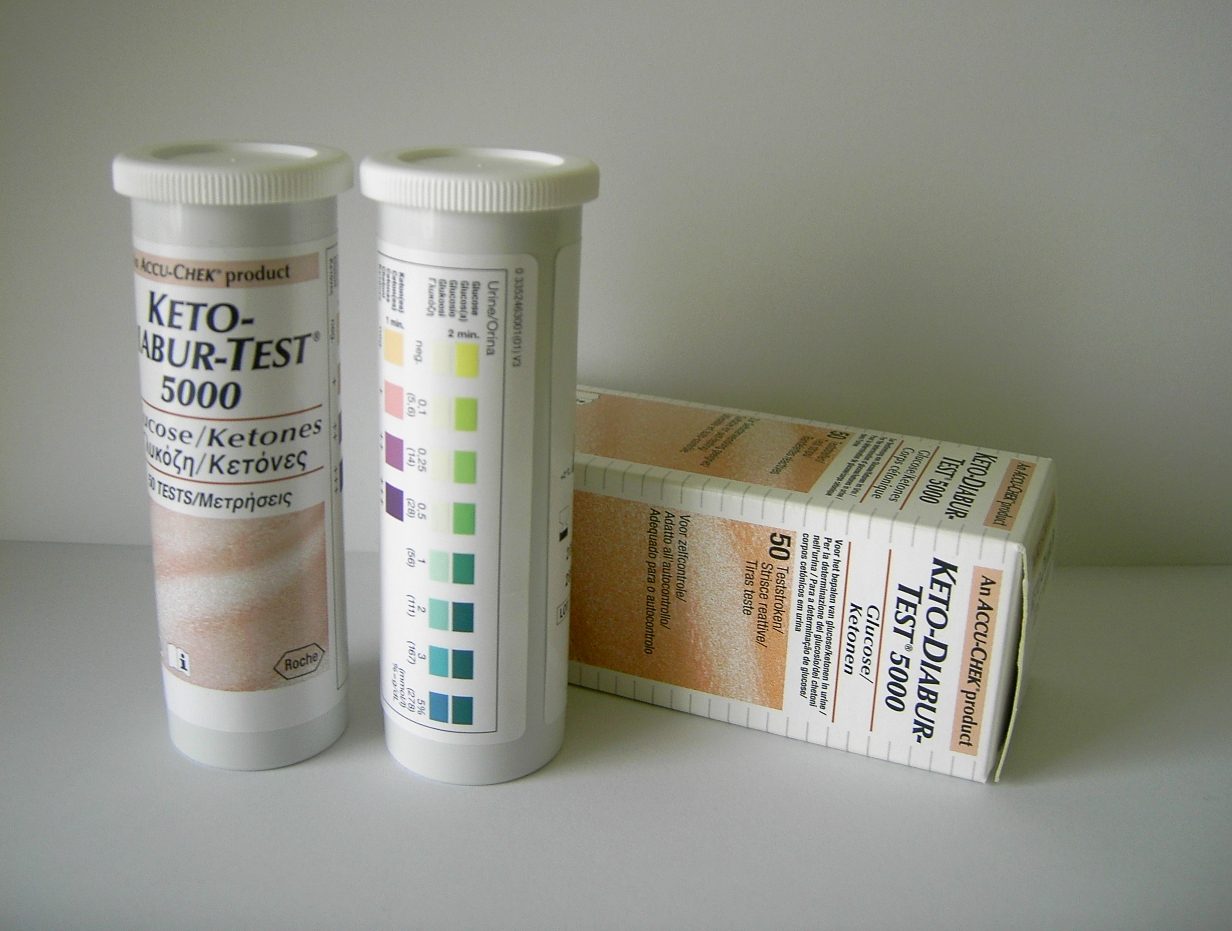
- Urine ketone strips read acetoacetate, not β-hydroxybutyrate. They can underestimate ketosis early, and captopril and valproate can turn them falsely positive.1
- Ketones without diabetes can come from starvation, alcoholic ketoacidosis, or pregnancy and hyperemesis.1
Why is the glucose high?
- Infection is the most common precipitant of DKA worldwide and the main one in 30–60% of HHS, most often urinary tract infection or pneumonia.1
- Missed or too little insulin, often with psychological or social causes behind it.1
- Acute illness: stroke, myocardial infarction, pancreatitis, pulmonary embolism, trauma, alcohol and substance use.1
- Drugs: glucocorticoids, antipsychotics and sympathomimetics.1 About 1–2% of patients on immune checkpoint inhibitors develop autoimmune diabetes, which can progress fast; in a review of 278 cases, 69.7% had DKA at diagnosis.1
- Other causes to consider: pregnancy and malignancy.2 In people 60 or older with weight loss and new-onset diabetes, NICE advises assessing for pancreatic cancer.3
New diabetes?
- Diagnosis: an A1c ≥ 6.5%, confirmed with a repeat test. Classic symptoms with plasma glucose over 200 mg/dL need no confirmation.5 A random glucose above 140 mg/dL should prompt consideration of diabetes.12
- Many ED patients have undiagnosed diabetes. In 618 ED patients without known diabetes, later glucose tolerance testing found diabetes in 10.5% and prediabetes in 31.9%. An ED A1c ≥ 6.0% had 77% sensitivity and 87% specificity for diabetes.13
- It is usually not new. Of 119 patients with glucose ≥ 300 mg/dL kept in an ED observation unit who had an A1c, 94% had a value ≥ 9.0%.9
- Type 1 can start at any age. Typical features are ketosis, rapid weight loss, onset under 50, BMI under 25, and a personal or family history of autoimmune disease. Not every patient has them.3
- Calling type 1 diabetes type 2 is the most common misclassification, and it risks withholding insulin and causing DKA.3
- Testing alone doesn't help. In a cluster trial across 18 hospitals, automatic A1c testing and notifying the diabetes team for admitted ED patients with glucose ≥ 252 mg/dL (14 mmol/L) did not increase new diagnoses with follow-up plans. The authors call for resourced care pathways.14
Lowering glucose in the ED
- No target number. In a 566-visit ED cohort (glucose ≥ 400 mg/dL; type 1 diabetes and admitted patients excluded), discharge glucose was not associated with return visits for hyperglycemia or hospitalization within 7 days.4,15
- Short-term crises were rare in that cohort: 2 patients developed DKA within 7 days, none HHS. Treatment had its own harm: 2% developed hypoglycemia.4,15
- IV fluids: in that cohort, the volume given was not associated with return visits.15
- Avoid IV insulin for non-emergent hyperglycemia. In 405 discharged ED patients given IV regular insulin, 7.9% became hypokalemic. More than 5 units lowered glucose only modestly more than 5 units or less, with no difference in length of stay.8
- If you treat, use subcutaneous insulin. Regular and rapid-acting insulin lowered glucose at similar rates (about 42 vs 47 mg/dL per hour) in 279 ED patients, with no difference in hypoglycemia. Dose per institutional protocol and label.7
How hard to treat the number in the ED. The emDocs authors suggest IV fluids and rapid-acting insulin for new glucose over 300 mg/dL; the post's editors note that rapid-acting insulin lowers glucose for only a few hours and that prompt follow-up matters more.2 The only outcome study found no link between discharge glucose and 7-day outcomes, but it was retrospective and excluded type 1 diabetes.4,15
Starting treatment
Long-term treatment belongs to the clinician who will follow the patient. Start it from the ED only with a follow-up plan in place.2 The NICE type 2 guideline suggests insulin or a sulfonylurea for symptomatic hyperglycemia, reviewed once glucose is at target.10 For routine first-line care it recommends modified-release metformin with an SGLT2 inhibitor, introduced one at a time, starting with metformin.10
| Agent | Adult dose | Notes |
|---|---|---|
| Metformin (immediate release) | 500 mg PO twice daily or 850 mg once daily, with meals | Don't use if eGFR < 30; starting is not recommended at eGFR 30–45. Contraindicated in metabolic acidosis, including DKA.11 |
| Insulin glargine (type 2, not on insulin) | 0.2 units/kg or up to 10 units SC once daily | Needs injection and hypoglycemia teaching, a glucose meter and arranged follow-up.16,2 |
| SGLT2 inhibitor | Not an ED start | NICE adds it after metformin and asks about DKA risk first: prior DKA, intercurrent illness, dehydration, ketogenic diet.10 |
Unreviewed doses. Verify against the current label and your institution's protocol before giving anything.
Suspected type 1 diabetes needs insulin and specialist input.3,2 Doses are from the FDA labels.11,16
Disposition
- Admit or get endocrinology input for suspected type 1 diabetes, and admit new severe hyperglycemia when there is no follow-up or the social situation is unstable.2
- Observation is an option. In 124 patients with glucose ≥ 300 mg/dL managed in an ED observation unit, 5.6% returned within 30 days with hypoglycemia, hyperglycemia or DKA.9
- Return visits are common. In a prospective cohort of 594 patients, 13.5% came back for hyperglycemia within 30 days. A history of substance use (OR 2.32) and a higher initial glucose predicted return; a new diagnosis of diabetes made it less likely (OR 0.29).17
- ED-started care works when it is supported. In a 101-patient trial, medication management plus survival-skills education for ED patients with glucose ≥ 200 mg/dL lowered A1c 0.9% more than usual care at 4 weeks, without severe hypoglycemia.6
- Give sick-day rules, including when to stop metformin or an SGLT2 inhibitor if vomiting, diarrhea or dehydration threaten, and how to restart.10
- If insulin is started, the patient needs teaching, a meter and strips, hypoglycemia education and a clinician who knows about the new prescription.2
Pitfalls
- Ruling out DKA because the glucose isn't very high, especially in a patient on an SGLT2 inhibitor.1
- Relying on urine ketones. They miss early ketosis and can be falsely positive.1
- Labeling a thin or young adult with new diabetes as type 2 and sending them home without insulin.3
- Pushing IV insulin to get the number down, and causing hypokalemia.8
- Holding a stable patient for a glucose target that hasn't been shown to change outcomes.4
- Discharging without a diagnosis plan and a named follow-up.14,2
- Starting metformin without checking renal function.11
How strong is the evidence?
The rule-out criteria for DKA and HHS come from an international consensus report.1 ED-specific evidence on treating the number is thin: the key outcome study is a single-center retrospective cohort,4 and the insulin comparisons are retrospective too.8,7 The best support for starting care from the ED is one small randomized trial with 4 weeks of follow-up.6 Guidelines on long-term drug choice were written for primary care, not the ED.10
On-shift teaching
Questions to ask a learner at the bedside. Tap a question to see the answer. Every answer uses facts cited above.
Q1A patient on empagliflozin has a glucose of 180 mg/dL and is vomiting. Can you rule out DKA?
Q2Why is a blood β-hydroxybutyrate better than a urine ketone strip?
Q3What features suggest type 1 diabetes in a newly hyperglycemic adult?
Q4Does a patient with glucose 450 mg/dL need to get under 300 before discharge?
Q5What's the problem with an IV insulin bolus for uncomplicated hyperglycemia?
References
What this page is built on
18 sources, cited 104 times. Dots are sources, filled by how far each was read; stronger color means a larger share of the citations. Tap a tier to see its sources.
Checked by the writer, not a physician. The dots show how each source was read, not that anyone has confirmed the claims.
- 1Umpierrez GE, Davis GM, ElSayed NA, et al. Hyperglycaemic crises in adults with diabetes: a consensus report. Diabetologia. 2024;67(8):1455–1479.
- 2Schwartz X, Sullivan A. Management and disposition of adults with new-onset hyperglycemia without hyperglycemic emergency. emDocs.
- 3National Institute for Health and Care Excellence. Type 1 diabetes in adults: diagnosis and management (NG17). 2015, updated.
- 4Driver BE, Olives TD, Bischof JE, et al. Discharge glucose is not associated with short-term adverse outcomes in emergency department patients with moderate to severe hyperglycemia. Ann Emerg Med. 2016;68(6):697–705.e3.
- 5International Expert Committee. International Expert Committee report on the role of the A1C assay in the diagnosis of diabetes. Diabetes Care. 2009;32(7):1327–1334.
- 6Magee MF, Nassar CM, Mete M, et al. The Synergy to Enable Glycemic Control Following Emergency Department Discharge Program for adults with type 2 diabetes: STEP-Diabetes. Endocr Pract. 2015;21(11):1227–1239.
- 7Zou X, Treu CN, Laub J, et al. Evaluation of blood glucose changes with regular versus rapid-acting insulin for hyperglycaemia management in the emergency department. Int J Pharm Pract. 2023;31(5):534–539.
- 8Koscal LJ, Weeda ER, Matuskowitz AJ, et al. Intravenous insulin for the management of non-emergent hyperglycemia in the emergency department. Am J Emerg Med. 2021;45:335–339.
- 9Crilly CJ, Allen AJ, Amato TM, et al. Evaluating the Emergency Department Observation Unit for the management of hyperglycemia in adults. Am J Emerg Med. 2018;36(11):1975–1979.
- 10National Institute for Health and Care Excellence. Type 2 diabetes in adults: management (NG28). 2015, updated February 2026.
- 11Metformin hydrochloride tablets. FDA prescribing information (DailyMed).
- 12Schwartz X, Porter B, Gilbert MP, et al. Emergency department management of uncomplicated hyperglycemia in patients without history of diabetes. J Emerg Med. 2023;65(2):e81–e92.
- 13Silverman RA, Thakker U, Ellman T, et al. Hemoglobin A1c as a screen for previously undiagnosed prediabetes and diabetes in an acute-care setting. Diabetes Care. 2011;34(9):1908–1912.
- 14Cheung NW, Campbell LV, Fulcher GR, et al. Routine glucose assessment in the emergency department for detecting unrecognised diabetes: a cluster randomised trial. Med J Aust. 2019;211(10):454–459.
- 15Rezaie S. Mythbuster: glucose levels must be below a "safe" threshold before discharge. REBEL EM; December 1, 2016.
- 16Lantus (insulin glargine) injection. FDA prescribing information (DailyMed).
- 17Yan JW, Woods N, Van Aarsen K, et al. Predictors of 30-day recurrent emergency department visits for hyperglycemia in patients with diabetes: a multicentre prospective cohort study. Acad Emerg Med. 2025;32(12):1309–1319.
- 18American Diabetes Association Professional Practice Committee. 16. Diabetes care in the hospital: Standards of Care in Diabetes—2026. Diabetes Care. 2026;49(Suppl 1):S339–S355. Further reading; not used for any claim above.
AI-generated draft. Not reviewed by a physician. This page is for education only and may contain errors, including in doses. Do not use it to diagnose, treat or make decisions about any patient. Rely on your own clinical judgment, your institution's protocols and current drug labeling. Reading this page does not create a physician-patient relationship. Full terms