


Gastroenteritis in adults
Bottom line
- Most cases are viral and self-limited. Norovirus usually clears in 1–3 days, and antibiotics do not help it.2
- Assess every patient for dehydration. Use oral rehydration solution for mild to moderate dehydration. Give isotonic IV fluid for severe dehydration, shock, altered mental status or failed oral rehydration.1
- Test stool only when it will change care: fever, bloody or mucoid stools, severe cramping or sepsis. Test for C. difficile after recent antibiotics or healthcare-associated diarrhea.1
- No empiric antibiotics for most patients, including most immunocompetent adults with bloody diarrhea. The exceptions are presumed shigellosis with documented fever, febrile or septic returning travelers, and severely ill immunocompromised patients.1
- Loperamide is reasonable for watery diarrhea in immunocompetent adults once hydrated. Avoid it with fever or bloody, inflammatory diarrhea.1,6
First steps
- Take the history that changes management: recent travel, antibiotics or healthcare contact, others ill, immune status, and work in food service, child care or patient care.1
- Look for dehydration, especially in older adults.1
- Rehydrate: oral rehydration solution first; isotonic IV fluid (lactated Ringer's or normal saline) for severe dehydration, shock, altered mental status, failed oral rehydration or ileus.1
- Decide whether stool testing and blood cultures are needed (table below). Most patients need neither.1
- Decide on antibiotics. Most patients get none. Avoid them if Shiga toxin-producing E. coli (STEC) is suspected.1
- Treat symptoms once hydrated: an antiemetic or loperamide can help, but neither replaces fluid.1
- History and dehydration check. Ask about travel, recent antibiotics or healthcare, immune status and others ill. Assess hydration in everyone.1
- NoOral rehydration solution for mild to moderate dehydration, even with vomiting.1
- Fever, bloody or mucoid stools, severe cramping or sepsis?YesSend stool testing for Salmonella, Shigella, Campylobacter, Yersinia, C. difficile and STEC.1 No loperamide with fever or bloody stools.1,6Empiric antibiotics only for presumed shigellosis with documented fever, a febrile (≥ 38.5 °C) or septic returning traveler, or a severely ill immunocompromised patient. Azithromycin 1,000 mg PO once is preferred for dysentery.1,5Suspected STEC: no antibiotics. Check hemoglobin, platelets, electrolytes, BUN and creatinine for early HUS.1
- No: watery diarrheaRecent antibiotics or healthcare-associated diarrhea?Yes*Test one stool sample for C. difficile.*1
- No
- No
- Home with oral fluids once drinking. Reassess if symptoms last 14 days or more: think parasites, IBD or IBS.1
What causes it
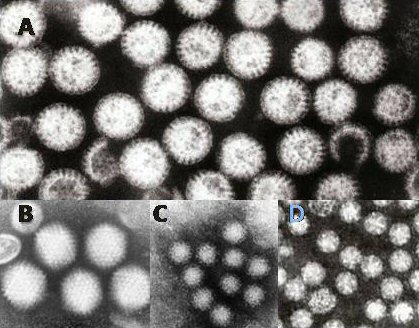
- Norovirus causes an estimated 465,000 US emergency department visits, 109,000 hospitalizations and 900 deaths a year.3
- It starts 12–48 hours after exposure with sudden vomiting and non-bloody diarrhea, sometimes with cramps and a low fever. The diagnosis is usually clinical.2
- In US adult outpatients with a gastroenteritis diagnosis (n = 248,896), 84.7% were seen in an emergency department and 96.4% went home. Only 1.0% were hospitalized within 30 days.4
- Only 18.3% had stool testing. Among those tested, C. difficile was the most common pathogen found (32.2%), followed by norovirus (6.3%) and Campylobacter (4.0%).4
- Diarrhea lasting 14 days or more with no source found: think of inflammatory bowel disease or irritable bowel syndrome, and test for parasites.1
Who needs tests
| Test | When to send it | Strength |
|---|---|---|
| Stool testing (bacterial pathogens and STEC) | Fever, bloody or mucoid stools, severe cramping or sepsis1 | Strong, moderate |
| C. difficile, single stool sample | Diarrhea after antibiotics, or healthcare-associated diarrhea1 | Weak, high |
| Blood cultures | Signs of sepsis, suspected enteric fever, systemic infection, immunocompromise, or fever after travel1 | Strong, moderate |
| Hemoglobin, platelets, electrolytes, BUN, creatinine | Known STEC infection, to catch early hemolytic uremic syndrome (HUS)1 | Strong, high |
| Fecal leukocytes, lactoferrin, WBC count | Not to find the cause1 | Strong |
| Routine testing in uncomplicated travelers' diarrhea | Not unless you are treating1 | Strong, moderate |
From the IDSA 2017 guideline.1 Multiplex PCR panels detect DNA, not necessarily live organisms, so interpret a positive result in context.1 No follow-up stool test is needed once diarrhea resolves, unless public health rules require one.1
Rehydration
- Reduced-osmolarity oral rehydration solution is first-line for mild to moderate dehydration, even with vomiting (strong, moderate).1
- IV isotonic fluid (lactated Ringer's or normal saline) for severe dehydration, shock, altered mental status, failed oral rehydration or ileus (strong, high).1
- Continue IV fluid until pulse, perfusion and mental status are normal and the patient can drink. Replace the rest of the deficit with oral solution.1
- Replace ongoing losses with oral solution, and restart a normal diet during or right after rehydration.1
- Dehydration is the main danger of norovirus, and older adults and immunocompromised patients are at highest risk.2
Antibiotics
- Watery diarrhea without recent travel: no empiric antibiotics for most patients. Immunocompromised patients are the exception (strong, low).1
- Bloody diarrhea in an immunocompetent adult: no empiric antibiotics, except presumed shigellosis with fever documented in a medical setting, or a recent international traveler with a temperature ≥ 38.5 °C or signs of sepsis.1
- Severely ill immunocompromised patients with bloody diarrhea: consider empiric antibiotics.1
- When treating empirically, give a fluoroquinolone such as ciprofloxacin, or azithromycin, chosen by local resistance and travel history (strong, moderate).1
- Change or stop antibiotics once a plausible organism is identified.1
| Drug | Adult dose | Notes |
|---|---|---|
| Azithromycin | 1,000 mg PO once, or 500 mg PO daily for 3 days | Preferred for dysentery or febrile diarrhea in travelers.5 |
| Ciprofloxacin | 750 mg PO once (travelers' diarrhea), or 500 mg PO every 12 hours for 5–7 days (label) | Labeled for infectious diarrhea from susceptible E. coli, Campylobacter and Shigella.5,7 |
| Rifaximin | 200 mg PO three times daily for 3 days | Travelers' diarrhea without dysentery only. Not for invasive pathogens.5 |
| Any antibiotic | Not for suspected STEC (E. coli O157 or Shiga toxin 2) | Strong, moderate.1 |
Unreviewed doses. Verify against the current label and your institution's protocol before giving anything.
Travelers' diarrhea: if symptoms persist after a single dose, continue daily dosing for up to 3 days.5 Antibiotics are not recommended for mild travelers' diarrhea, may be used for moderate, and should be used for severe.5
Do antibiotics cause HUS in E. coli O157 infection? The IDSA guideline says to avoid them.1 A 2002 meta-analysis of 9 studies found no clear increase in risk (OR 1.15, 95% CI 0.79–1.68).11 A 2025 meta-analysis of 23 studies (n = 17,975) found a small increase with any antibiotic (OR 1.47) and a larger one with beta-lactams (OR 2.37).12 Both rest on observational data. Until that changes, avoid antibiotics when STEC is suspected.1
Symptom relief
| Drug | Adult dose | Notes |
|---|---|---|
| Loperamide | 4 mg PO, then 2 mg after each unformed stool; max 16 mg/day | Immunocompetent adults with watery diarrhea, once hydrated (weak, moderate).1,6 Stop if no better in 48 hours.6 |
| Loperamide | Do not give | Fever, or bloody or inflammatory diarrhea (toxic megacolon risk).1 Contraindicated in dysentery, invasive bacterial enterocolitis and C. difficile colitis.6 |
| Antiemetic | Dose per institutional protocol and label | May be considered once hydrated; it does not replace fluid.1 |
Unreviewed doses. Verify against the current label and your institution's protocol before giving anything.
- Loperamide at high doses can kill. The label carries a boxed warning for torsades de pointes, cardiac arrest and death above the recommended dose.6
- With an antibiotic, loperamide speeds recovery in travelers' diarrhea. Adding it raised the odds of cure at 24 hours (OR 2.6) and 48 hours (OR 2.2) over antibiotics alone.8
- Ondansetron: in an ED trial of adolescents and adults with vomiting from gastroenteritis (n = 321), a 24-mg long-acting oral tablet gave treatment success (no further vomiting, rescue drug or IV fluid for 24 hours) in 65.6% vs 54.3% with placebo.9 The tablet was experimental, and the trial was funded by its maker.9
- Across all causes of ED nausea, no antiemetic beat placebo at 30 minutes except droperidol in one small trial. Many patients improved with placebo and supportive care.10
- Probiotics may shorten symptoms in immunocompetent adults (weak, moderate).1
Disposition and infection control
- Before discharge, make sure the patient can drink safely. Replace ongoing losses with oral rehydration solution and resume a normal diet.1
- Reassess anyone who does not improve, including for noninfectious causes such as lactose intolerance.1
- Food handlers, child care and healthcare workers should follow local public health rules on reporting and return to work.1
- Wash hands with soap and water for at least 20 seconds. Alcohol gel is not a substitute for norovirus.2
- Avoid swimming and sexual contact while symptomatic.1
Pitfalls
- Giving antibiotics for bloody diarrhea that turns out to be STEC.1
- Giving loperamide to a febrile patient with bloody stools.1,6
- Forgetting C. difficile after recent antibiotics or a hospital stay.1
- Ordering a stool panel for every case. Test when the guideline's triggers are present, and remember a positive PCR may not mean live organisms.1
- Calling it gastroenteritis after 14 days. Look for parasites, inflammatory bowel disease or irritable bowel syndrome.1
On-shift teaching
Questions to ask a learner at the bedside. Tap a question to see the answer. Every answer uses facts cited above.
Q1Which adults with diarrhea need stool testing?
Q2Name the exceptions to "no empiric antibiotics for bloody diarrhea" in immunocompetent adults.
Q3Why avoid antibiotics when STEC is suspected, and how strong is that evidence?
Q4When should you not give loperamide?
Q5What is the first-line rehydration for mild to moderate dehydration, even with vomiting?
Q6Which antibiotic is preferred for a returning traveler with dysentery?
References
What this page is built on
12 sources, cited 94 times. Dots are sources, filled by how far each was read; stronger color means a larger share of the citations. Tap a tier to see its sources.
Checked by the writer, not a physician. The dots show how each source was read, not that anyone has confirmed the claims.
- 1Shane AL, Mody RK, Crump JA, et al. 2017 Infectious Diseases Society of America clinical practice guidelines for the diagnosis and management of infectious diarrhea. Clin Infect Dis. 2017;65(12):e45–e80.
- 2Mirza SA, Vinjé J. Norovirus. CDC Yellow Book: Health Information for International Travel. Centers for Disease Control and Prevention; April 23, 2025.
- 3Burke RM, Mattison CP, Pindyck T, et al. Burden of norovirus in the United States, as estimated based on administrative data: updates for medically attended illness and mortality, 2001–2015. Clin Infect Dis. 2021;73(1):e1–e8.
- 4Moon RC, Bleak TC, Rosenthal NA, et al. Epidemiology and economic burden of acute infectious gastroenteritis among adults treated in outpatient settings in US health systems. Am J Gastroenterol. 2023;118(6):1069–1079.
- 5Riddle MS, Connor BA, Beeching NJ, et al. Guidelines for the prevention and treatment of travelers' diarrhea: a graded expert panel report. J Travel Med. 2017;24(suppl 1):S57–S74.
- 6Loperamide hydrochloride capsules. Prescribing information (PD-Rx Pharmaceuticals). DailyMed.
- 7Ciprofloxacin tablets. Prescribing information (PD-Rx Pharmaceuticals). DailyMed.
- 8Riddle MS, Arnold S, Tribble DR. Effect of adjunctive loperamide in combination with antibiotics on treatment outcomes in traveler's diarrhea: a systematic review and meta-analysis. Clin Infect Dis. 2008;47(8):1007–1014.
- 9Silverman RA, House SL, Meltzer AC, et al. Bimodal release ondansetron for acute gastroenteritis among adolescents and adults: a randomized clinical trial. JAMA Netw Open. 2019;2(11):e1914988.
- 10Furyk JS, Meek RA, Egerton-Warburton D. Drugs for the treatment of nausea and vomiting in adults in the emergency department setting. Cochrane Database Syst Rev. 2015;(9):CD010106.
- 11Safdar N, Said A, Gangnon RE, Maki DG. Risk of hemolytic uremic syndrome after antibiotic treatment of Escherichia coli O157:H7 enteritis: a meta-analysis. JAMA. 2002;288(8):996–1001.
- 12Sevilla P, Martínez A, Nuevo DV, Córdoba JG, Camarena JJ. Impact of antibiotic treatment on hemolytic uremic syndrome risk in Escherichia coli O157 infections: a comprehensive systematic review and meta-analysis. Eur J Clin Microbiol Infect Dis. 2025;44(8):1763–1778.
AI-generated draft. Not reviewed by a physician. This page is for education only and may contain errors, including in doses. Do not use it to diagnose, treat or make decisions about any patient. Rely on your own clinical judgment, your institution's protocols and current drug labeling. Reading this page does not create a physician-patient relationship. Full terms