


Elder falls and geriatric trauma
Bottom line
- Older trauma patients are under-triaged. Low-energy falls, unreliable vital signs and medications hide how sick they are. The World Society of Emergency Surgery (WSES) uses a heart rate of 90 and a systolic pressure under 110 mm Hg as triggers for trauma activation.1 In a national registry, older patients with a systolic of 90–109 died as often as those under 90.2
- Normal vital signs do not rule out shock. Beta-blockers blunt tachycardia. Get an early blood gas for lactate or base deficit.1
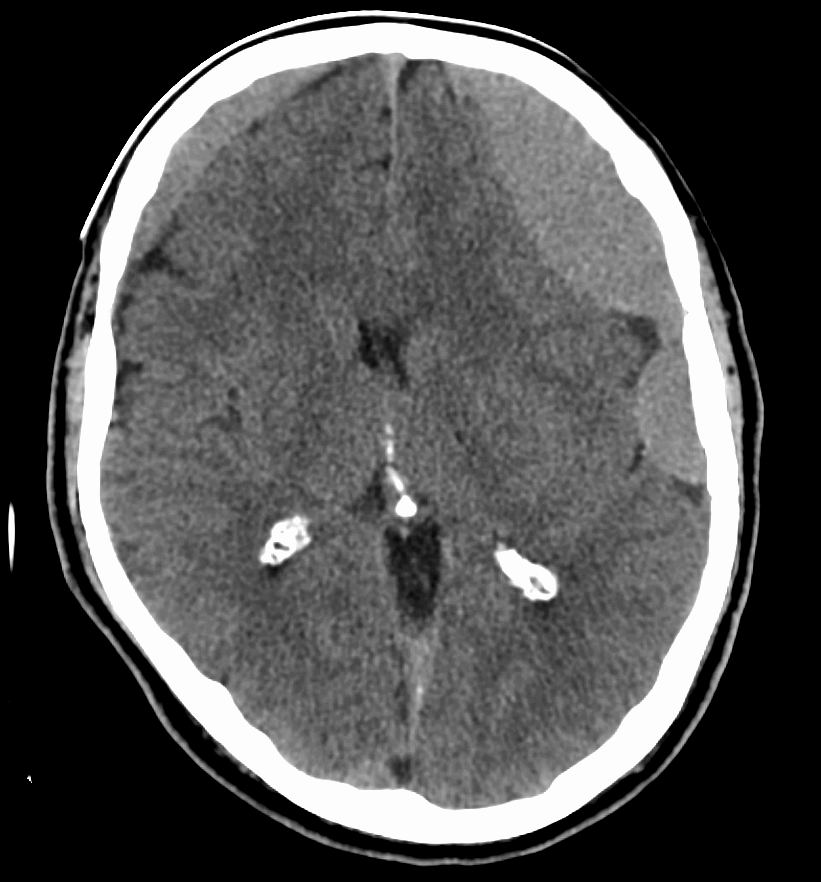
- About 1 in 20 older adults who fall has an intracranial bleed.3,4 Keep a low threshold for CT.1 The Falls Decision Rule may safely spare some head CTs, but it has had only one external validation and no impact study.5,6
- Reverse anticoagulation for bleeding, not for a fall. Don't reverse warfarin after head trauma without bleeding on CT.1 At neurologic baseline with a normal first CT, routine repeat CT or admission is not needed.7
- A fall is a symptom. Ask what happened, and evaluate an unexplained fall as syncope. Injury, 2 or more falls in a year, a long lie, frailty or a possible blackout mark high risk of falling again.8
Why older patients are different
- Under-triage is common. Mechanisms are low energy, vital signs are unreliable, and medications can mask the response to injury.1
- Activate early. WSES suggests trauma activation from age 55 (weak, low certainty) and recommends careful evaluation to avoid under-triage (strong, low certainty).1
- Lower vital-sign triggers. WSES recommends triage set points of a heart rate of 90 and a systolic pressure under 110 mm Hg (strong, moderate certainty).1 In 1.5 million US trauma patients, older adults with a systolic of 90–109 had the same adjusted odds of death as those under 90 (aOR 1.03). Moving the cutoff to 110 cut under-triage by 4.4% and raised over-triage by 4.3%.2
- Tachycardia may never come. Hypertension, heart disease, weaker response to catecholamines and beta-blockers all blunt the response to blood loss.1 A normal blood pressure without tachycardia or tachypnea does not rule out poor tissue perfusion.1
- Assess frailty in every older trauma patient (strong, moderate certainty).1 On the Clinical Frailty Scale, a score of 4 or more counts as frail in the World Falls Guidelines.8
First steps
- Ask what happened. Get the details of the fall, earlier falls, any loss of consciousness or dizziness, and how long they were on the floor.8
- Take a medication history. Look for beta-blockers, steroids, antiplatelets and anticoagulants.1
- Compare vital signs with the lower triggers. Activate the trauma team early if they are met.1
- Send a blood gas and coagulation tests early. Lactate or base deficit picks up hidden hypoperfusion.1 WSES recommends PT, INR, aPTT, thrombin time and anti-Xa levels. PT and aPTT are unreliable for direct oral anticoagulants (DOACs).1
- Keep a low threshold for CT, including contrast CT. WSES judges its yield to outweigh the risk of contrast nephropathy (strong, moderate certainty).1
- Treat pain early with scheduled acetaminophen and regional blocks (see Pain control).1
- Then, for everyoneBlood gas for lactate or base deficit, plus coagulation tests. Normal vital signs do not rule out hypoperfusion.1
- Either wayOn an anticoagulant with life-threatening, intracranial or uncontrolled bleeding?YesReverse: warfarin with 4F-PCC plus vitamin K 5 mg IV; dabigatran with idarucizumab 5 g IV; apixaban or rivaroxaban with andexanet alfa, or 4F-PCC 2,000 units.1,9,10,11DOACs: WSES suggests reversal agents only for hemorrhagic shock not responding to resuscitation, weighing the risk of thrombosis.1
- No bleeding
- Unexplained fall, or possible loss of consciousness?YesEvaluate it as syncope.8
- Then, before dischargeFalls risk: injury, 2 or more falls in a year, a long lie, frailty or a possible blackout mean high risk. Arrange a multifactorial falls assessment.8
Head injury and CT
- How common: a systematic review of 11 studies (11,102 patients) found intracranial bleeding in 5.2% of older adults seen in the ED after a fall, most studies at high risk of bias.3 A prospective Canadian cohort (1,753 patients) found 5.0%. Of 88 bleeds, 12 were diagnosed during 42-day follow-up rather than at the first visit.4
- What predicts a bleed: in that cohort, a new neurologic abnormality (OR 4.4), a bruise or laceration on the head (OR 4.3), chronic kidney disease (OR 2.4) and a GCS below normal (OR 1.9). Antiplatelet and anticoagulant use were not associated with bleeding.4
- A 2026 meta-analysis of 17 studies (22,520 patients with a fall-related head injury) found a bleed in 6.8%. Of those, 8.0% needed urgent neurosurgery. After adjustment, focal neurologic signs (aOR 4.4), a visible head injury (aOR 2.7), loss of consciousness (aOR 1.6) and male sex (aOR 1.4) remained predictors. Anticoagulants were not a significant risk factor (OR 0.8). Dual antiplatelet therapy was (unadjusted OR 2.3).15
- Standard rules fit older adults poorly. NEXUS Head CT counts age 65 or older as high risk. ACEP notes that the Canadian CT Head Rule and the New Orleans Criteria apply only to patients with loss of consciousness, amnesia or disorientation who are not on anticoagulants.7
The Falls Decision Rule
No head CT is needed if all four are true: no head injury in the fall, no amnesia for the fall, no new abnormality on neurologic exam, and a Clinical Frailty Scale score under 5.5
| Study | Patients | Sensitivity | Specificity | NPV |
|---|---|---|---|---|
| Derivation, 11 EDs5 | 4,308 | 98.6% | 20.3% | 99.8% |
| External validation, 1 trauma center6 | 800 | 97.9% | 31.9% | 99.5% |
Derivation cohort: median age 83, 26% on an anticoagulant, clinically important bleeding in 3.2% by 42 days.5 In the validation, the rule could have cut head CTs by about a third.6 A 2026 European cohort (1,620 patients) derived two further rules (PIWI 1 and 2), each 100% sensitive, which still need external validation.16
WSES recommends a low threshold for CT in older trauma patients.1 The Falls Decision Rule could spare some head CTs (about a third in the validation), but its authors say it still needs validation and an impact study.5,6 Until then, use it to support judgment, not to replace it.
Anticoagulants and reversal
- Warfarin: reverse for bleeding that does not respond to supportive care, life-threatening bleeding, bleeding in the brain, chest or abdomen, or an urgent procedure (strong, moderate certainty).1 Head trauma without bleeding on CT does not need preventive reversal.1
- Use 4F-PCC with IV vitamin K 5 mg for life-threatening bleeding (strong, high certainty). Use plasma only if nothing else is available, and not recombinant factor VIIa first line.1 Vitamin K alone is not recommended for life-threatening bleeding; it is an add-on.1
- DOACs: PT and aPTT are unreliable, especially for apixaban and edoxaban. Measure drug levels if your lab can. WSES suggests reversal agents only for critically ill patients with hemorrhagic shock that does not respond to resuscitation (weak, moderate to low certainty), weighing the risk of thrombosis.1
| Drug to reverse | Agent | Adult dose | Notes |
|---|---|---|---|
| Warfarin (vitamin K antagonist) | |||
| Warfarin | 4F-PCC (Kcentra) | INR 2 to < 4: 25 units/kg (max 2,500). INR 4–6: 35 units/kg (max 3,500). INR > 6: 50 units/kg (max 5,000) | Dose on weight up to 100 kg. Give vitamin K with it.1,9 |
| Warfarin | Vitamin K | 5 mg IV | With PCC, not instead of it.1 |
| Warfarin | Plasma | Only if nothing else is available | 1 |
| Direct oral anticoagulants | |||
| Dabigatran | Idarucizumab (Praxbind) | 5 g IV (two 2.5 g vials) | If unavailable, WSES suggests activated PCC 50 units/kg.1,10 |
| Apixaban, rivaroxaban | Andexanet alfa (Andexxa) | Low: 400 mg IV at 30 mg/min, then 4 mg/min for 120 min. High: 800 mg IV at 30 mg/min, then 8 mg/min for 120 min | High dose for apixaban > 5 mg or rivaroxaban > 10 mg (or an unknown dose) taken < 8 h ago or at an unknown time; otherwise low dose.1,11 |
| Apixaban, rivaroxaban | 4F-PCC | 2,000 units | WSES alternative if andexanet is not available.1 |
Unreviewed doses. Verify against the current label and your institution's protocol before giving anything.
WSES advises further PCC doses if needed to reach an INR under 1.5.1 The Kcentra label says the safety and effectiveness of repeat dosing have not been established and does not recommend it.9
Delayed bleeding after a normal CT
- ACEP: for minor head injury on an anticoagulant or antiplatelet, at neurologic baseline with no bleeding on the first CT, do not routinely repeat the CT or admit (Level B).7
- A meta-analysis of 12 studies (5,289 patients, 92% ground-level falls) found delayed bleeding in 2.4% on a DOAC and 2.3% on warfarin. Most delayed bleeds (86%) had no clinical consequence. The crude risk of death from a delayed bleed was 0.36%.17
- A 2024 meta-analysis (26 studies, 7,218 anticoagulated patients) found delayed bleeding in 2.0%. Only 0.1% needed neurosurgery and 0.1% died. GCS under 15, loss of consciousness and post-traumatic amnesia were risk factors.18
Injuries that are easy to miss
- Cervical spine: the Canadian C-Spine Rule excludes older patients, and NEXUS has variable accuracy in them. In 2,312 older adults admitted after a ground-level fall, 10.9% had a cervical spine injury. Midline tenderness was the strongest predictor (OR 23). Even with no midline tenderness, focal deficit or sign of head or face trauma, the negative predictive value was only 95.1%. The study was retrospective.12
- Ribs: older adults with rib fractures had twice the mortality of younger adults with similar injuries (22% vs 10%) and more pneumonia (31% vs 17%). Each additional fracture raised the odds of death (OR 1.19 per rib).19 Plain films may miss up to half of rib fractures, so CT is preferred.13
- Pelvis: EM Cases notes that older adults are more likely to have lateral compression pelvic fractures that bleed, and that FAST misses retroperitoneal bleeding.13
- The long lie: lying on the floor for over an hour is linked to dehydration, electrolyte disturbance, renal failure, hypothermia, pneumonia, urinary infection and skin damage. One in 8 older adults who fall report lying on the floor that long.8
Pain control
| Approach | Adult dose | Notes |
|---|---|---|
| Acetaminophen IV, scheduled | 1,000 mg every 6 h (max 4,000 mg/day) if ≥ 50 kg. Under 50 kg: 15 mg/kg every 6 h (max 75 mg/kg/day) | First line (strong, high certainty).1,14 |
| NSAIDs | Dose per label and protocol | Consider for severe pain, weighing adverse effects and drug interactions (weak).1 |
| Peripheral nerve block | Per institutional protocol | For hip fracture at presentation; cuts opioid use (strong, high certainty).1 |
| Thoracic epidural or paravertebral block | Per institutional protocol | For rib fractures, with systemic analgesia, if skills are available (strong, high certainty).1 |
| Opioids | Lowest effective dose, shortest time | Breakthrough pain only. They accumulate in older adults, causing oversedation, respiratory depression and delirium.1 |
Unreviewed doses. Verify against the current label and your institution's protocol before giving anything.
Weigh neuraxial and plexus blocks carefully in patients on anticoagulants.1 Splinting, dressings and ice help alongside drugs.1 Assess delirium risk factors early, since delirium predicts poor outcomes.1
Why did they fall?
- High risk of falling again: a fall with injury, 2 or more falls in the past 12 months, being unable to get up for at least an hour, frailty, or a suspected transient loss of consciousness. These patients should be offered a multifactorial falls assessment.8
- Unexplained falls: assess them the same way as syncope (strong, high certainty). With a normal initial cardiovascular assessment and no suspicion of syncope, no further cardiac testing is needed.8
- Gait: a gait speed under 0.8 m/s predicts falls (strong, high certainty). A Timed Up and Go over 15 seconds is an alternative with less consistent evidence.8
- Medications: review fall-risk-increasing drugs with a structured tool such as STOPPFall or the Beers Criteria.8
- Consider elder abuse. US EDs diagnosed it in only 0.013% of visits by adults aged 60 and older, at least a hundred times lower than estimated population rates. Contusions were linked to the diagnosis (OR 2.91).20
Disposition
- Discharged on an anticoagulant after a normal CT: give instructions on the symptoms of delayed bleeding, and consider referral to review falls risk and the balance of risks and benefits of anticoagulation (ACEP, consensus).7
- Therapy in the ED: physical or occupational therapist evaluation in the ED was associated with fewer ED revisits at 1, 2 and 6 months, without more admissions or longer stays. Studies were mixed and had co-interventions.21
- Follow-up: EM Cases suggests a home safety assessment, a falls prevention program, and primary care follow-up for falls risk and osteoporosis.13
- Rib fractures: EM Cases suggests considering transfer to a trauma center for more than 3 fractures, bilateral fractures, a flail segment or significant lung disease.13
- Goals of care: age alone is not a reason to withhold aggressive care. Discuss end-of-life decisions with the team, the patient's directives and family, and involve palliative care early for patients at the end of life.1
Pitfalls
- Being reassured by a normal heart rate in a patient on a beta-blocker.1
- Using a systolic of 90 as the shock threshold. In older adults, 90–109 carried the same risk of death.2
- Reversing warfarin for a fall with a normal head CT.1
- Treating the injury and missing the cause: an unexplained fall needs a syncope workup.8
- Counting rib fractures on a plain film. It can miss up to half of them.13
- Giving antibiotics for blunt trauma without signs of sepsis (WSES recommends against this).1
How strong is the evidence?
Most WSES recommendations rest on moderate or low certainty evidence.1 Many World Falls Guidelines recommendations for patients seen after a fall are expert opinion.8 The Falls Decision Rule has one derivation and one single-center validation.5,6 Data on delayed bleeding come from meta-analyses of observational studies.17,18 The blood pressure cutoff comes from registry data.2
On-shift teaching
Questions to ask a learner at the bedside. Tap a question to see the answer. Every answer uses facts cited above.
Q1Why use a systolic of 110 rather than 90 to flag shock in older trauma patients?
Q2Which features make an older adult who fell high risk for falling again?
Q3What are the four parts of the Falls Decision Rule, and how sensitive was it?
Q4A patient on apixaban hit their head. The CT is normal and they are at baseline. Repeat CT?
Q5Is anticoagulant use a risk factor for intracranial bleeding after a fall?
Q6How much does each extra rib fracture matter in an older adult?
References
What this page is built on
21 sources, cited 123 times. Dots are sources, filled by how far each was read; stronger color means a larger share of the citations. Tap a tier to see its sources.
Checked by the writer, not a physician. The dots show how each source was read, not that anyone has confirmed the claims.
- 1De Simone B, Chouillard E, Podda M, et al. The 2023 WSES guidelines on the management of trauma in elderly and frail patients. World J Emerg Surg. 2024;19(1):18.
- 2Brown JB, Gestring ML, Forsythe RM, et al. Systolic blood pressure criteria in the National Trauma Triage Protocol for geriatric trauma: 110 is the new 90. J Trauma Acute Care Surg. 2015;78(2):352–359.
- 3de Wit K, Merali Z, Kagoma YK, Mercier É. Incidence of intracranial bleeding in seniors presenting to the emergency department after a fall: a systematic review. Injury. 2020;51(2):157–163.
- 4de Wit K, Parpia S, Varner C, et al. Clinical predictors of intracranial bleeding in older adults who have fallen: a cohort study. J Am Geriatr Soc. 2020;68(5):970–976.
- 5de Wit K, Mercuri M, Clayton N, et al. Derivation of the Falls Decision Rule to exclude intracranial bleeding without head CT in older adults who have fallen. CMAJ. 2023;195(47):E1614–E1621.
- 6Kudu E, Altun M, Danış F, et al. Validating the falls decision rule: optimizing head CT use in older adults with ground-level falls. CJEM. 2025;27(8):629–637.
- 7ACEP Clinical Policies Subcommittee on Mild Traumatic Brain Injury; Valente JH, Anderson JD, et al. Clinical policy: critical issues in the management of adult patients presenting to the emergency department with mild traumatic brain injury. Ann Emerg Med. 2023;81(5):e63–e105.
- 8Montero-Odasso M, van der Velde N, Martin FC, et al. World guidelines for falls prevention and management for older adults: a global initiative. Age Ageing. 2022;51(9):afac205.
- 9Kcentra (prothrombin complex concentrate, human). CSL Behring. FDA label, DailyMed.
- 10Praxbind (idarucizumab) injection. Boehringer Ingelheim. FDA label, DailyMed.
- 11Andexxa (andexanet alfa) for injection. AstraZeneca. FDA label, DailyMed.
- 12Engelbart J, Zhou P, Johnson J, et al. Geriatric clinical screening tool for cervical spine injury after ground-level falls. Emerg Med J. 2022;39(4):301–307.
- 13Helman A, Li W. Ep 160 Geriatric trauma part 2: rib fractures, pelvic fractures, prognostication, elder abuse, discharge planning. Emergency Medicine Cases; September 2021.
- 14Ofirmev (acetaminophen) injection. FDA label, DailyMed.
- 15Dubucs X, Gingras V, Boucher V, et al. Risk factors for traumatic intracranial hemorrhage in older adults sustaining a head injury in ground-level falls: a systematic review and meta-analysis. Ann Emerg Med. 2026;87(2):181–191.
- 16Dubucs X, Even C, Guenezan J, et al. Risk stratification for significant acute traumatic intracranial hemorrhage in older adults after a ground-level fall: a prospective multicentre cohort study. PLoS Med. 2026;23(8):e1004935.
- 17Puzio TJ, Murphy PB, Kregel HR, et al. Delayed intracranial hemorrhage after blunt head trauma while on direct oral anticoagulant: systematic review and meta-analysis. J Am Coll Surg. 2021;232(6):1007–1016.
- 18Pessôa RL, Garcia GM, Becker GG, et al. Incidence and risk factors of delayed intracranial hemorrhage in anticoagulated head trauma patients: a systematic review and meta-analysis. World Neurosurg. 2024;192:190–200.
- 19Bulger EM, Arneson MA, Mock CN, Jurkovich GJ. Rib fractures in the elderly. J Trauma. 2000;48(6):1040–1046.
- 20Evans CS, Hunold KM, Rosen T, et al. Diagnosis of elder abuse in U.S. emergency departments. J Am Geriatr Soc. 2017;65(1):91–97.
- 21Southerland LT, Curiati PK, Shih RD, et al. Physical and occupational therapist evaluations for fall prevention in the emergency department: a Geriatric ED Guidelines 2.0 systematic review. Acad Emerg Med. 2026;33(3):e70201.
AI-generated draft. Not reviewed by a physician. This page is for education only and may contain errors, including in doses. Do not use it to diagnose, treat or make decisions about any patient. Rely on your own clinical judgment, your institution's protocols and current drug labeling. Reading this page does not create a physician-patient relationship. Full terms