


Cellulitis and skin abscess
Bottom line
- Sort it first: purulent or not. Abscesses, carbuncles and large furuncles need incision and drainage. Typical cellulitis without systemic signs needs an antibiotic active against streptococci.1
- Typical cellulitis is mostly streptococcal. In 179 adults admitted with diffuse cellulitis and nothing to culture, 73% were due to beta-hemolytic streptococci, and 95.8% responded to a beta-lactam.2
- After drainage, an antibiotic helps a little. TMP-SMX raised cure from 73.6% to 80.5%, and clindamycin or TMP-SMX raised it from 68.9% to 82–83% for abscesses up to 5 cm.3,4 The 2014 IDSA guideline predates these trials.1
- Treat cellulitis for 5 days, and extend only if it has not improved.1
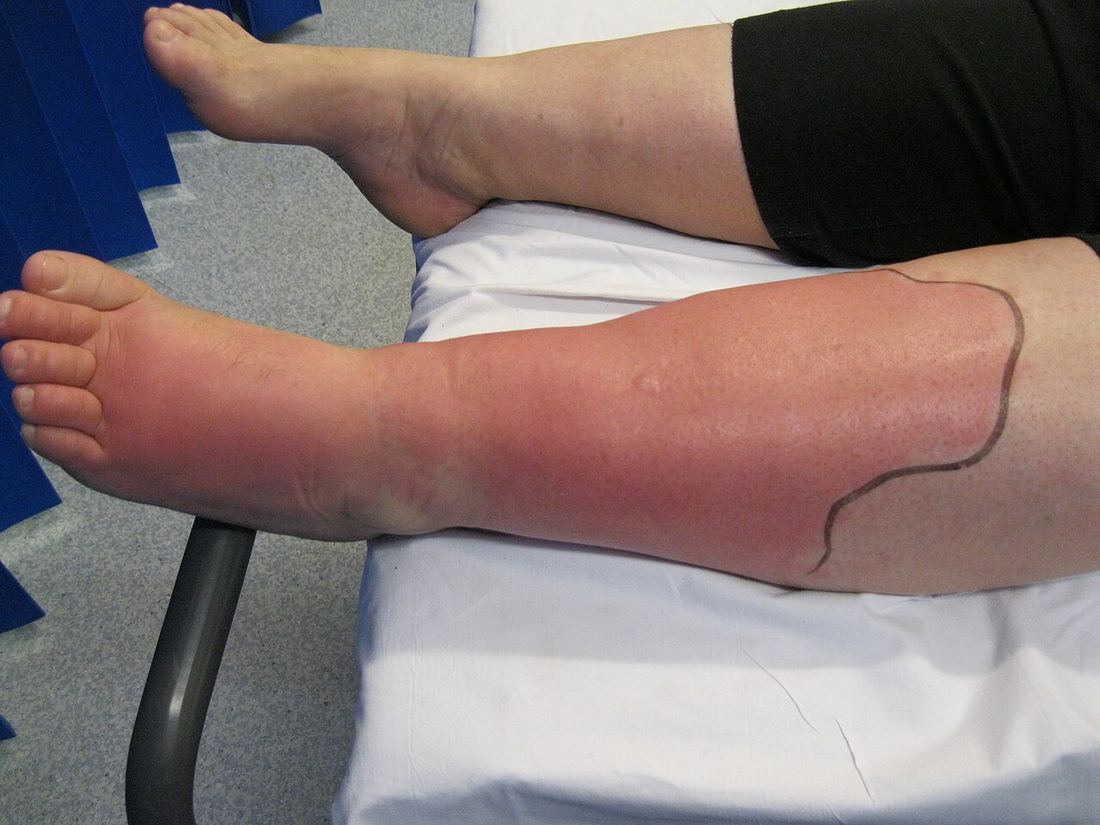
- Many red legs are not cellulitis. In one ED, 30.5% of patients admitted for leg cellulitis turned out to have something else.5
Sort the infection
| Severity | Purulent (abscess, furuncle, carbuncle) | Nonpurulent (cellulitis, erysipelas) |
|---|---|---|
| Mild | Incision and drainage | Typical cellulitis, no pus: an oral antibiotic active against streptococci |
| Moderate: systemic signs | Drainage, culture, and an antibiotic | Streptococcal cover; add MRSA cover when systemic signs are present |
| Severe | Failed drainage plus oral antibiotics, or systemic signs: drainage and an MRSA-active antibiotic | Failed oral antibiotics, systemic signs, or bullae, skin sloughing, hypotension or organ dysfunction: vancomycin plus piperacillin-tazobactam or a carbapenem |
Adapted from the IDSA 2014 categories and recommendations.1 Systemic signs means the systemic inflammatory response syndrome: for example, temperature over 38 °C (100.4 °F) or under 36 °C (96.8 °F), respiratory rate over 24, heart rate over 90, or a white count over 12,000/µL.1
First steps
- Look for deep infection. Bullae, skin sloughing, hypotension or organ dysfunction make it severe. Suspected deeper or necrotizing infection needs admission.1
- Check for systemic signs (temperature, heart rate, breathing rate, white count). They change both antibiotics and disposition.1
- Is there pus? If you can't tell, scan it. Bedside ultrasound was 94.6% sensitive and 85.4% specific for abscess, and changed management correctly in 10.3% of cases and wrongly in 0.7%.6
- Drain every abscess. Send pus for Gram stain and culture when you can; treating typical cases without culture is reasonable.1
- Cultures in cellulitis are not routine. Get blood cultures, and consider aspirate, biopsy or swab cultures, in patients on chemotherapy for cancer, with neutropenia or severe cell-mediated immunodeficiency, and after immersion injuries or animal bites.1
- In leg cellulitis, look between the toes and treat any fissuring, scaling or maceration. Elevate the limb and treat edema and other predisposing conditions.1
- Ask if it is really cellulitis. Misdiagnosed cellulitis led to unneeded admissions and antibiotics in most such patients in one ED cohort.5
- Red, warm, swollen skin. Check for systemic signs: temperature over 38 °C or under 36 °C, heart rate over 90, respiratory rate over 24.1
- NoUnsure whether there is pus? Scan it: ultrasound is 94.6% sensitive and 85.4% specific for abscess.6
- Purulent or not?AbscessIncise and drain. Culture the pus when you can.1
- Treat for 5 days, longer only if not improving. Elevate the limb and treat toe-web disease.1
- Systemic signs, confusion, unstable, severely immunocompromised, or unable to take treatment at home?YesAdmit.1
- NoTreat as an outpatient, and admit if outpatient treatment fails.1
Abscess
- Incision and drainage is the treatment for abscesses, carbuncles, large furuncles and inflamed epidermoid cysts (strong, high).1
- Irrigation didn't help. In 187 ED patients, further intervention within 30 days was needed in 15% with irrigation and 13% without.8
- Packing may not help either. In a pilot trial of 48 abscesses under 5 cm, packing didn't reduce repeat intervention at 48 hours (4 of 23 vs 5 of 25) and hurt more.9
Antibiotics after drainage
- TMP-SMX vs placebo (n = 1,247 in the main analysis, 5 US EDs, MRSA in 45.3%): cure 80.5% vs 73.6%. TMP-SMX also cut repeat drainage (3.4% vs 8.6%) and new skin infections (3.1% vs 10.3%).3
- Clindamycin or TMP-SMX vs placebo for abscesses up to 5 cm (n = 786): cure 83.1% and 81.7% vs 68.9%. The benefit was limited to S. aureus infections. Clindamycin had fewer new infections at 1 month but more side effects (21.9% vs 11.1%).4
- Meta-analysis of 4 trials (n = 2,406): treatment failed in 7.7% with antibiotics and 16.1% with placebo, at the cost of slightly more minor side effects.7
The 2014 IDSA guideline ties antibiotics after drainage to systemic signs, impaired host defenses or severe disease, and its text says adding antibiotics did not improve cure.1 Two later placebo-controlled trials and a meta-analysis found a modest gain in cure for drained abscesses.3,4,7 Weigh that gain against side effects.
Cellulitis
- Cover streptococci. Typical cellulitis without systemic signs needs an antibiotic active against streptococci (strong, moderate).1
- Add MRSA cover for penetrating trauma, MRSA infection elsewhere, MRSA nasal colonization, injection drug use, or systemic signs (strong, moderate).1
- Adding TMP-SMX to cephalexin did not raise cure in the per-protocol analysis (83.5% vs 85.5%; n = 411). In the intention-to-treat analysis it was 76.2% vs 69.0%, not significant, but the range included a meaningful benefit.10 A REBEL EM review of the trial concludes that streptococcal cover alone is reasonable at first in well-appearing patients without abscess.11
- Duration: 5 days works as well as 10 if the infection has improved by day 5 (strong, high).1
- Steroids: prednisone 40 mg daily for 7 days could be considered in nondiabetic adults (weak, moderate).1
Of 259 patients admitted from one ED with leg cellulitis, 79 (30.5%) had another diagnosis. Of the 52 admitted mainly for cellulitis, 44 did not need admission and 48 (92.3%) got antibiotics they didn't need.5 In a randomized trial of inpatients with presumed cellulitis, early dermatology consultation cut IV antibiotic use and improved clinical outcomes at 2 weeks (89.3% vs 68.3% improved).12
Adult doses
| Agent | Adult dose | Notes |
|---|---|---|
| Streptococcal and MSSA cover | ||
| Cephalexin | 500 mg PO four times daily | Also for penicillin allergy without immediate hypersensitivity1 |
| Penicillin VK | 250–500 mg PO every 6 h | Streptococcal skin infection1 |
| Dicloxacillin | 500 mg PO four times daily | Oral drug of choice for MSSA1 |
| Cefazolin | 1 g IV every 8 h | Preferred over nafcillin for convenience1 |
| MRSA cover | ||
| TMP-SMX | 1–2 double-strength tablets PO twice daily | IDSA rated its efficacy poorly documented in 20141; later abscess trials used 2 tablets twice daily3 |
| Doxycycline | 100 mg PO twice daily | Not for children under 81 |
| Clindamycin | 300–450 mg PO four times daily, or 600 mg IV every 8 h | Bacteriostatic; watch for inducible resistance in MRSA1 |
| Vancomycin | 30 mg/kg/day IV in 2 divided doses | IV drug of choice for MRSA1 |
| Severe nonpurulent infection | ||
| Vancomycin plus piperacillin-tazobactam or a carbapenem | Per institutional protocol and label | Reasonable empiric regimen1 |
Unreviewed doses. Verify against the current label and your institution's protocol before giving anything.
Doses from the IDSA 2014 guideline's adult dosing table.1 Check the label for kidney dosing.
Recurrence
- Recurrent abscess at the same site: look for a local cause, drain and culture it early, and treat for 5–10 days guided by the culture.1 Decolonization may be considered for recurrent S. aureus infection (weak, low).1
- Recurrent abscesses since early childhood: evaluate for a neutrophil disorder.1
- Recurrent cellulitis: treat edema, obesity, eczema, venous insufficiency and toe-web problems. With 3–4 episodes a year despite that, preventive antibiotics may be considered (weak, moderate).1
Disposition
Pitfalls
- Treating an undrained abscess with antibiotics alone.1
- Adding MRSA cover to every cellulitis. Most typical cellulitis is streptococcal and responds to a beta-lactam.2,10
- Prescribing 10 days when 5 will do.1
- Calling every red leg cellulitis without considering another diagnosis.5
- Missing deep infection: bullae, skin sloughing, hypotension or organ dysfunction mean severe disease.1
- Missing the toe web: fissures, scaling and maceration in leg cellulitis need treatment too.1
How strong is the evidence?
The IDSA guideline is from 2014 and has not been updated; drainage and the 5-day course are strong recommendations on high-quality evidence, while the decision to add antibiotics for purulent infection rests on low-quality evidence.1 The abscess antibiotic trials were large, double-blind and placebo-controlled, but were done where MRSA was common.3,4 The packing and irrigation trials were small or unblinded.9,8 Ultrasound performed best in adults (sensitivity 98.7%, specificity 91.0%).6
On-shift teaching
Questions to ask a learner at the bedside. Tap a question to see the answer. Every answer uses facts cited above.
Q1Why is cephalexin alone enough for most typical cellulitis?
Q2Which patients with cellulitis need MRSA cover?
Q3You drained a 3 cm abscess in a well patient. Do you prescribe an antibiotic?
Q4Should you pack a small abscess after drainage?
Q5How long should cellulitis be treated?
References
What this page is built on
12 sources, cited 79 times. Dots are sources, filled by how far each was read; stronger color means a larger share of the citations. Tap a tier to see its sources.
Checked by the writer, not a physician. The dots show how each source was read, not that anyone has confirmed the claims.
- 1Stevens DL, Bisno AL, Chambers HF, et al. Practice guidelines for the diagnosis and management of skin and soft tissue infections: 2014 update by the Infectious Diseases Society of America. Clin Infect Dis. 2014;59(2):e10–e52.
- 2Jeng A, Beheshti M, Li J, Nathan R. The role of beta-hemolytic streptococci in causing diffuse, nonculturable cellulitis: a prospective investigation. Medicine (Baltimore). 2010;89(4):217–226.
- 3Talan DA, Mower WR, Krishnadasan A, et al. Trimethoprim-sulfamethoxazole versus placebo for uncomplicated skin abscess. N Engl J Med. 2016;374(9):823–832.
- 4Daum RS, Miller LG, Immergluck L, et al. A placebo-controlled trial of antibiotics for smaller skin abscesses. N Engl J Med. 2017;376(26):2545–2555.
- 5Weng QY, Raff AB, Cohen JM, et al. Costs and consequences associated with misdiagnosed lower extremity cellulitis. JAMA Dermatol. 2017;153(2):141–146.
- 6Gottlieb M, Avila J, Chottiner M, Peksa GD. Point-of-care ultrasonography for the diagnosis of skin and soft tissue abscesses: a systematic review and meta-analysis. Ann Emerg Med. 2020;76(1):67–77.
- 7Gottlieb M, DeMott JM, Hallock M, Peksa GD. Systemic antibiotics for the treatment of skin and soft tissue abscesses: a systematic review and meta-analysis. Ann Emerg Med. 2019;73(1):8–16.
- 8Chinnock B, Hendey GW. Irrigation of cutaneous abscesses does not improve treatment success. Ann Emerg Med. 2016;67(3):379–383.
- 9O'Malley GF, Dominici P, Giraldo P, et al. Routine packing of simple cutaneous abscesses is painful and probably unnecessary. Acad Emerg Med. 2009;16(5):470–473.
- 10Moran GJ, Krishnadasan A, Mower WR, et al. Effect of cephalexin plus trimethoprim-sulfamethoxazole vs cephalexin alone on clinical cure of uncomplicated cellulitis: a randomized clinical trial. JAMA. 2017;317(20):2088–2096.
- 11Swaminathan A. Initial antibiotic choice in uncomplicated cellulitis. REBEL EM; June 8, 2017.
- 12Ko LN, Garza-Mayers AC, St John J, et al. Effect of dermatology consultation on outcomes for patients with presumed cellulitis: a randomized clinical trial. JAMA Dermatol. 2018;154(5):529–536.
AI-generated draft. Not reviewed by a physician. This page is for education only and may contain errors, including in doses. Do not use it to diagnose, treat or make decisions about any patient. Rely on your own clinical judgment, your institution's protocols and current drug labeling. Reading this page does not create a physician-patient relationship. Full terms